
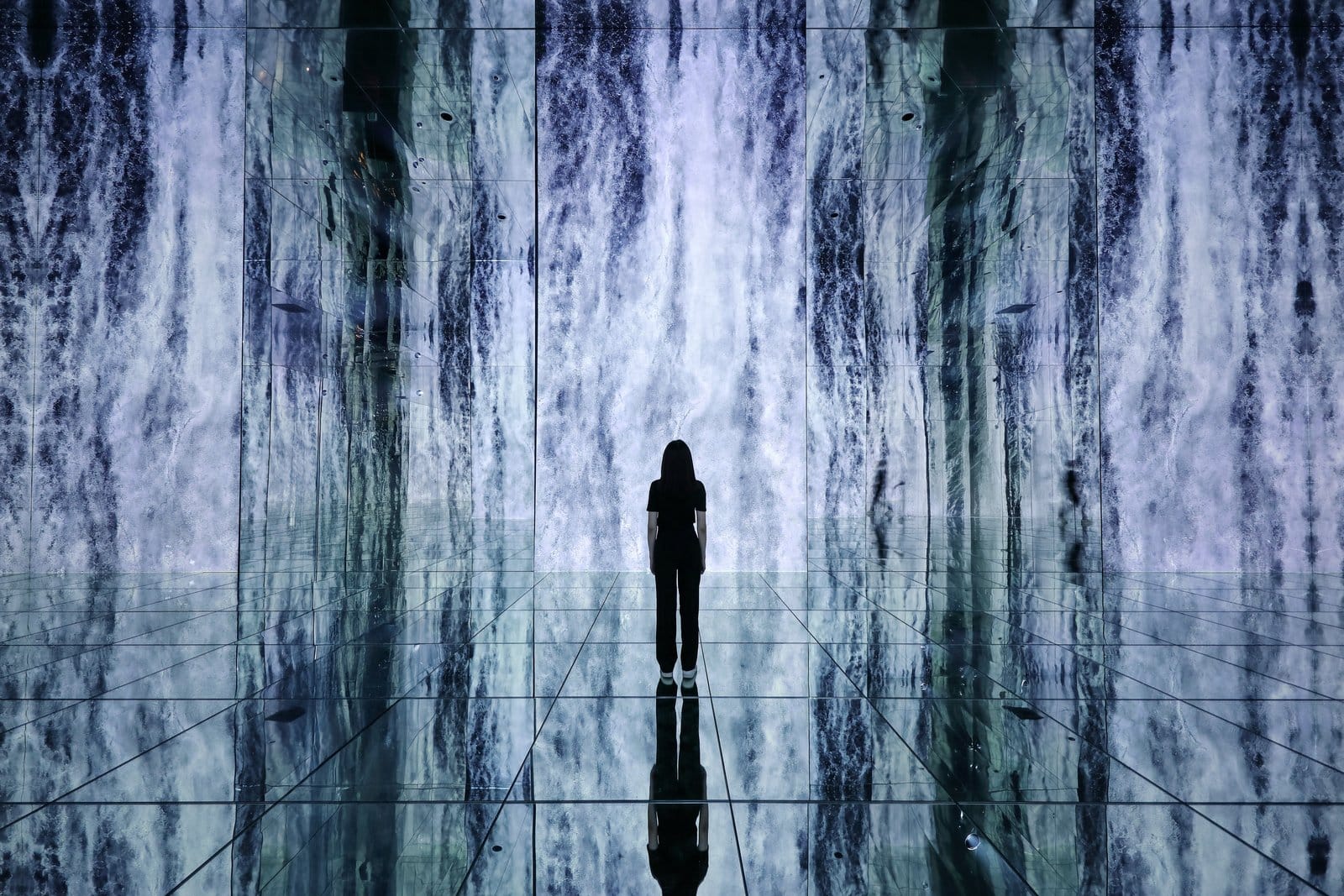
Arte Museum is the kind of place you may have seen on your phone before, but weren't quite sure what or where it was. A waterfall pours down mirrored walls. A wave the size of a building hangs in the air and never breaks. That kind of thing. And where? Well, now there's one near Nagoya, and it's called Arte Museum Nagoya.
The museum (is that what this is?) is in Shinmaiko. And if you aren't quite sure where that is — well, that's Chita City, on the Ise Bay shore. It is about half an hour south of Meitetsu Nagoya on the Tokoname Line and a few minutes' walk from Shinmaiko Station. People from Nagoya have been coming here for day trips since the Meiji era, when developers decided its pine-backed beach looked like Maiko, near Kobe, and went with the same name. A tad confusing.
But... What Is It?
Arte Museum is a series of dark rooms where projections cover the walls and floors. Each room has its own soundtrack (and its own scent!). Some of the works respond when you move, and in one you draw something and watch it come to life. There's no guided tour; instead, you walk through at your own pace. The museum says an average visit takes about 90 minutes.
The Nagoya area is the first place in Japan to get one, but Arte Museum is a branded experience run by d'strict, a digital design company in Seoul. The Nagoya location is the ninth of its kind. The first Arte Museum opened on Jeju Island in 2020, followed by Yeosu, Gangneung, and Busan in Korea, Chengdu in China, Las Vegas, Dubai, and New York. It may seem an odd pick for Japan's first, but the museum's president says they chose Nagoya as a place where tradition and new technology live side by side. Like the others in the group, Arte Museum Nagoya is permanent, so relax and go whenever you have time to fully enjoy it.
Made for Nagoya
Every location is built around the same theme, Eternal Nature. Some works appear in other cities too, but each location gets new ones of its own. Nagoya has 17 rooms holding 18 works. Six are new, and most of those borrow from Nagoya and Japan.
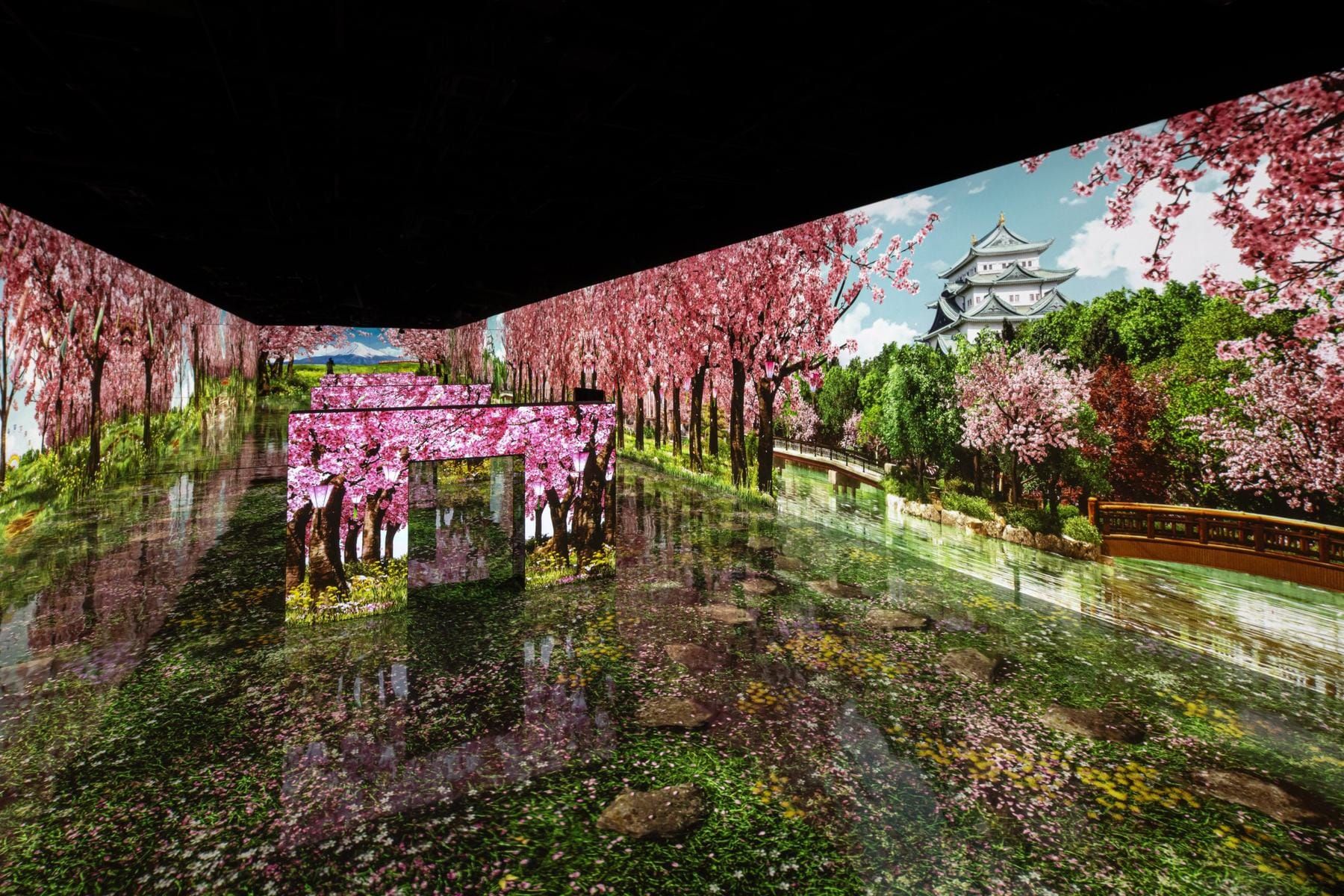
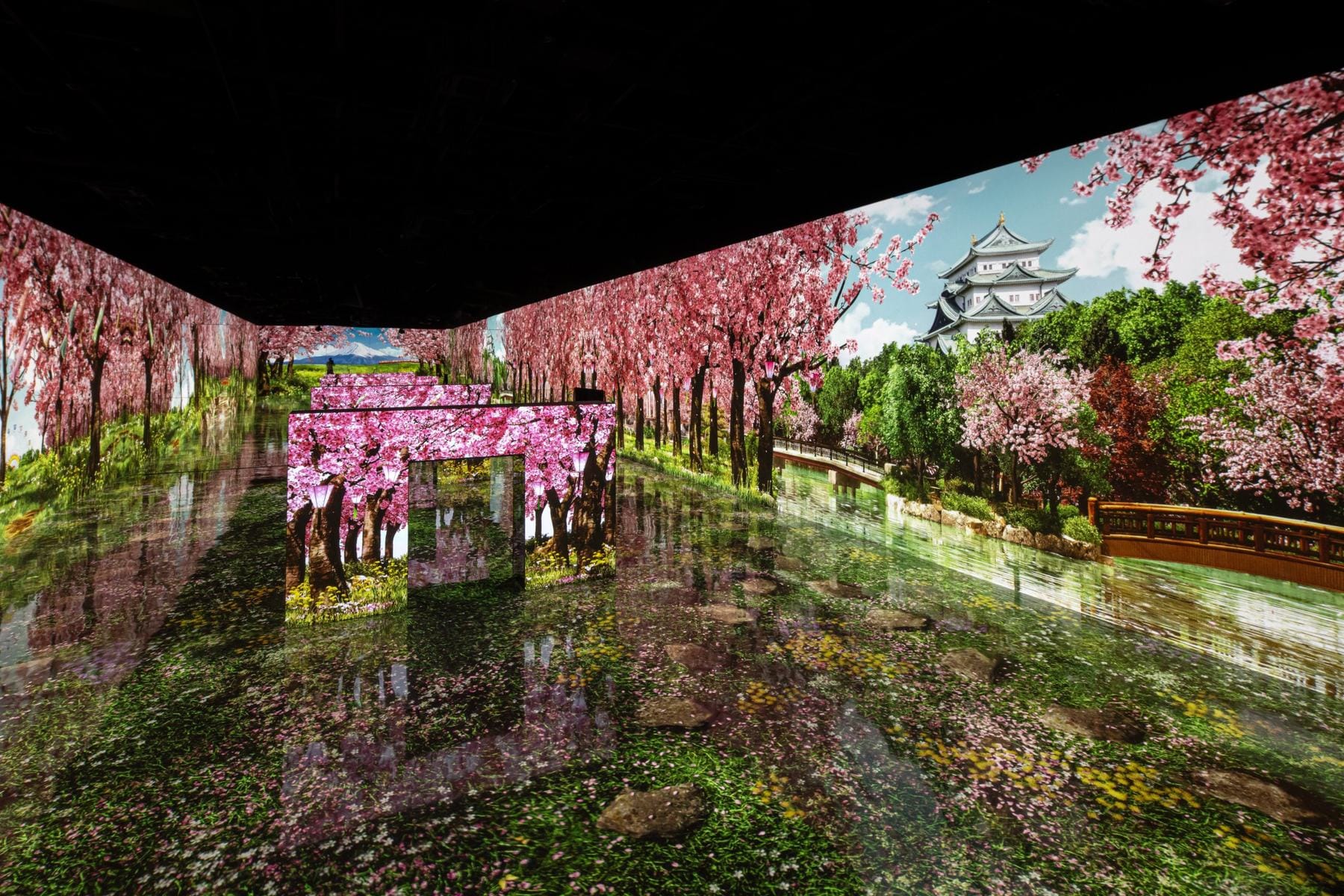
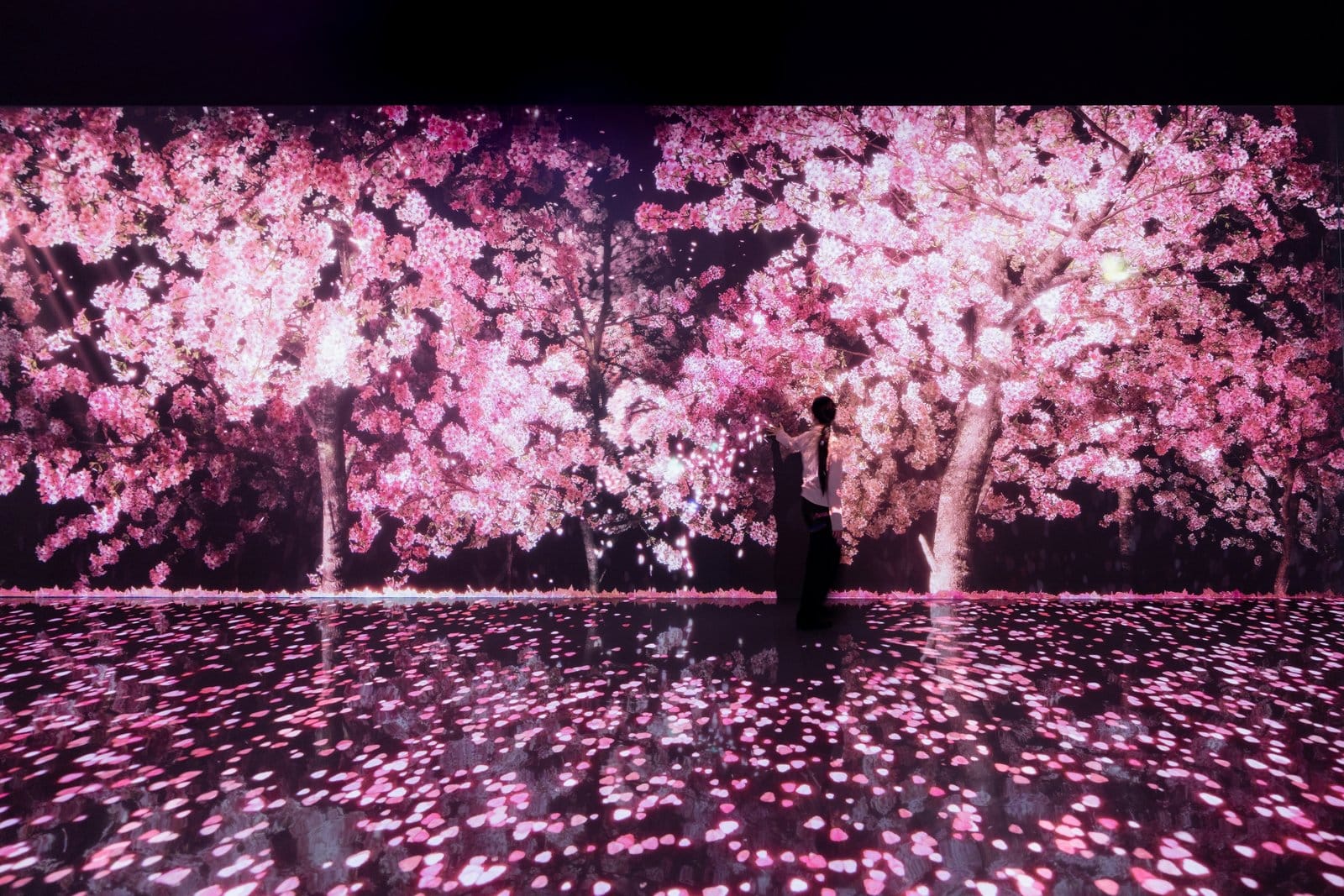
The biggest is Legacy of Light, Nagoya, in the largest room, called Garden. It runs through the year. Spring brings cherry blossoms to Meijo Park. Summer has an orca and the energy of the Owari Tsushima Tenno Festival. Autumn is the gold of Nagoya Castle's Honmaru Palace, and winter sets snowy Shirakawa-go beside the modern city skyline. Shirakawa-go is in Gifu, but we'll let that go.
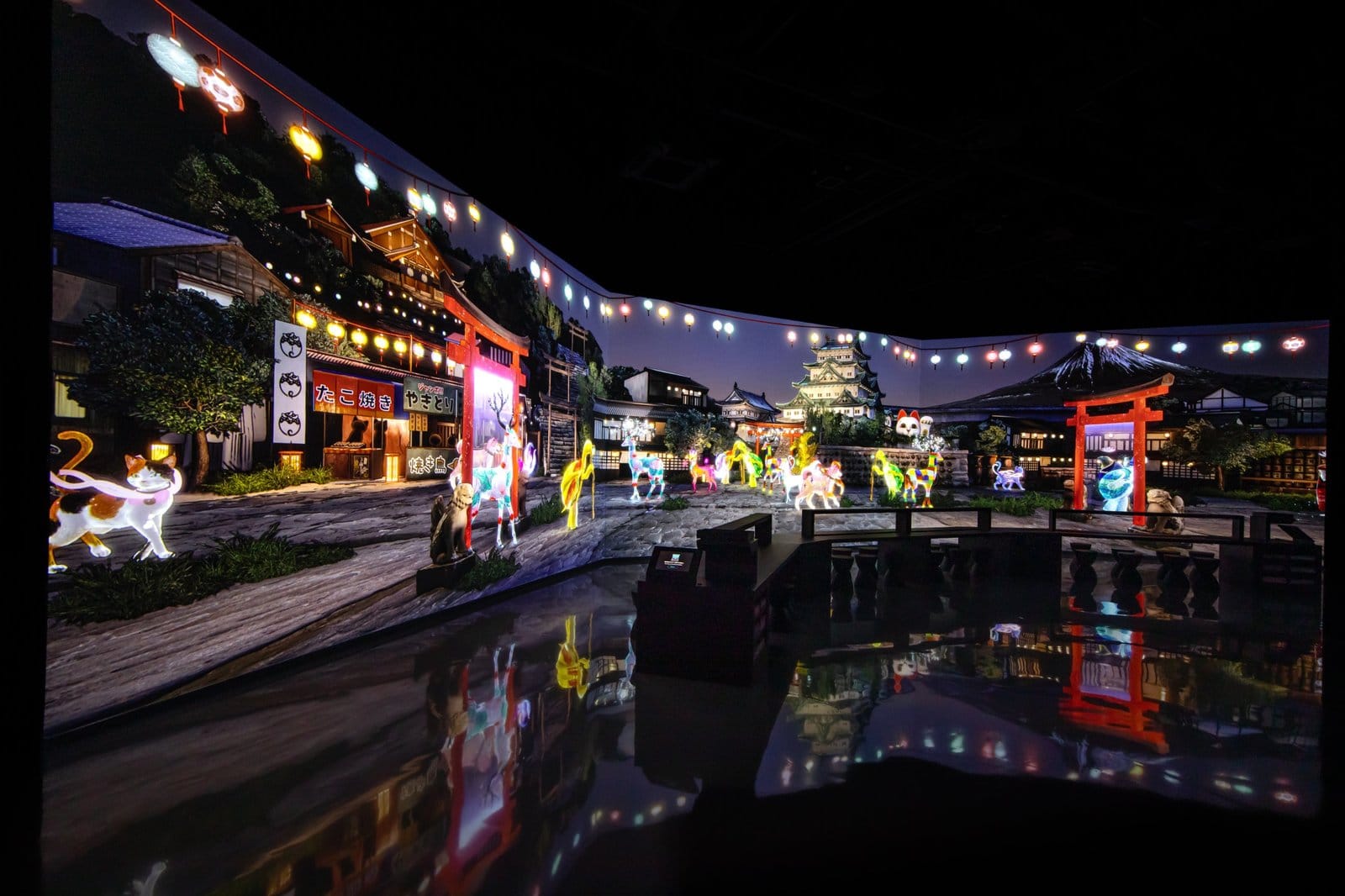
Live Sketchbook: Matsuri of Spirits is hands-on. You draw an animal, and it joins a night festival on the wall. Foxes and deer guard the mountain, turtles and toads guard the water, and cats and dogs look after the shopping street. Once they pass through the torii, they wake up... as spirits!
Two more rooms are given over to cherry blossoms. In Cherry Blossoms, birdsong announces spring and rain brings the petals down faster. Cherry Blossom Odyssey plays out a full bloom as a time-lapse. Circle, the last of the new rooms, is a deep-blue whirlpool hanging in midair that you walk toward. An ode to blue tarps, perhaps?
Other Works
The other featured works have traveled from Arte Museums around the globe. One you’ve probably seen on social media is Waterfall Infinite, a seven-meter waterfall extended by mirrors and recreated from a piece d’strict showed in Times Square. Wave, the trapped wave, first appeared in Seoul in 2020. In Waterfall: Sand, golden sand pours down, glowing as it falls from nine meters up.
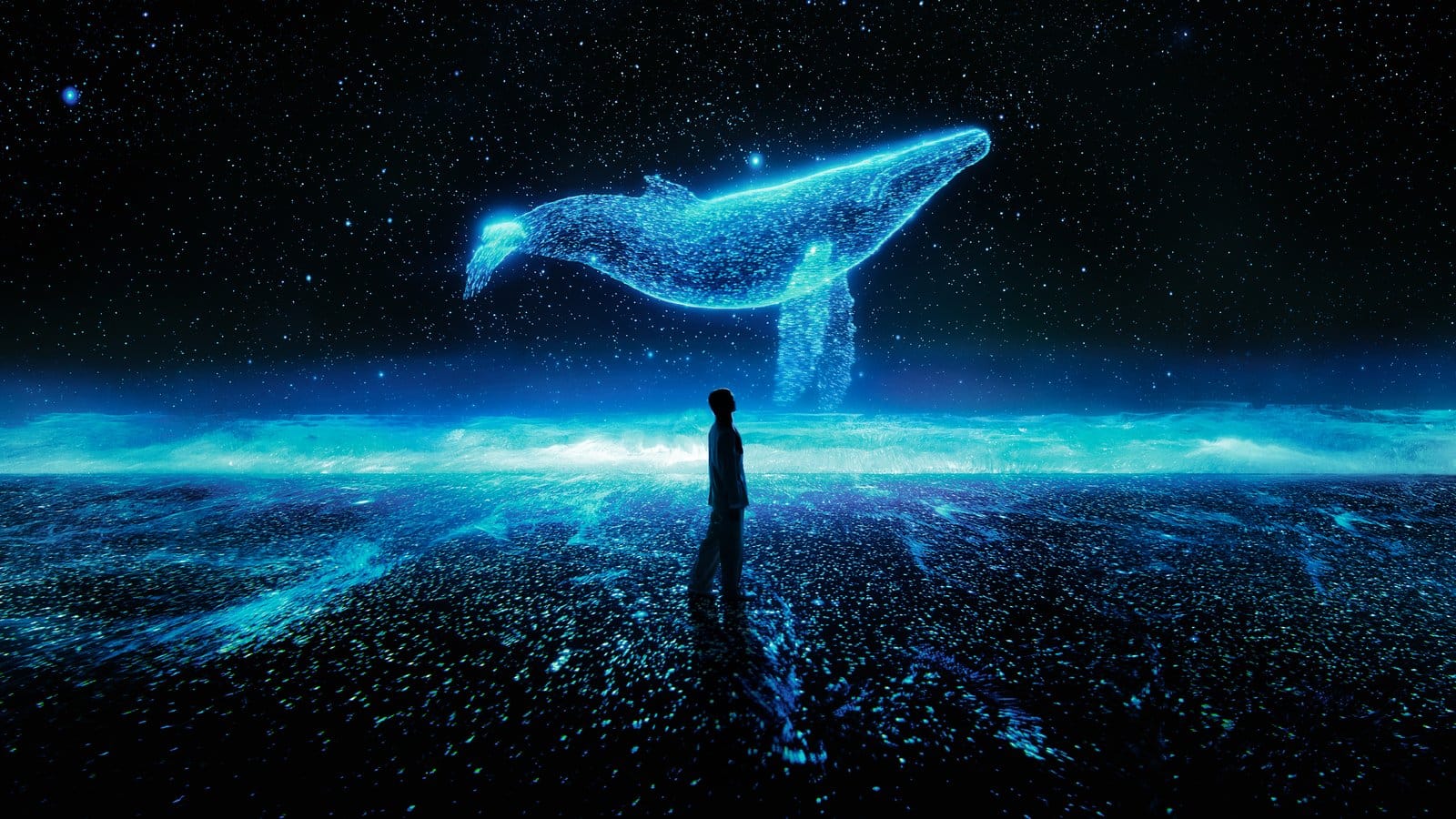
In Beach: Night Being, a dark sea, whales and turtles wake as visitors move through it. Star: Milky Way uses paper-art stars and mirrors to make the room look endless. There's also a jungle, a forest, a cave and a giant sun to walk into, plus a Garden room that reworks paintings from the Musée d'Orsay.
This is an experience that is hard to portray with images or descriptions. Photos don't show you the scents. The museum says each room has its own scent, made with ingredients that are harmless to breathe.
CAFE dara
CAFE dara is only at the Nagoya branch. Its mascot is dara, a moon rabbit whose name means "moon" in Korean, and the tabletops double as projection screens. Order a drink and dara tells your fortune, a digital take on omikuji. The matcha comes from Nishio, and the menu also runs to black sesame and purple sweet potato lattes, melon soda with whipped cream, and a dara mousse cake.
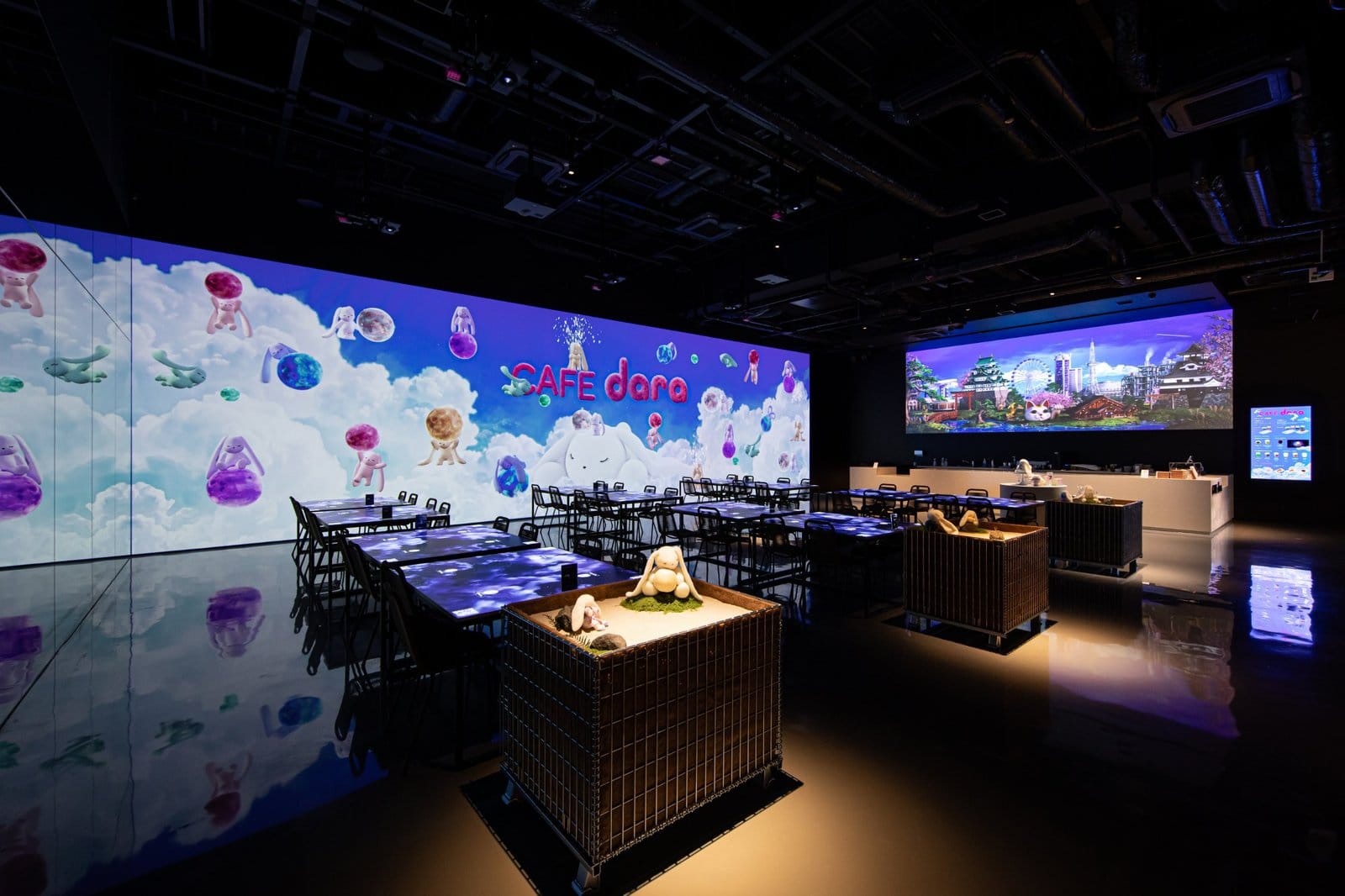
The café session takes about 15 minutes. A museum-and-café ticket costs ¥500 more than regular admission and includes one drink. On the way out, the gift shop has a booth purveying Suntory’s Chita, a single grain whisky made here in the city it’s named after.
Planning a Visit
Arte Museum Nagoya is open every day of the year until 20:00, it’s all indoors, and Shinmaiko is a straight 26-minute ride from Meitetsu Nagoya. That makes it an easy pick for a rainy weekend, or for showing visiting friends something they can’t see anywhere else in Japan.
Tickets take a little planning for a family. Two adults and two children aged 4–12 pay ¥10,400 on a weekday and ¥11,600 on weekends and holidays, before train fares. Weekdays save ¥400 per adult, and with last entry at 19:00, an evening visit fits after a day in the city. Tickets cost the same at the door and online, entry isn’t timed, and groups of 20 or more get 10% off.
The museum actively encourages photos and video, as long as there’s no flash. The galleries are dark, so staff ask visitors not to run, and children 12 and under need a guardian with them. Food and drink stay outside the exhibition rooms, gum and candy included. The museum advises care for visitors with a history of seizures, panic disorder, heart disease or stroke, and suggests that anyone who finds dark spaces difficult, including pregnant and older visitors, come with a companion.
Wheelchairs are welcome and the museum lends them free, though a few areas can’t be reached by wheelchair. Lockers in the lobby are free, and the front desk holds larger bags. There’s no museum parking, so take the train. It’s the easy way in anyway.
Make a Day of It
Shinmaiko Marine Park is about a 10-minute walk from the station. Its 400-meter Blue Sun Beach bills itself as the closest swimming beach to Nagoya. After the digital sea, the real one is free.
The Details
Arte Museum Nagoya
Address
8-22 Ose, Shinmaiko
Chita City
Date(s)
Daily, year-round
Time
10:00–20:00
Last entry 19:00
Price
Weekdays / weekends & holidays
Adults ¥3,400 / ¥3,800
Ages 13–17 ¥2,500 / ¥2,800
Ages 4–12 ¥1,800 / ¥2,000
Disability ID ¥1,800 / ¥2,000
Ages 0–3 free
Café add-on ¥500 (one drink)
Tickets
At the door or online via Fever
Same price at the door and online
No timed entry
Website
artemuseum.co.jp
Good to know
No parking; come by train
Allow about 90 minutes
Access
By Train
Meitetsu Tokoname Line from Meitetsu Nagoya (NH36) to Shinmaiko (TA16)
About 26 minutes by limited express, ¥630
West Exit, then about 3 minutes on foot
The West Exit is on the sea side of the tracks. Head for the Fine Bridge East (ファインブリッジ東) intersection. The museum is the large building on that corner, visible from the station.
Take a limited express (特急) bound for Chubu Centrair Airport. The ordinary cars need only a regular ticket or IC card. Cars 1 and 2 are reserved and need a ¥450 μ-ticket. The μ-SKY airport express usually doesn't stop at Shinmaiko, so check the departure board.
Map

Leave a Comment