
Traditional craft, contemporary lighting
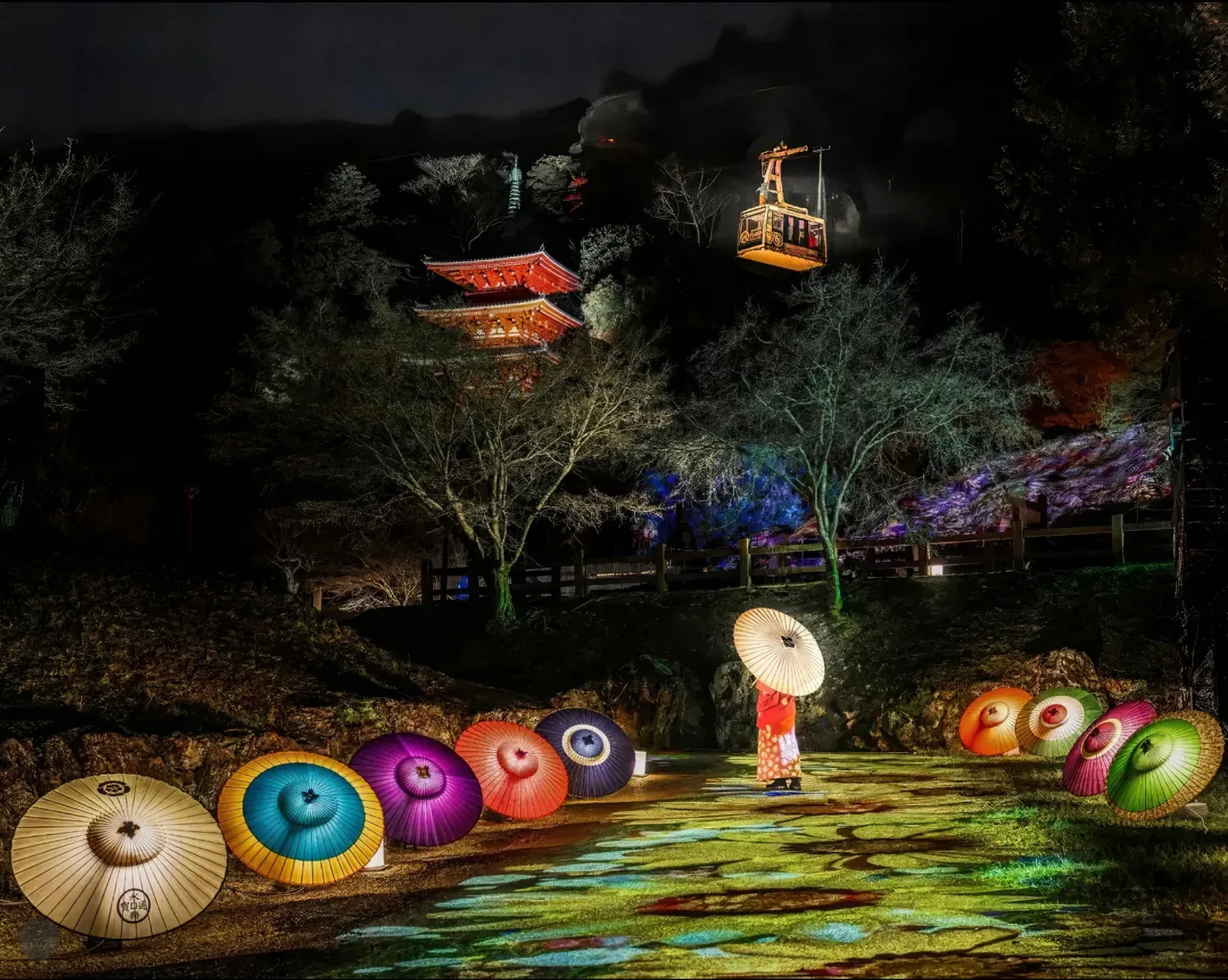
About ten meters past the entrance to Gifu Park, wagasa umbrellas appear, lit from below so the paper glows and bamboo ribs cast shadows onto the gravel. Gifu has been making these for centuries. For two weeks in January, the city sets out around a hundred of them after dark and sells tickets to walk thorough the Gifu Akari Monogatari, running January 17 through February 1.
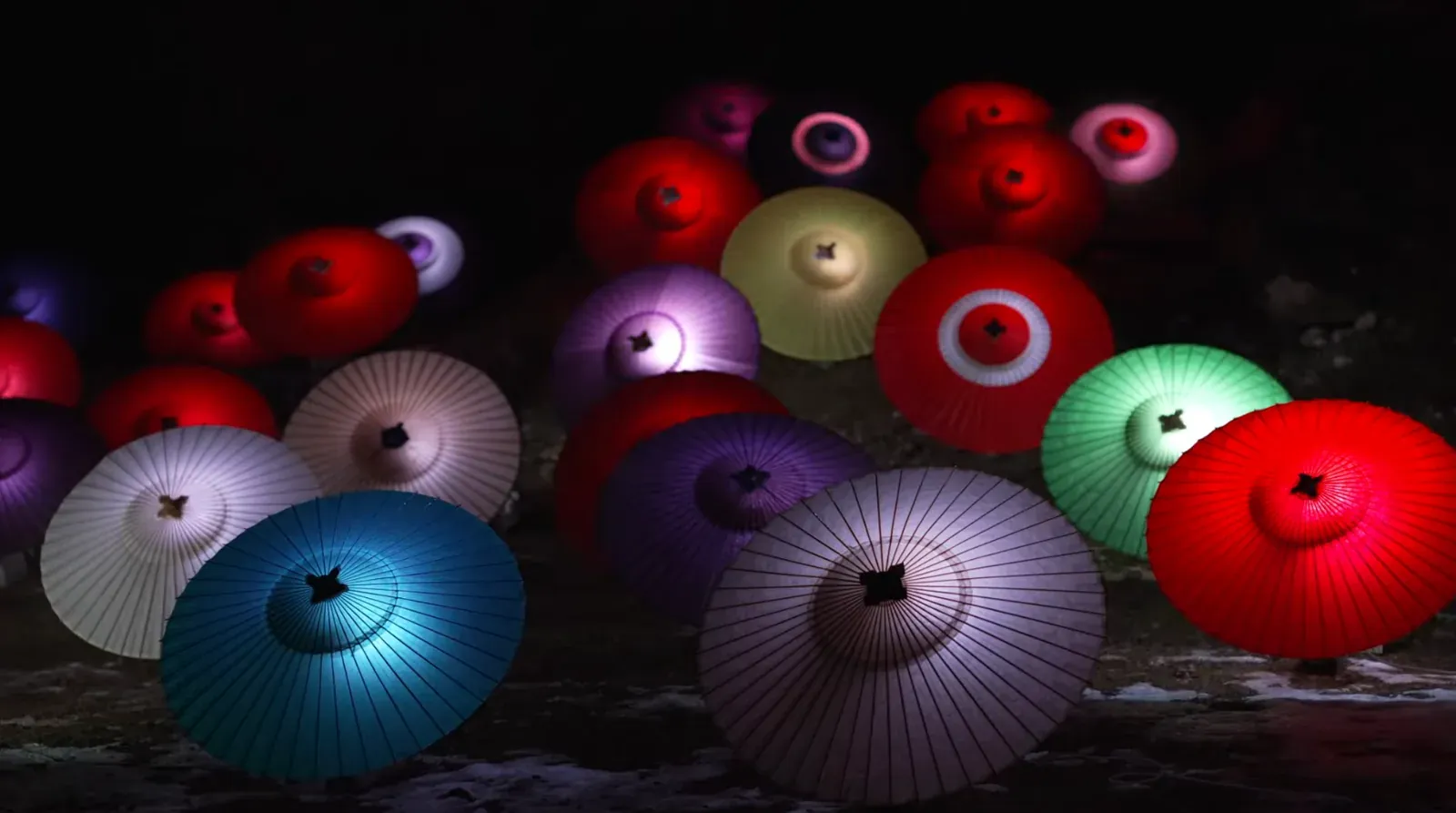
Wagasa are traditional Japanese umbrellas made from bamboo and washi paper, finished with natural oils rather than fabric. Gifu is one of the places where the craft took root, thanks to local bamboo and Nagara River washi. "Gifu wagasa" became a recognized regional product long before umbrellas became symbolic.
When they're lit from below, the structure does the work—the paper glows, the bamboo ribs show, and the object explains itself. That's why they're central here. This isn't decoration imported for effect. It's Gifu using something that is innate unto itself.
And while Monogatari usually gets translated as "story," here it's less about plot than sequence—scenes placed next to each other, meaning coming from movement rather than climax. That's how this works.
You walk, pause, move on.
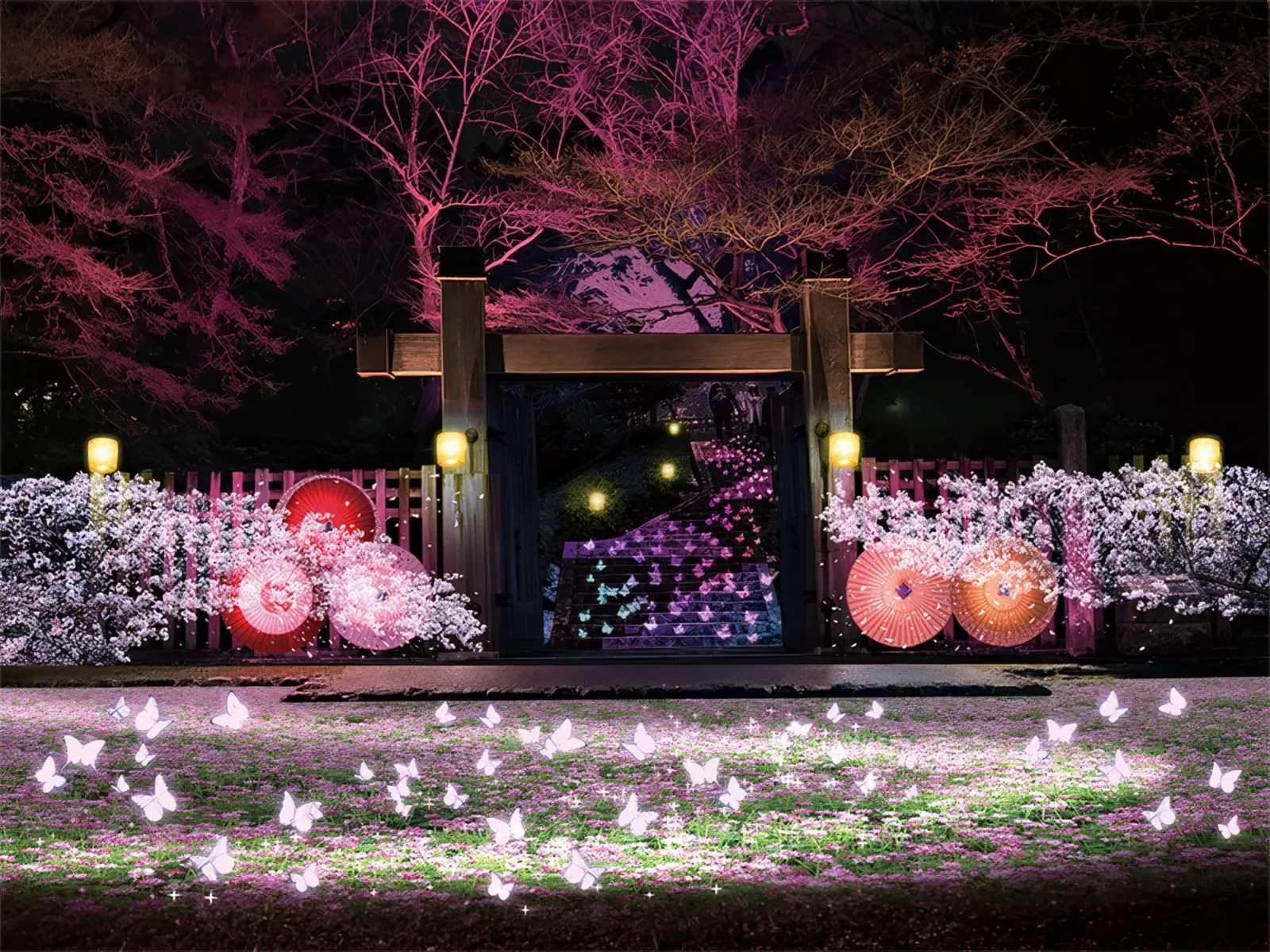
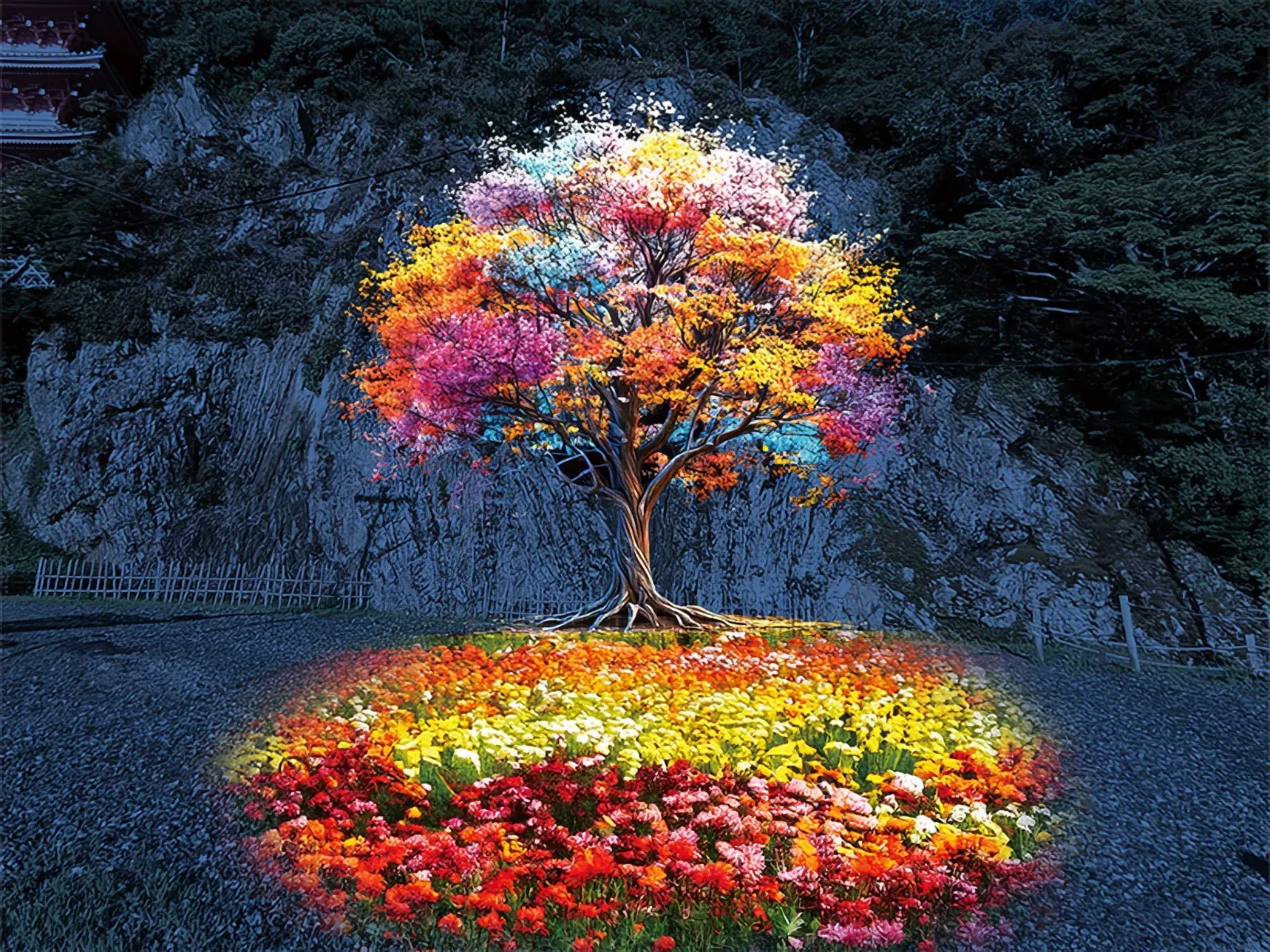
The experience stays consistent as you move through the creation. Instead of building LED tunnels or importing structures, Gifu works with its umbrellas, red chochin lanterns... the rock wall below the castle. Projection mapping is layered onto those surfaces rather than replacing them. The largest installation, Tree of Life, is mapped directly onto the cliff face. On the ground, seasonal patterns—cherry blossoms, drifting shapes—slide across the paths. The umbrellas get their own mapped sequences, ribs and shadows shifting slowly as the light cycles.
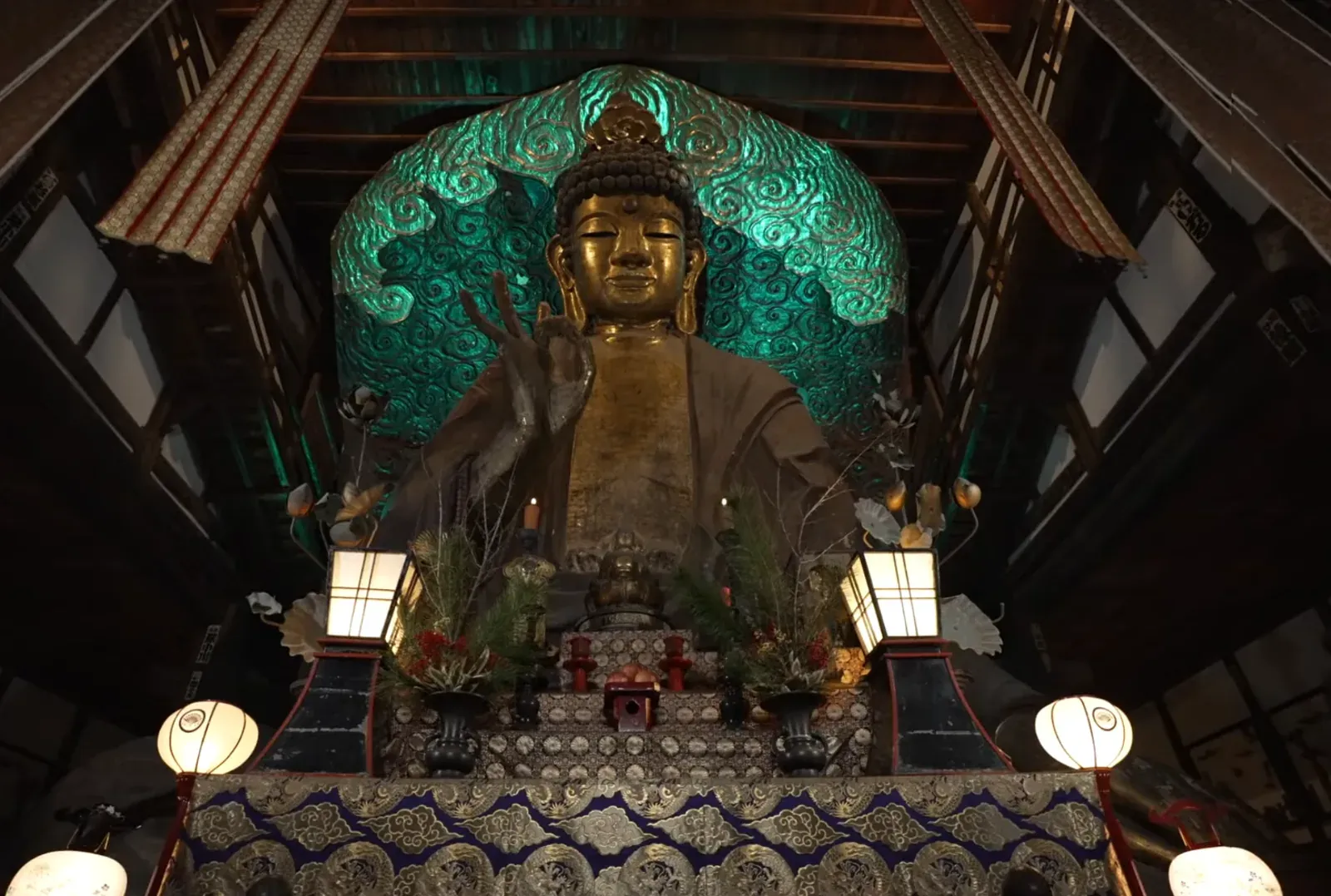
Now in it's sixth year, the refinement shows. At Shoboji Temple, the lanterns aren’t additions just as continuations. The rest of the temple stays mostly dark, so light gathers only where it’s placed. Footsteps echo on stone. Traffic hums faintly below. Above it all are the castle grounds that once belonged to Oda Nobunaga, but that history isn’t announced. It sits there alongside everything else.
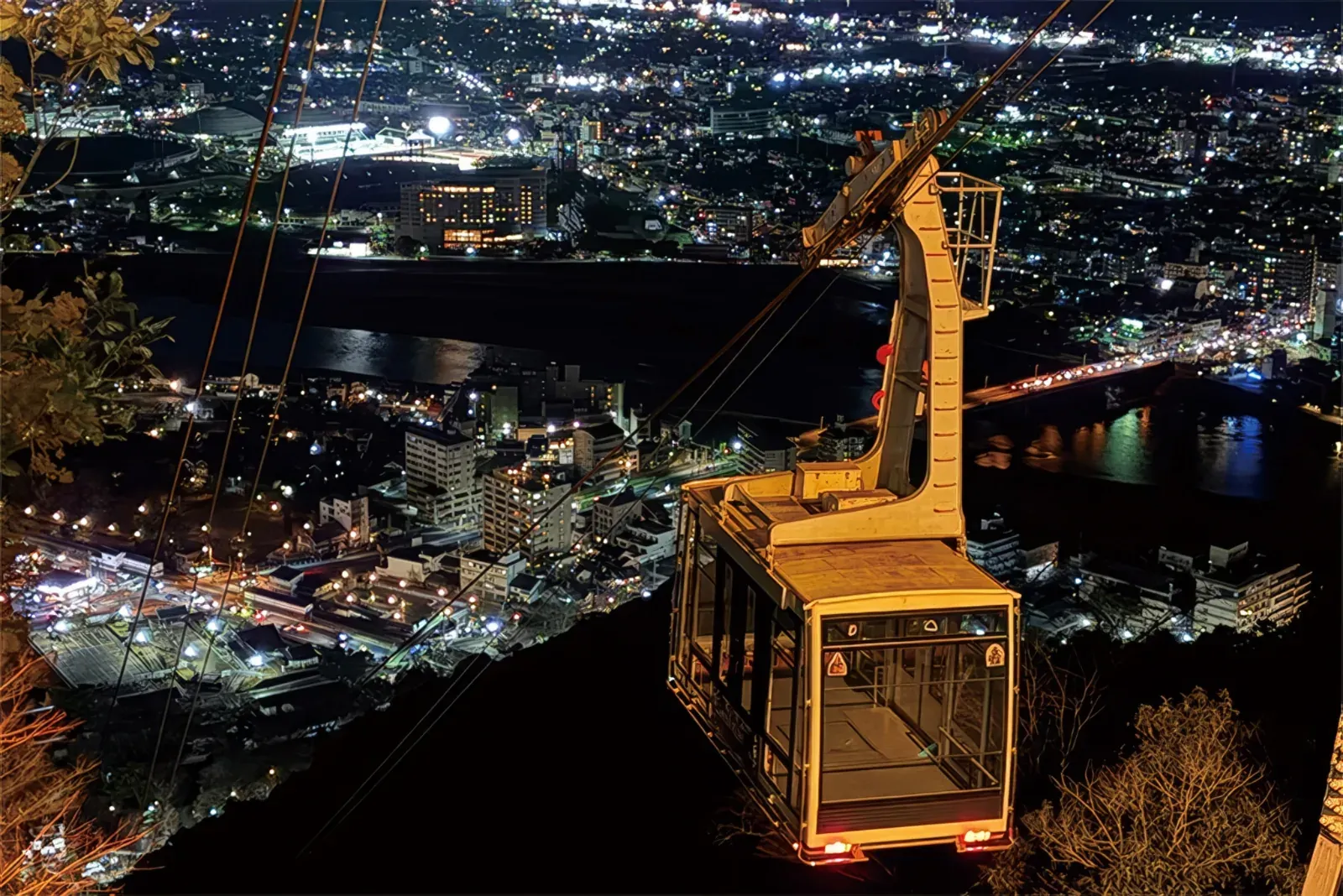
During the event, the Gifu Kinkazan Ropeway runs at night. From the top of Mount Kinka, you get a panoramic view of the city and a downward look at the illuminated park below. The castle tower above—Gifu Castle—adds a second vantage point, turning the light-up into something you can look down on as well as walk through.
Weekdays are calmer. Weekends pull more people than the space comfortably absorbs, enough that the official site warns parking can take over an hour and posts a crowd-prediction chart. There are food trucks operating during event hours. Some installations draw clusters of people holding phones. Nothing resolves into a single focal point. You drift, wait, move on.
The walk takes about forty-five minutes to an hour if you stop occasionally. January cold is part of it—hands in pockets, breath visible, the contrast between warm light through paper and winter. The projection mapping is easy to miss if you rush. Most people don’t. They slow down, notice something, then let it go.
There’s no "narrative arc" here, no crescendo. Just craft and light and cold air, arranged carefully enough that walking through feels intentional, not guided. This isn’t an attraction. It’s a sequence of moments, and then you’re finished.
This works if you’re curious how a mid-sized regional city treats its own materials when it commits to them. Gifu is twenty to thirty minutes from Nagoya on the JR Tokaido Line, and the ticket buys you a bounded evening that doesn’t try to become more than it is. It doesn’t work if weekday evenings are off the table, or if ¥1,600 for an hour feels steep.
If you go, go on a weeknight. And wear something warm.
January in Gifu means cold air and visible breath—but remember that the light matters a bit more just because of it.
The Details
Gifu Akari Monogatari 2026
ぎふ灯り物語 2026
Venue:
Gifu Park and Gifu Shoboji Temple
Official site: https://gifuakari.com/
Dates:
Jan. 17 – Feb 1, 2026
Hours:
17:30 – 21:00
(Last entry 20:30)
Admission:
Adults (university+)
¥1,600 (weekdays)
¥1,800 (weekends) advance; ¥1,700
¥1,900 day-of
Middle / High School:
¥1,300 (weekdays)
¥1,600 (weekends) advance; ¥1,400
¥1,700 day-of
Elementary & under |
Persons with disabilities:
Free
Tickets:
Advance purchase recommended. Available via Rakuten Travel, PassMarket, Asoview, and other platforms listed on the official site.
How long to allow:
45 minutes to an hour for the installations. Longer if you stop for food trucks.
Best time to go:
Weekday evenings. Weekend parking and entry lines can add significant time.
Good to know:
This is a ticketed illumination event with multiple projection-mapped installations and food trucks. It’s calmer than large-scale winter light shows, but not a quiet free walk. The wagasa umbrellas and chochin lanterns are local craft, not decorative imports.
Access
Getting there from Nagoya:
By Train (Recommended):
Take the JR Tokaido Line (Rapid or Special Rapid) from Nagoya Station to Gifu Station (about 20–30 minutes).
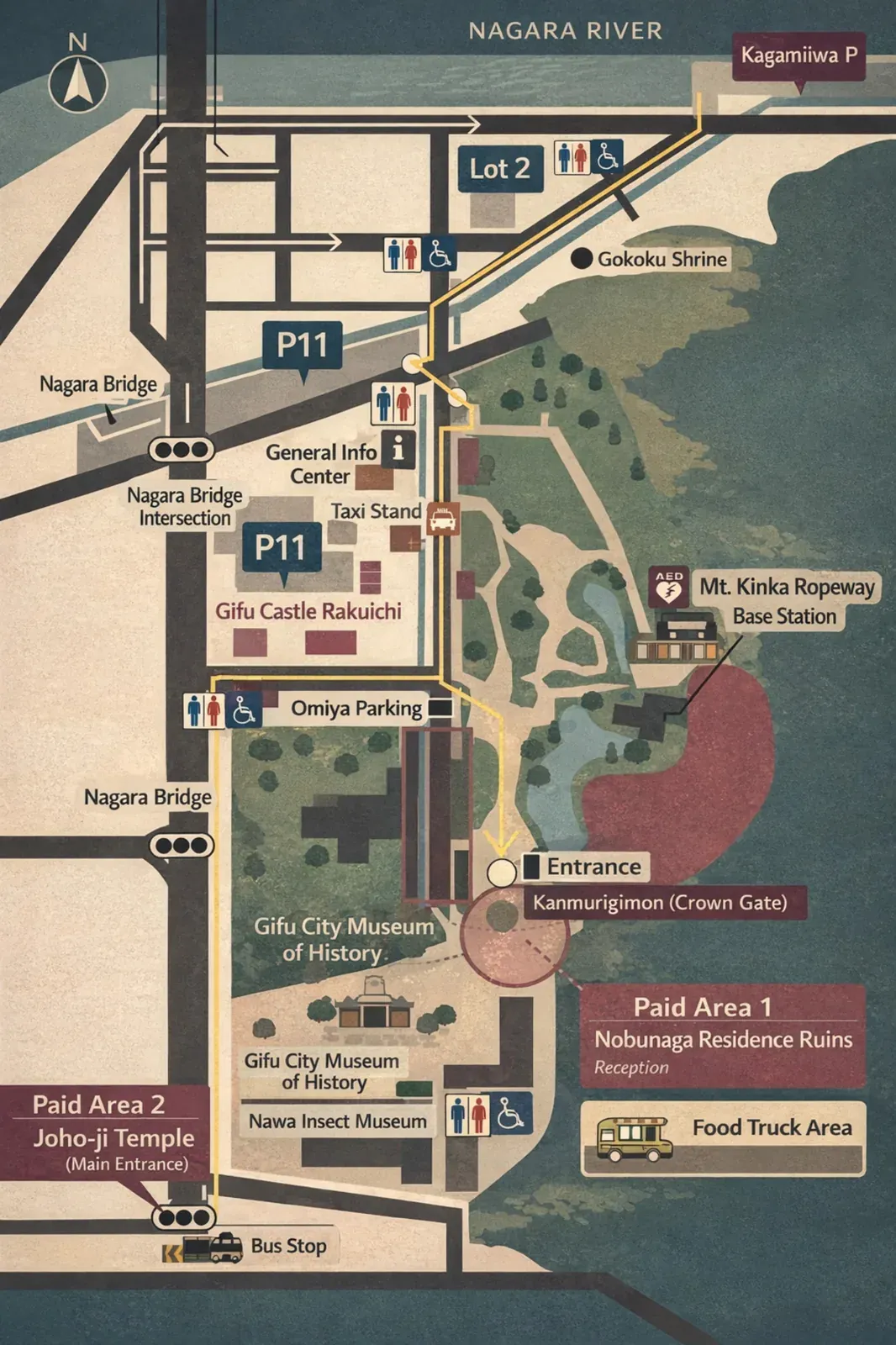
From Gifu Station North Exit, it’s roughly a 20–25 minute walk to Gifu Park, mostly uphill at the end. If you don’t feel like walking, buses bound for Gifu Koen / Gifu Castle leave from the north-side bus terminal and take about 10 minutes. (Click HERE for Bus Information in English)
Shoboji Temple is within walking distance of the park area and is usually visited as part of the same loop.
By Car:
From central Nagoya, allow 40–60 minutes by car depending on traffic.
Parking is available near Gifu Park, but weekend evenings can be congested. The official event site warns that parking waits can exceed one hour on busy days. If you’re driving, arrive early or plan for extra time.
Good to know:
Public transport is the easier option on weekends. The area around Gifu Park is compact once you arrive, but access roads narrow quickly during peak hours.
MAP
Nagoya Buzz tracks seasonal events, exhibitions, festivals, and small local things worth leaving the house for — in Nagoya and the surrounding region.
→ See what’s going on this week!
#GifuAkariMonogatari #GifuEvents #NagoyaDayTrip #JapanIllumination






Leave a Comment