

The White Day Gamble
By Emily Hayase
In the U.S., Valentine's Day is chaotic but democratic. Everyone gives something. Everyone gets something. Love is messy, but at least it's symmetrical.
Japan looked at that and said: what if we made this a two-part system where nobody's quite sure if the second part is real?
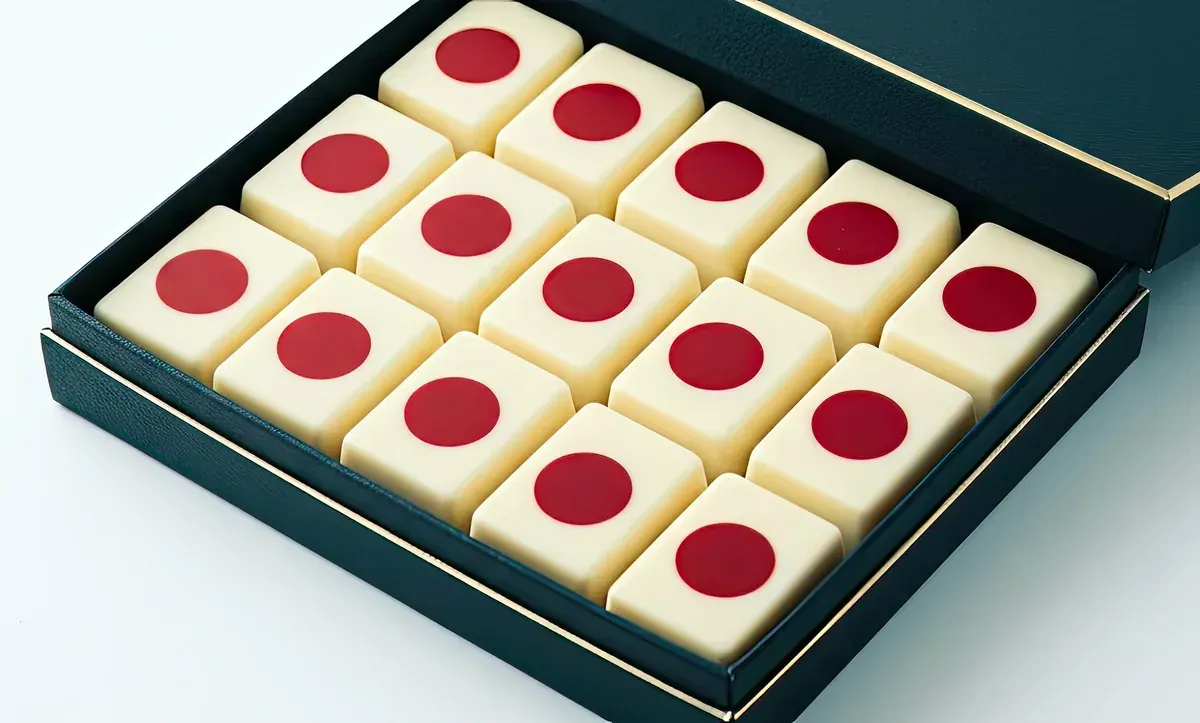
Here, Valentine's Day flows in exactly one direction. Women give chocolate to men. Not just partners. Not just crushes. Every male coworker, supervisor, manager, client-adjacent human with a desk and a pulse. This is giri choco—obligation chocolate—and it is not optional in the way things are never optional in Japan.
Then, exactly one month later, the men are supposed to respond.
White Day.
March 14.
Return gifts.
Supposed to.
Giri choco occupies the same space as romance.
Which means it leaves no room for romance at all.
This is the genius of whoever designed this system. They created a perpetual motion machine that runs on social obligation and gender dynamics:
Step One: Women go first. Lower social risk because it's "tradition." You're not confessing feelings, you're participating in culture. The obligation is clear, the expectations are known, and department stores have an entire floor dedicated to making this easy for you.
Step Two: Men receive. They now owe a return gift worth approximately three times what they received. This is not written anywhere official. Everyone knows it anyway.
Step Three: Women wait to see if the second half of the bargain actually happens.
And here's where it gets interesting: nobody knows for sure if it will.
Some men show up on White Day with thoughtful gifts. Some bring convenience store cookies. Some bring nothing and hope nobody notices. The system created an obligation but provided no enforcement mechanism.
Which means every woman who participates in February is making a gamble about March.
The department stores win twice. The chocolate companies win twice. We're all standing here wondering if reciprocity is real or just marketing copy.
You don't "decide" whether to participate. You participate by existing in a workplace with men. The only real choice is how.
Option One:
Compliant and Invisible
This is the safest route.
You buy small, clearly obligation-level chocolate. Convenience store. ¥300–¥500. You hand it out quickly. You smile. You create no ripples.
Nobody thinks you're generous. Nobody thinks you're cheap. Nobody thinks anything at all.
Come White Day, you'll probably get something back. Probably something of roughly equivalent value. Probably. This is the path of minimal investment and minimal return, and it works precisely because everyone understands the transaction.
This option costs money, but it saves energy. Which is why it's popular.
Option Two:
Strategic Spending
This is where things get interesting.
You give nicer chocolate. Not luxury, but nice. ¥1,000, maybe ¥1,500. From an actual chocolatier, not a train station kiosk.
Now you wait.
March 14 arrives and that man is standing in a department store doing calculations:
How much does he owe you?
What kind of gift won't send the wrong message?
Can he just... bring cookies and hope that's enough?
You are no longer guessing.
He is.
I'm not saying women do this intentionally. I'm saying the math exists whether you acknowledge it or not, and the system made sure women move first so men carry the uncertainty about what comes next.
Some years you get beautiful return gifts. Some years you get whatever he grabbed at the last minute. Some years you learn exactly how much attention he was paying, calculated in yen and effort.
Option Three:
Opting Out
You don't give anything.
Nothing dramatic happens. No confrontation. No meeting. No HR memo.
But March 14 arrives and you'll watch it happen anyway. Other women receive packages. Wrapped boxes appear on desks. There's that small flurry of "oh you shouldn't have" and "this is too much" that accompanies White Day reciprocity.
You receive confirmation that you opted out of a shared ritual.
Whether that feels like freedom or exclusion depends on your personality and your office. There is no neutral choice here. Only different consequences.
And here's the thing nobody tells you: some of those men seem relieved you didn't give them chocolate. Like you just freed them from an obligation they didn't ask for either.
For the men reading this: yes, you're also trapped in this system. Just differently. Women have clear instructions and social pressure. You have vague expectations and a one-month deadline to figure out what we actually want. The asymmetry is not an accident.
Option Four:
The Mistake Every Foreign Woman Makes Once
My second year in Japan, someone hinted that a male coworker "really wanted chocolate."
I misunderstood the system.
I bought chocolate that suggested interest. I wrote a note. Not dramatic—just thoughtful. The kind of gesture that in any other context would mean "I've been thinking about you."
What followed was three weeks of professional-grade hallway avoidance. He took different staircases. He suddenly had urgent business whenever I entered the break room. His desk became a place he visited briefly between meetings that didn't exist.
He hadn't wanted that kind of chocolate. He wanted chocolate the way you want a mint. Functional. Forgettable. Emotionless.
That was the moment I understood the real trap.

Giri choco occupies the same space as romance.
Which means it leaves no room for romance at all.
You cannot signal genuine interest with chocolate, because chocolate has already been claimed by obligation. The system absorbs all meaning before you ever open your mouth. Every possible gesture—expensive chocolate, cheap chocolate, handmade chocolate, chocolate with a note—already has a prescribed interpretation within the giri/honmei framework.
Lost in translation: my dignity, somewhere between the second floor and his creative route to avoid the copy room.
The Quiet Calculation Nobody Explains
You cannot give everyone good chocolate. That creates hierarchy.
You cannot give cheap chocolate to some people and better chocolate to others. That publishes the hierarchy.
You cannot opt out cleanly. That creates a different hierarchy.
So you calculate. Constantly.
Standing in Matsuzakaya's chocolate section in early February doing math. If I give him ¥500 chocolate but her desk-neighbor gets ¥800, does that send a message? If I give the manager ¥1,200 is that appropriate acknowledgment of hierarchy or is it trying too hard? If I give my actual work friends slightly better chocolate will everyone else notice?
This is emotional labor disguised as tradition.
Meanwhile men stand around wondering why you seem stressed about candy.
The moment you understand the mechanics—that February obligation creates March uncertainty, that the system benefits department stores more than relationships, that you're publishing social hierarchies in cacao percentages—you get to decide which parts serve you.
White Day: The Return Performance
March 14 arrives and the uncertainty resolves.
White Day isn't generosity. It's reciprocity enforcement. Men perform attentiveness. Women receive proof of whether they were noticed at all.
Some men take this seriously. They remember what you gave. They calculate the three-times return. They buy something thoughtful—hand cream, nice cookies, something that suggests they paid attention.
Some men buy the same thing for every woman in the office. Efficient. Fair. Utterly meaningless.
Some men forget entirely and show up empty-handed with an apology. You learn exactly where you ranked in his mental hierarchy.
Everyone pretends this is charming.
If you wanted his attention, this feels flattering. If you didn't, it feels like another obligation you didn't ask for. Either way, the system keeps moving.
I know women who track the return ratio year over year. Not obsessively—just noticing. Did he remember this year? Was it more or less than last year? What does that mean about our working relationship?
I also know women who skip the whole thing now and report feeling lighter in February and invisible in March.
Both are valid responses to a system nobody designed for your benefit.
What Actually Matters
Once you understand the rules, the pressure changes.
Some people play the game fully. Chocolate in February. Returns in March. A neat little loop of obligation that renews annually. It works for them. The predictability is comforting.
Some couples skip the script entirely and exchange something strange and specific and personal—because meaning only exists outside the system.
My best Valentine's Day in Japan happened after a text-message breakup. I spent February 14 returning a gas burner to my ex. We got lunch. Without the performance of romance we actually talked like humans.
The point isn't rebellion.
The point is clarity.
This tradition works because it assumes you won't question it. It assumes you'll participate because everyone else is participating, and opt-out feels harder than compliance.
The moment you understand the mechanics—that February obligation creates March uncertainty, that the system benefits department stores more than relationships, that you're publishing social hierarchies in cacao percentages—you get to decide which parts serve you.
And which don't.
Love might speak chocolate. But obligation speaks it louder, and the return policy is unclear.
Happy Valentine's Day. May your March 14 bring clarity, or at least decent cookies.

Nagoya Buzz publishes weekly guides to events, exhibitions, food, and the small local things that make living here easier (and occasionally stranger.)
→ See what’s happening in Nagoya this week!






Leave a Comment