
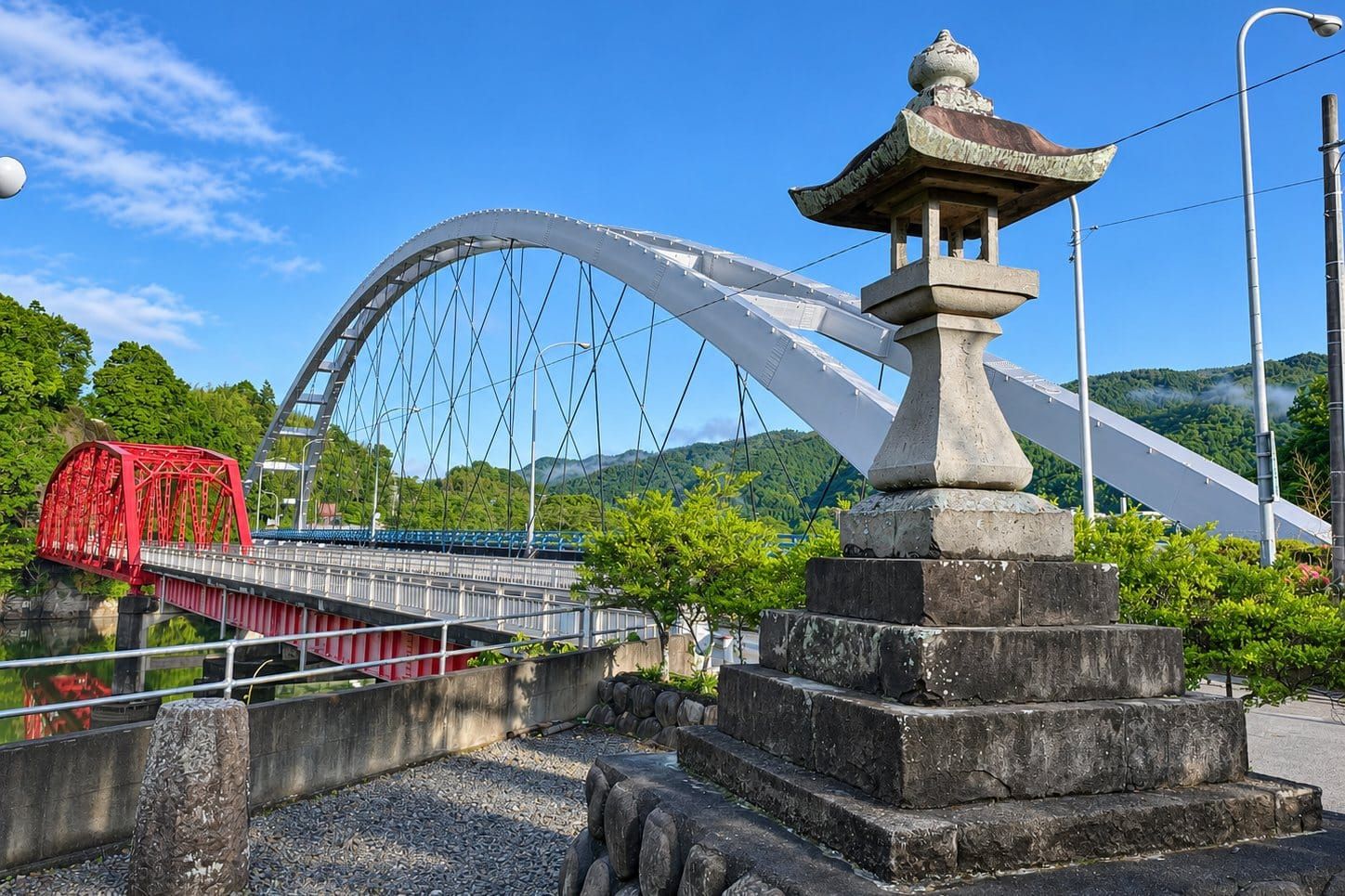
An old stone lantern stands beside the Kiso River at Kurose Port in Yaotsu. Behind it, a red bridge crosses the water, dwarfed by the broad white arch of another.
The lantern looks slightly out of place. Until you learn what it was doing there.
For centuries, this stretch of river was a road. Timber came down from the mountains and boats carried salt and supplies back up, and Kurose Port was where much of it changed hands.
Most of that traffic is long gone. A Gifu Prefecture tourism project, planned by Takako Muto of POUSSE and Sustainable802, wants to show international residents and visitors what's left of it, and is recruiting a small group to help test a new walking tour.
The Offer
Two full-day tours run on Sunday, December 13, and Friday, January 15. Both are free, including guides, lunch, transportation during the tour, and a small souvenir. You pay only for your own travel to and from the meeting point.
There's a reason it's free. The program is still being developed, and the organizers want participants to walk it, ask questions, and tell them what works. Everyone completes a questionnaire afterward. An optional feedback session follows on January 16, in person or online.
There are eight places in total across both dates, not eight per date, so this isn't exactly an open invitation to the entire population of Nagoya.
Timber, Salt, and a Lantern
The Kiso mountains produced some of Japan's most prized hinoki cypress, the wood of castles and temples. Getting it out of the mountains was one thing. Getting it to the people who needed it was another.
The answer was the river. Logs were floated down one at a time, caught at collection points, and bound into rafts for the trip toward Inuyama and Nagoya. One of these was Nishikori Tsunaba, near present-day Yaotsu, where the Owari Domain set up an office in 1665. Records put the staff at 138 officials and the traffic at up to 300,000 logs a year.
That's a great many trees passing through one stretch of river.
Goods moved the other way too. Salt came upriver to Kurose Port, where merchants and warehouses lined the streets, then went on into the hills along the Kurose Road, sometimes called a salt road.
The lantern went up in 1822. Boatmen called it a lighthouse, and their families took turns keeping it lit.
Railways, roads, and eventually dams ended the river trade. The lantern stayed.
A Boat in the Streets
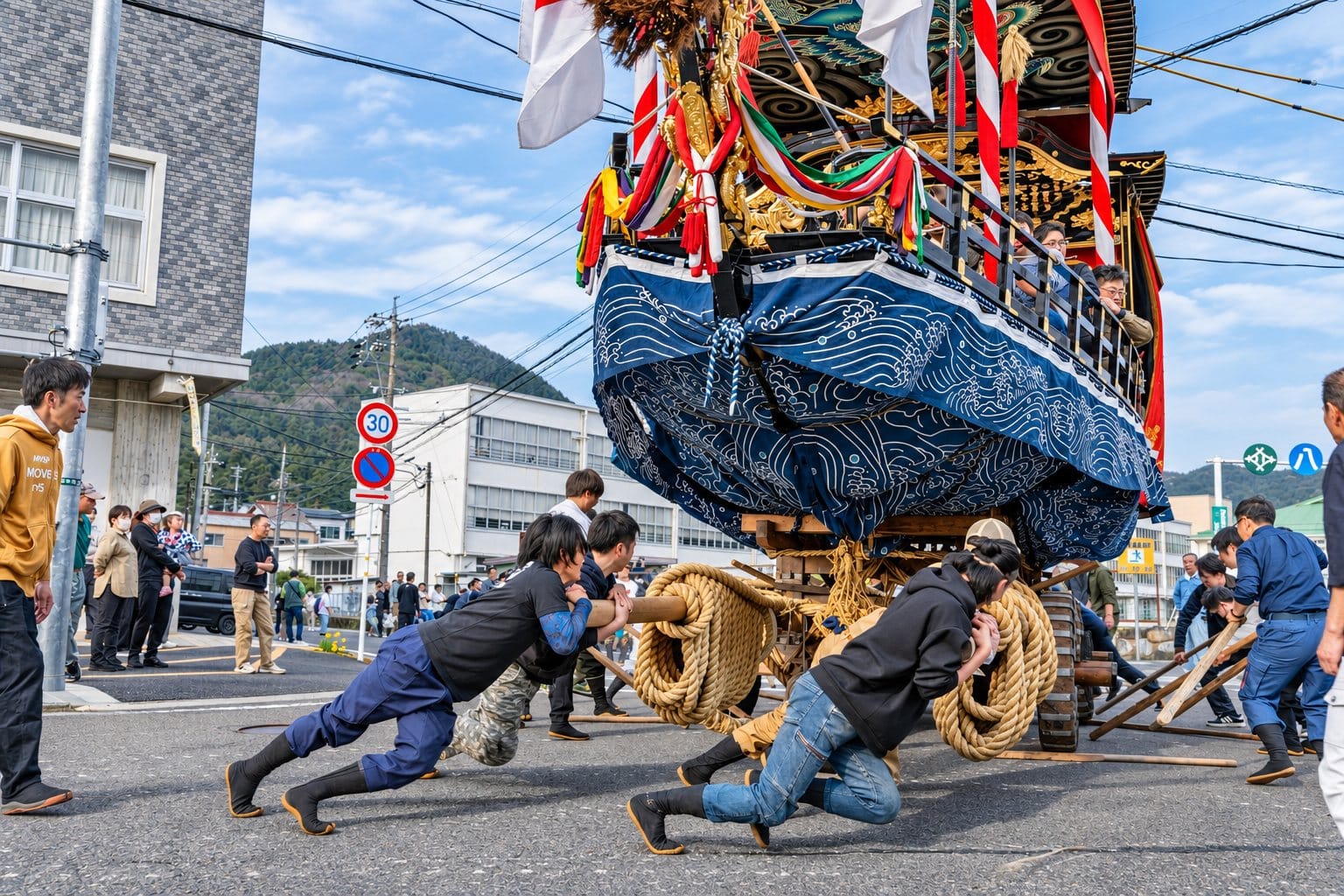
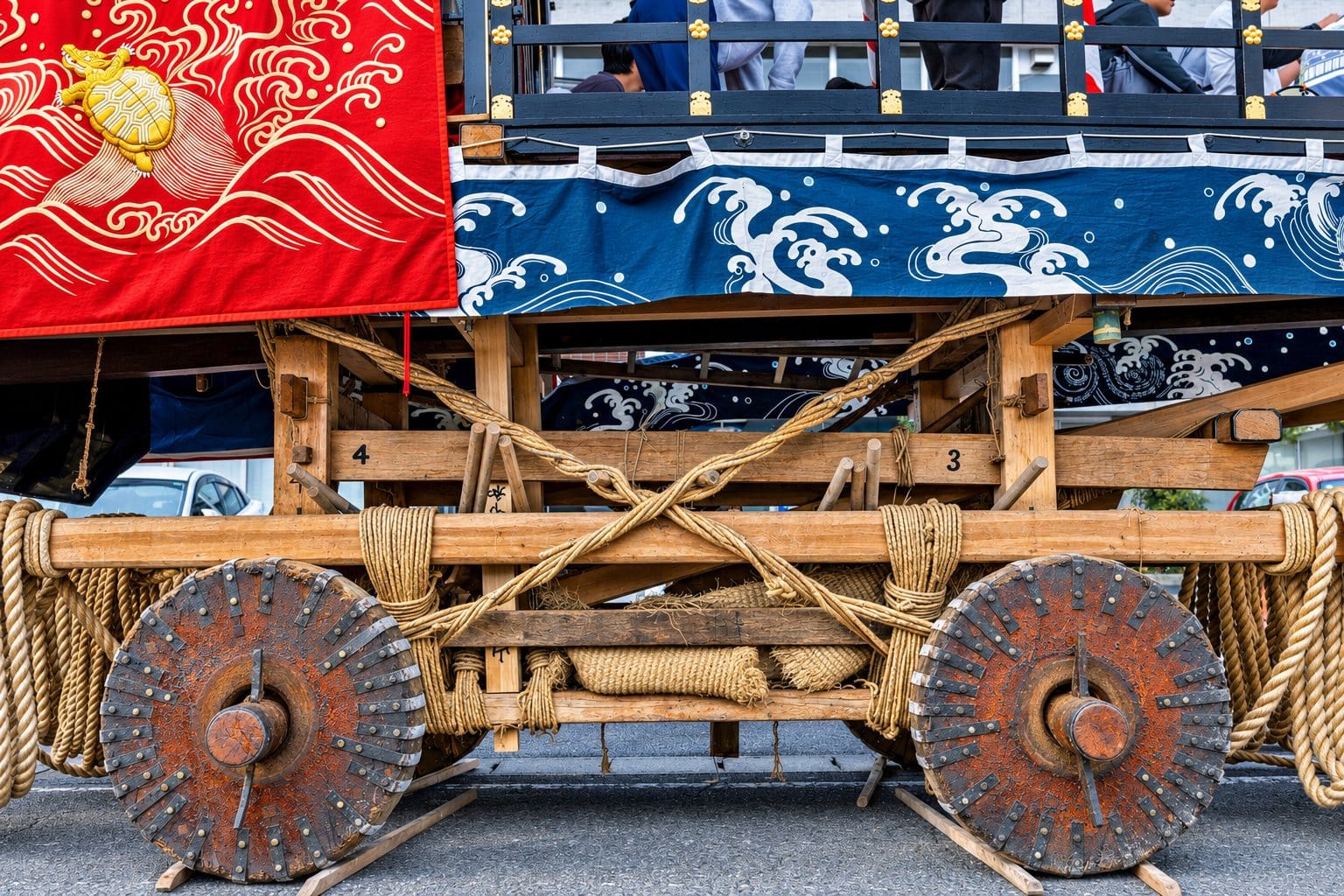
Every April, Yaotsu's Danjiri Festival hauls three enormous wooden floats through town. Each is built as part of a boat, and brought together they form a single vessel. Teams lever them around corners with long wooden poles, which must take a fair amount of practice.
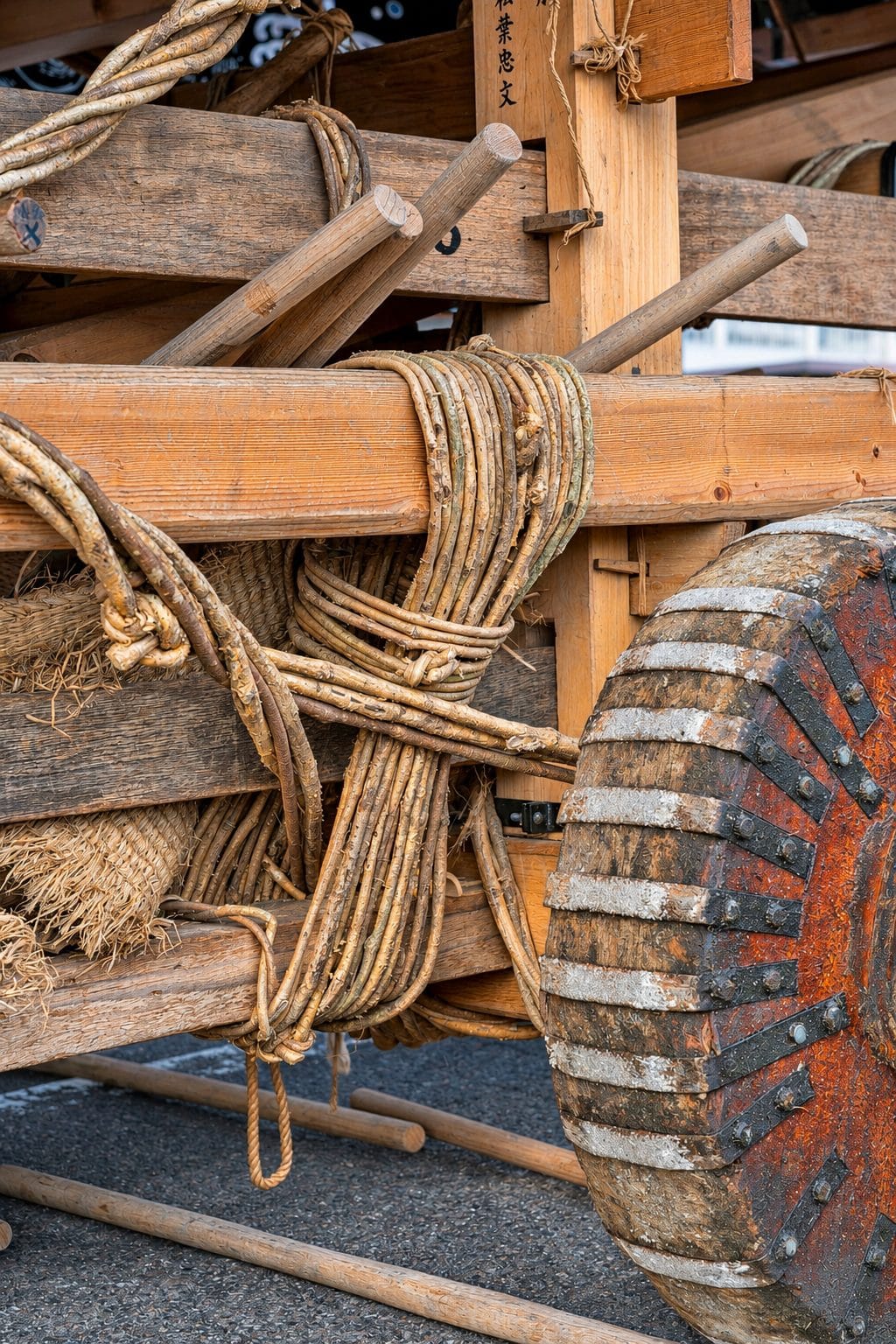
The frames use no nails. The joints are bound with thick wisteria vine, renewed every year before the festival. One theory holds that the technique came from the way raft crews once bound timber on the Kiso. Nobody has proven it, but it's hard to look at the bindings and dismiss the idea.
The Day
You meet at Meitetsu Inuyama-Yuen Station at 08:25 and walk across Inuyama Bridge. The morning follows the river's Japan Line section, then stops at the Minokamo City Museum, where models show how the rafts and riverboats worked.
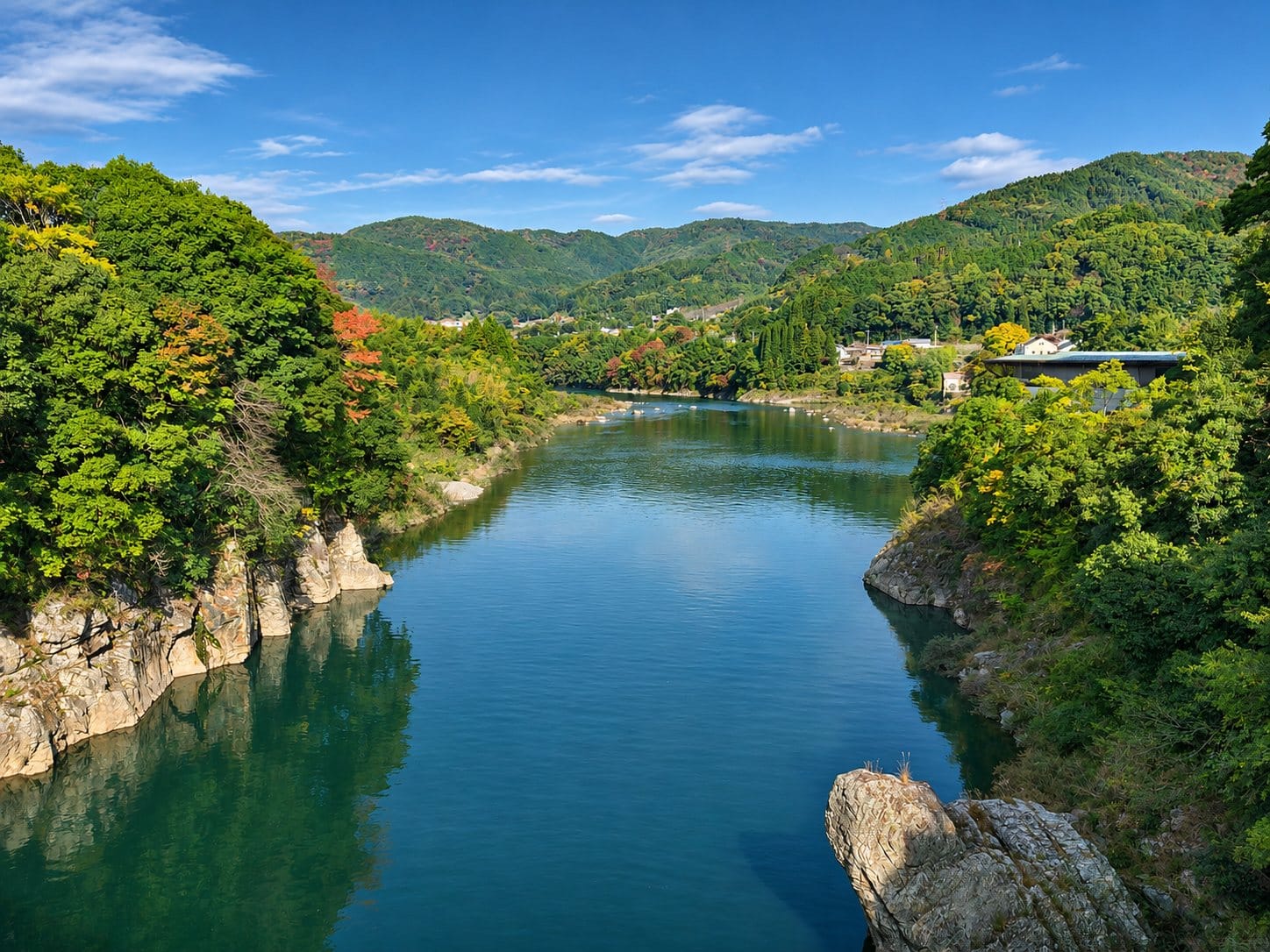
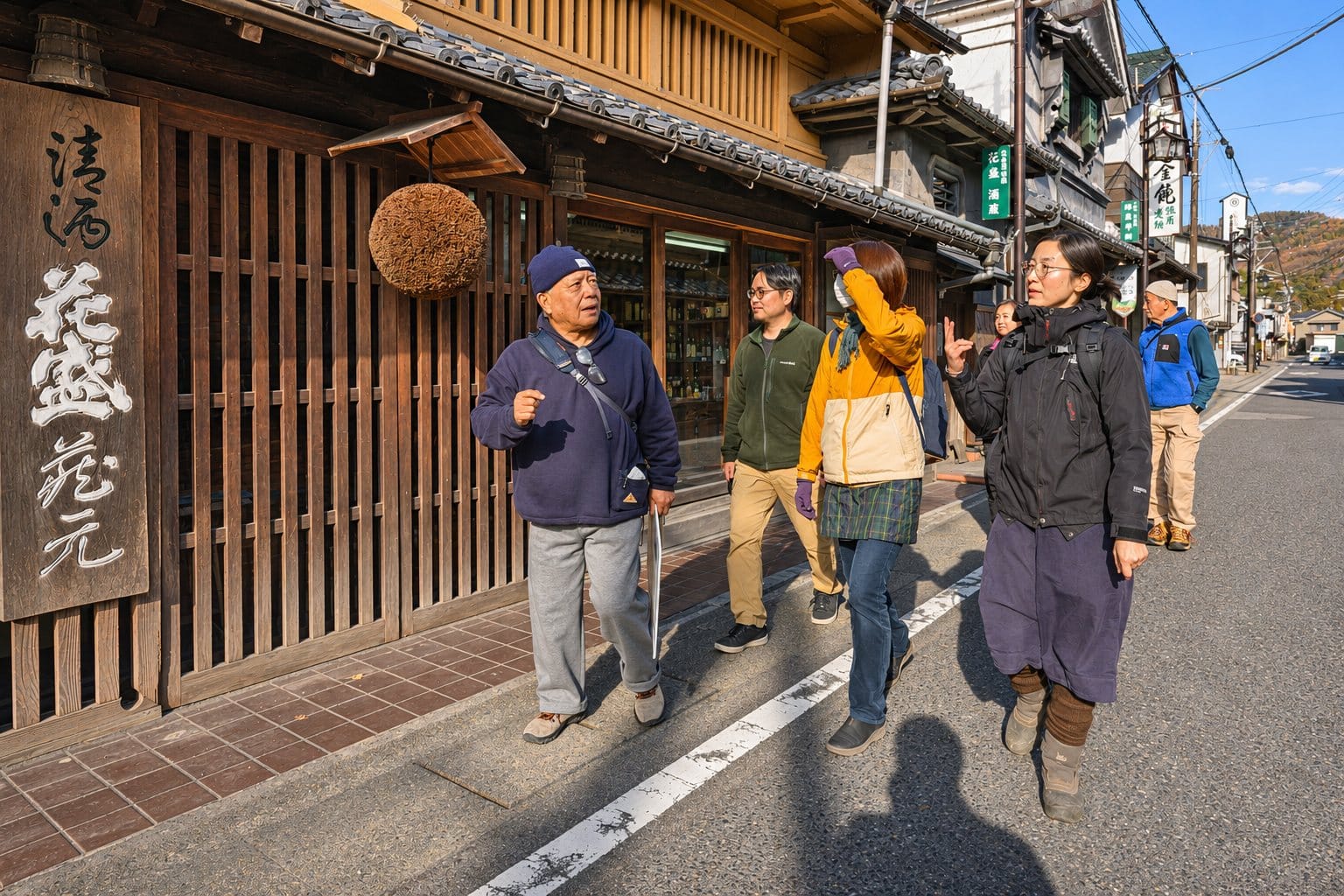
After lunch the route heads into Yaotsu. You visit the old Nishikori timber yard and walk through Sōsuikyō Gorge, where the river runs between steep wooded slopes and bare rock. Then come the Danjiri storehouse, Kurose Port, and the old streets of Honmachi. The day ends at Kuramoto Yamada, a sake brewery founded in 1868, with a taste of the water that goes into the sake, and the sake itself for those who'd like some. You're back at Inuyama-Yuen around 17:30.
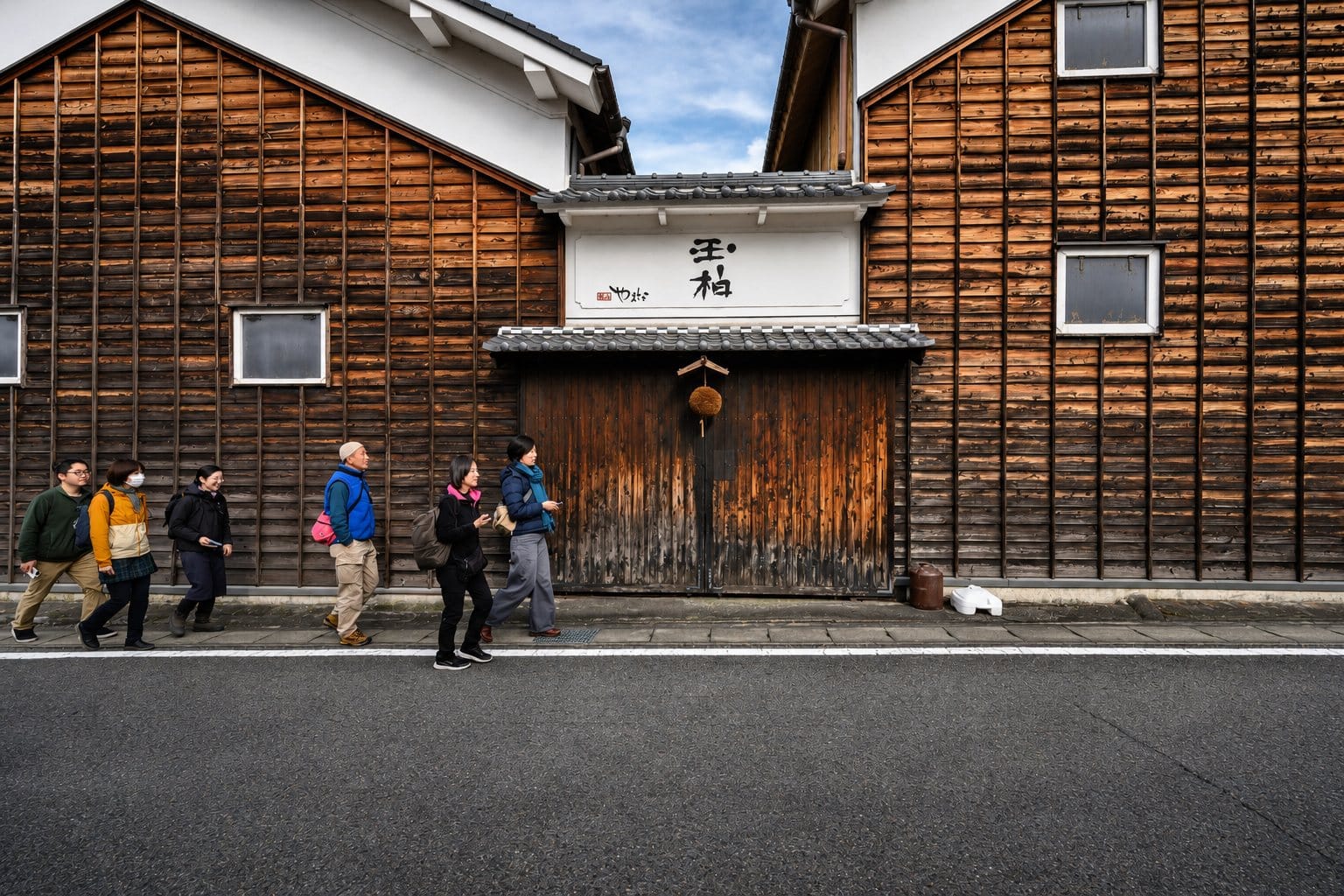
It's a full day with several walking sections, one of them 3.4 kilometers. Wear proper shoes and dress for winter.
The organizers are also testing multilingual smartphone guides and AI-assisted voice translation, so visitors who don't speak Japanese can follow the guides and talk with them. Whether it actually helps is part of what they want to hear from you.
The rafts are long gone. The lantern is still there, and so are people willing to show you around.
Tour information and registration
The Details
Kiso River Basin Culture Monitor Tour
Venue
Kiso River, Inuyama to Yaotsu
Meeting point
Inuyama-Yuen Station (IY16)
Dates
Sun, Dec 13, 2026
Fri, Jan 15, 2027
Time
08:25–17:30 (approx.)
Price
Free, lunch included
You pay travel to the station
Places
8 in total, both dates
Who can join
Non-Japanese nationals
Registration
Required, in advance
Questionnaire after the tour
Feedback session (optional)
Sat, Jan 16, 2027, from 10:00
In person or online
Address
24-1 Zuisenji, Inuyama
Organizer
Gifu Prefecture
Website
Tour info and registration
Good to know
Operated by C・I・T Co., Ltd.
Optional extras may cost money
Access
By Train
Meitetsu Inuyama Line from Meitetsu Nagoya Station (NH36) to Inuyama-Yuen Station (IY16), about 30–35 minutes. The tour meets at 08:25, so aim for a train that gets in with time to spare. Confirm meeting instructions with the organizer after registering.
 Nagoya Buzz
Map


Leave a Comment