
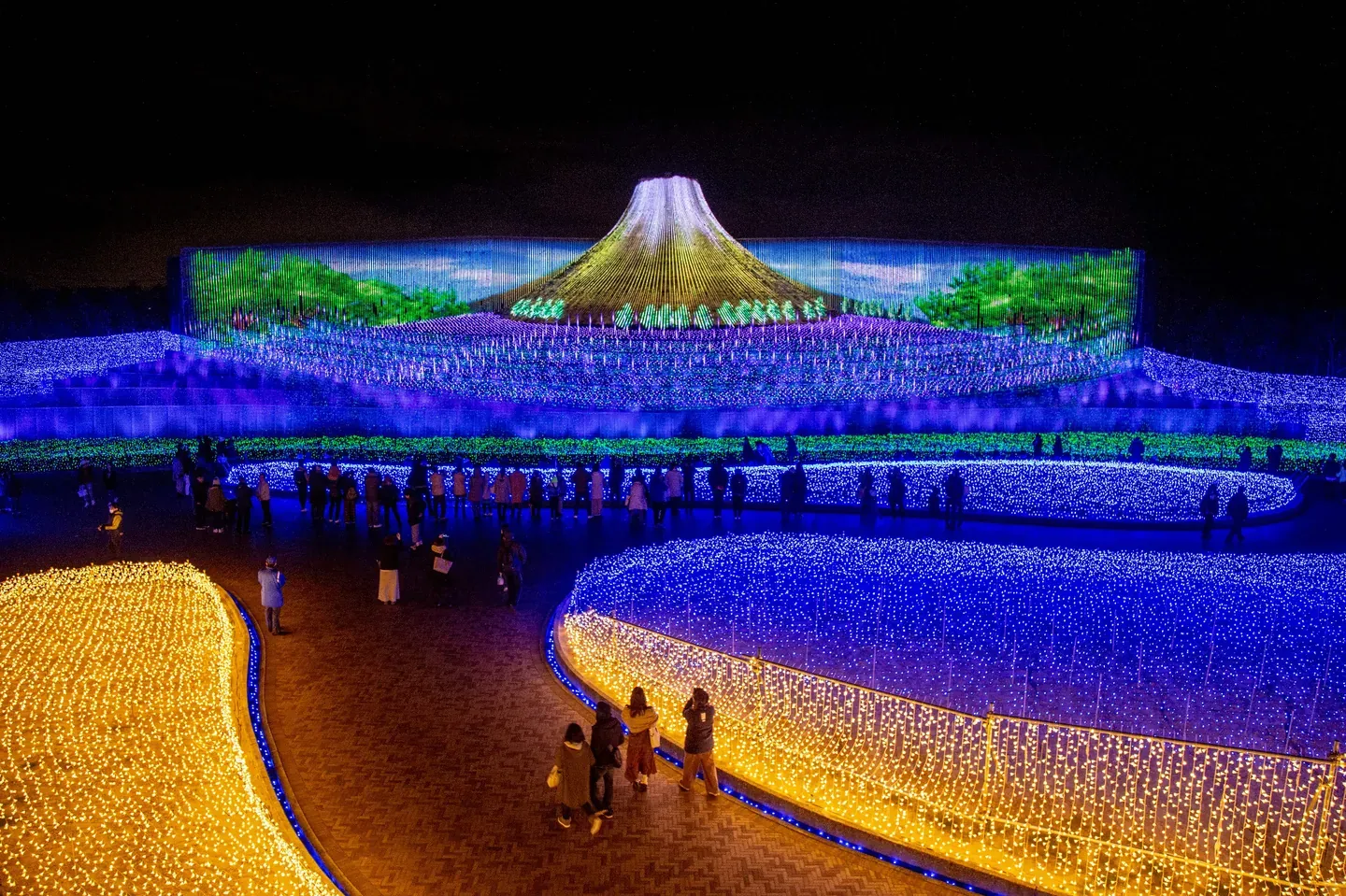
What Nabana no Sato Is Really Like
Nabana no Sato occupies that peculiar zone of Nagoya consciousness — technically in Mie Prefecture, functionally part of the city's orbit, perpetually on everyone's "maybe this year" list. The winter illumination runs from October through May, which means right now, in the heart of winter, you're hitting peak season. The cold makes the lights sharper. The crowds, paradoxically, get slightly more manageable after New Year's hysteria fades.
Here's what nobody tells you: the forty-minute journey from Nagoya Station feels longer in winter, especially when you're wedged into a bus with sixty other people all clutching identical advance tickets. But then you round that last curve into Kuwana, and the glow starts bleeding through the bus windows, and suddenly everyone goes quiet in that particular way Japanese crowds do when something's about to happen.
What You're Actually Getting Into
Nabana no Sato is the illumination wing of Nagashima Resort — think of it as the contemplative sibling to the roller coasters and outlet malls. During illumination season, the botanical garden transforms into something else entirely. We're talking millions of LEDs arranged into tunnels, landscapes, and this season's centerpiece: a massive animated Mount Fuji that cycles through the seasons every few minutes.
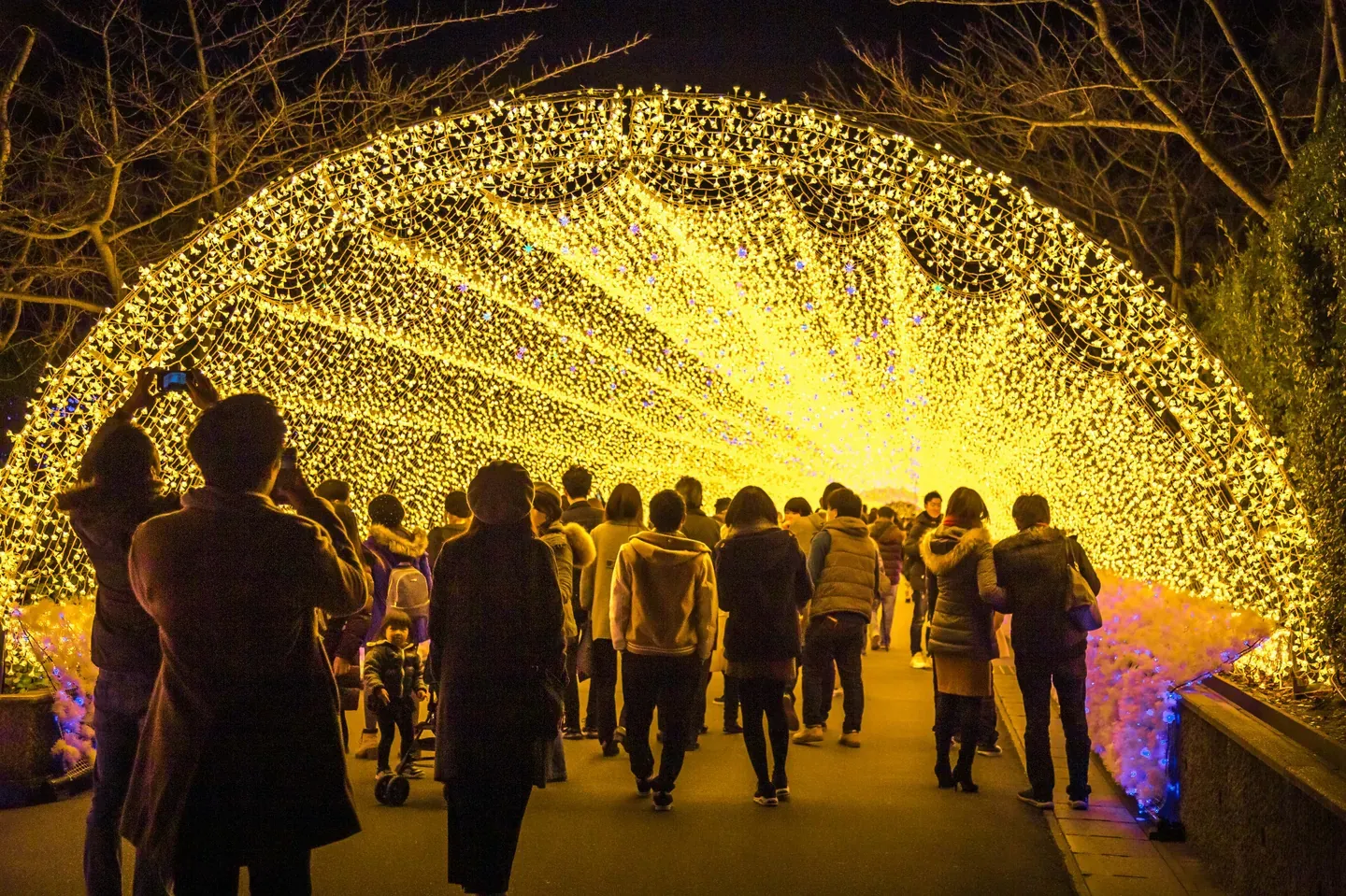
The Nabana no Sato winter illumination registers differently in person. Photos flatten it into Instagram fodder. Standing inside the main tunnel — 200 meters of warm white lights overhead — does something to your depth perception. Kids go silent. Adults forget to take photos for whole seconds at a time.
Why People Keep Going Back
The easy answer: it changes every year. The real answer: it's one of those rare experiences that works whether you're eight or eighty. Couples treat it like a pilgrimage. Families use it as reliable magic when the grandparents visit. Friend groups go ironically, then spend two hours genuinely absorbed.
The gardens themselves — the daytime attraction — stay open during illumination season. You can arrive early, walk the greenhouse, eat decent pasta at the Italian restaurant, then watch the whole place transform at dusk. Or you can do what most locals do: show up at 17:00, catch the sunset transition, and be heading home by 20:00.
The Timing Game
Weekday evenings through mid-February offer the sweet spot — cold enough to thin crowds, clear enough for sharp visibility, late enough in the season that the installations are fully dialed in. Avoid Saturdays unless you enjoy competitive parking. Valentine's Day becomes a human traffic jam.
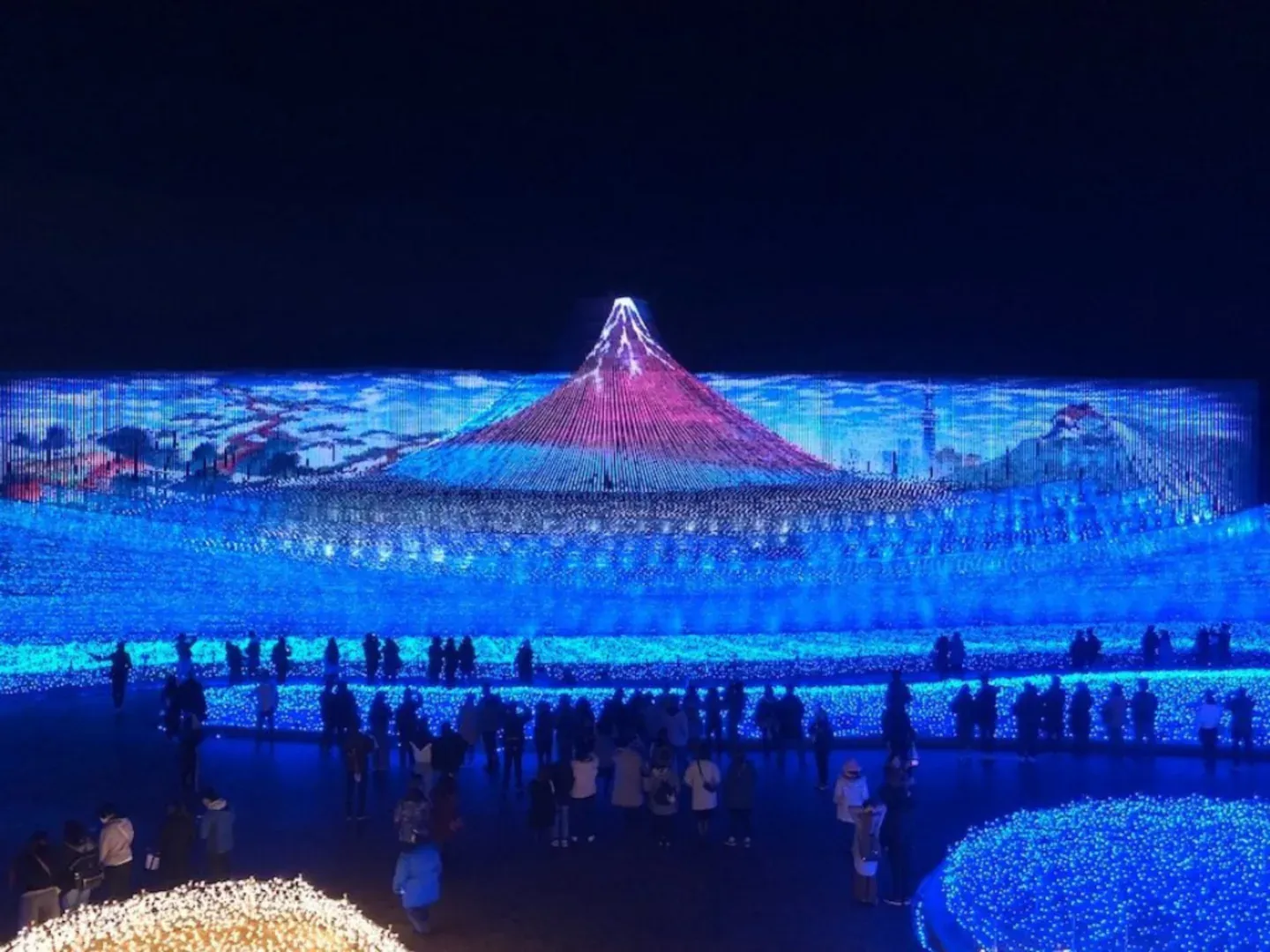
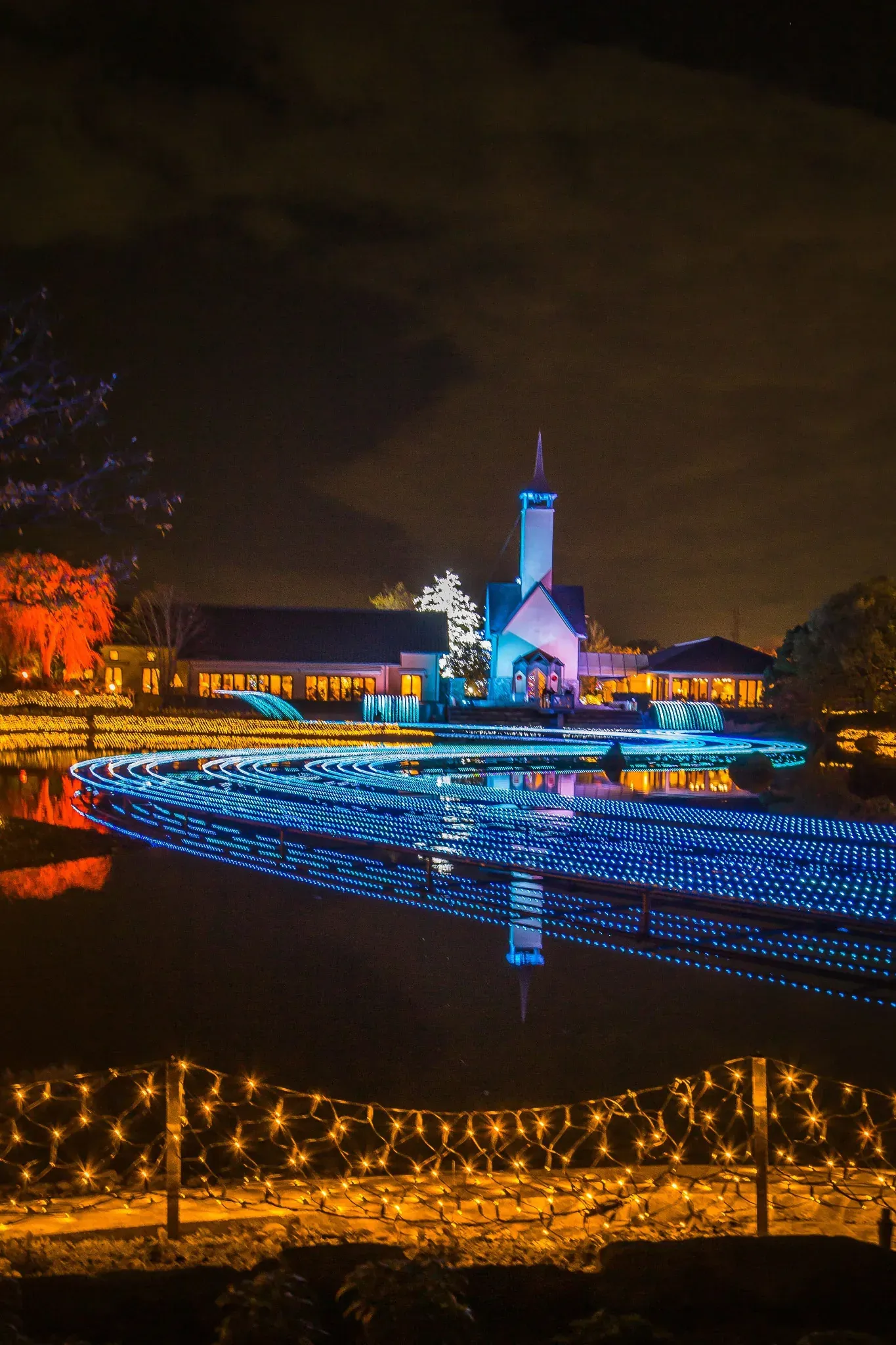
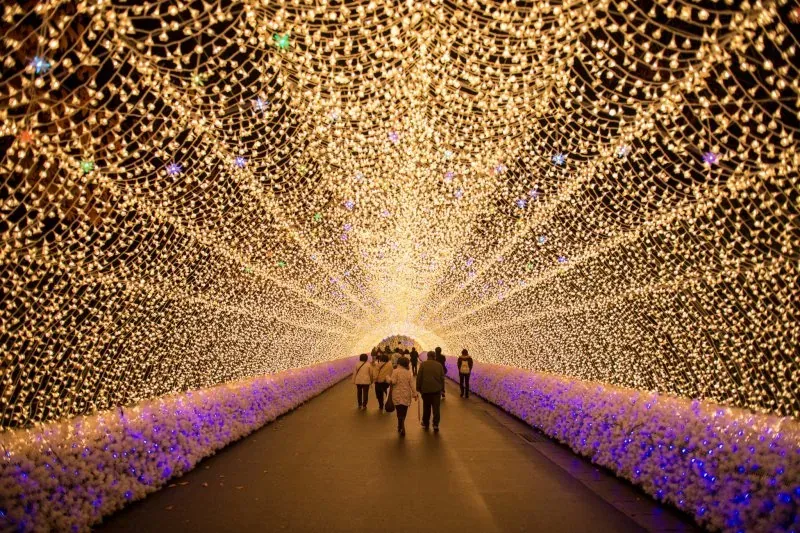
The winter illumination near Nagoya technically starts at dusk (around 17:00 in January), but the real moment happens about twenty minutes after official sunset when the residual daylight dies completely and the LEDs take over. Weather matters more than you'd think — a clear, windless night after rain makes everything unnaturally vivid.
What Changes, What Stays
The Tunnel of Light — the signature arch you've seen in every photo — stays constant. Everything else shifts. This year's Mount Fuji installation uses motion-mapping to show volcanic formation, seasonal changes, and cultural significance. Last year featured global landmarks. The year before that, Japanese landscapes.
The secondary gardens rotate through seasonal themes. January means plum blossoms under lights. March brings early cherry blossoms. May closes with wisteria. The begonia garden stays heated year-round — a reliable escape when your fingers go numb.
The Quiet Reality
Nabana no Sato occupies a strange position in Nagoya's recreational hierarchy. It's neither theme park nor garden, neither purely tourist trap nor purely local favorite. It exists in that middle space where marketing spectacle meets genuine visual impact.
You go because January evenings in Nagoya can feel long. Because sometimes scale and repetition — millions of identical points of light — create their own kind of meditation. Because your visiting relatives need something to do, or your kids remember last year, or you're curious whether Mount Fuji really does look better in lights than in daylight.
It's not life-changing. It's not unmissable. It's a well-executed winter lights display that knows exactly what it wants to be, forty minutes from your apartment, open until 21:00 on weeknights when you need to get out of the city without really leaving.
The Details
Nabana no Sato
Winter Illumination
Venue:
Nabana no Sato (Nagashima Resort)
Dates:
Mid-October through late May
Times:
Opens: 09:00
Illumination from dusk
(around 17:00 in January)
Closes: 21:00
(22:00 on weekends)
Price: ¥2,500
(includes ¥1,000 voucher for use inside)
Check website for current pricing and seasonal variations
Address:
270 Nagashimacho Komae
Kuwana, Mie
Website: nagashima-onsen.co.jp
Access
Getting to Nabana no Sato from Nagoya Station is straightforward once you know one key thing: it has its own dedicated entrance and ticket gates, separate from Nagashima Spa Land and the outlet mall.
NOTE: You do not enter through the theme park.
By Direct Bus
Meitetsu Bus from Nagoya Station (Meitetsu Bus Center, above Meitetsu Department Store) runs direct to the Nabana no Sato entrance.
¥1,900 round trip, includes an admission discount. Around 40 minutes each way. Seats book up quickly on weekends.
By Train and Bus
Take the Kintetsu Nagoya Line to Kuwana Station (¥450, about 25 minutes), then transfer to a local bus bound for Nabana no Sato (¥220, about 10 minutes). Slightly more hassle, but more flexible if you’re avoiding peak bus times.
By Car
Driving works if you’re comfortable with Japanese highway tolls. Follow signs for なばなの里 (Nabana no Sato), NOT Nagashima Spa Land. Parking is adjacent to the Nabana no Sato entrance and clearly separated from the amusement park. Lots are large but fill in waves — arrive before 16:00 or after 18:30 to avoid the worst congestion.
Nagoya Subway Map
Check out our handy guide to using the Nagoya Subway
MAP
What else is going on in Nagoya?
Nagoya Buzz publishes weekly guides to events, exhibitions, food, and the small local things that make living here easier (and occasionally stranger).
If you enjoyed this, our Events page highlights other small, seasonal things happening around Nagoya right now.
→ See what’s happening in Nagoya this week
Nabana no Sato
Winter Illumination
Mie Prefecture
Nagoya Day Trip
Japan in Winter





Leave a Comment