
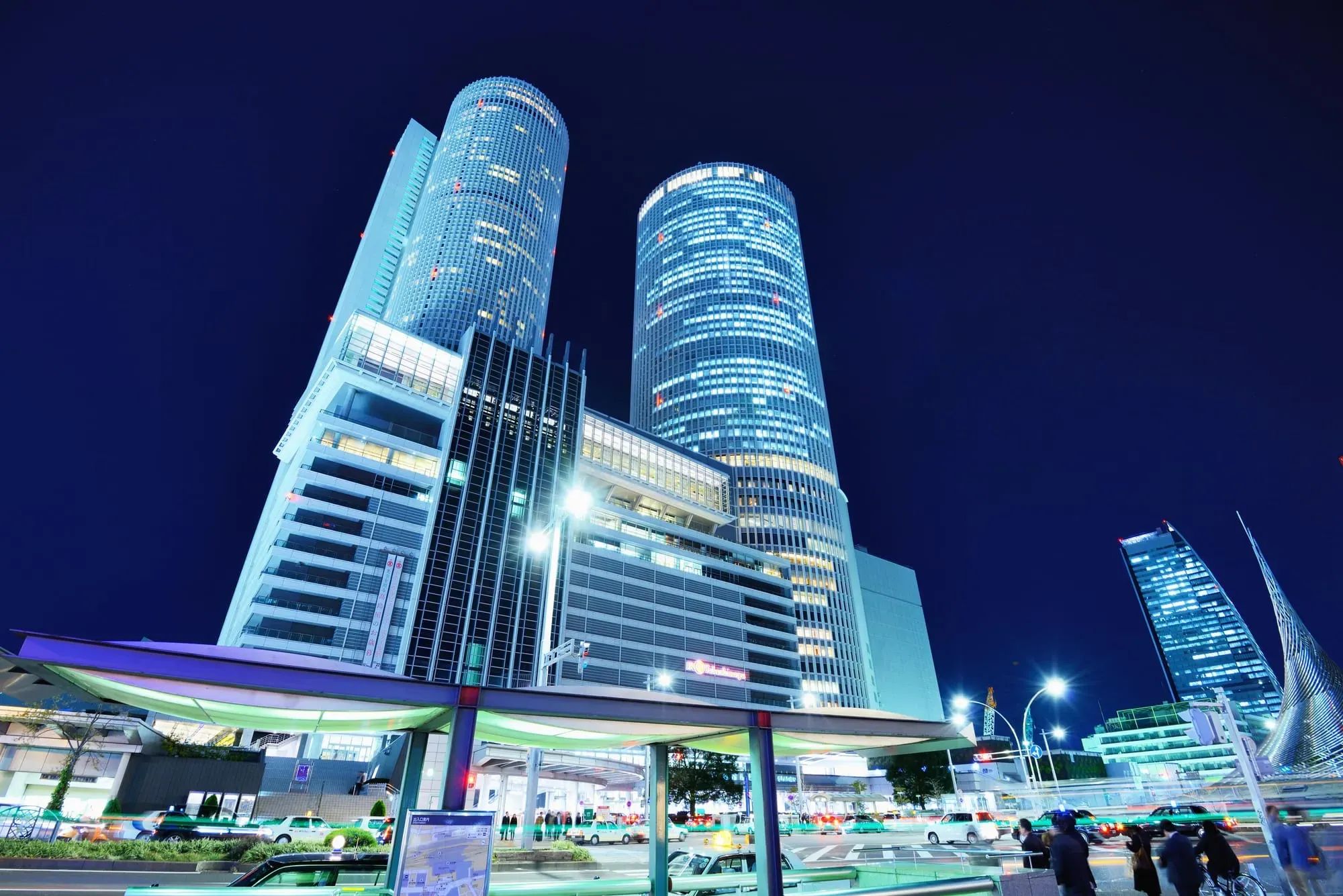
Nagoya Station Area Guide
Nagoya Station isn't just big—it's a stacked city! Three rail systems. Two department store towers. Underground malls stretching in four directions. You can walk five minutes in a straight line and still be inside.
First time here? That disoriented feeling is normal.
Nagoya Station (名古屋駅) is Japan's largest station by floor area and the third-busiest by passenger volume. It's the central transit hub for the Chūbu region, connecting the Tōkaidō Shinkansen with local rail, subway, and bus networks. Half a million people move through here daily.
Locals call the area Meieki (名駅—literally "name + station"). When someone says Meieki, they mean the neighborhood, not just the platforms. The station anchors Nagoya's main business and commercial district on the city's west side.
Here's what you need to know.
Quick Answers
Getting to/from Centrair Airport by Rail
Take the Meitetsu μSKY limited express from the station’s underground concourse. About 28 minutes. Around ¥900–¥1,000 depending on train type. Trains run every 20–30 minutes. Follow signs for “Meitetsu,” “μSKY,” or “Central Japan International Airport.”
Luggage Storage Coin lockers throughout the station (¥300-800 depending on size). Sizes: small, medium, large, extra-large. They fill up fast on weekends and holidays. Alternative: Takashimaya Baggage Room on the Central Walkway—¥700~/day, more reliable, attendant staffed.
Tourist Information Tourist Information Center on the Central Walkway (central concourse), east end near the Sakura-dōri exit. English, Chinese, and Korean support. Open 09:00-19:00 daily (closed Dec 29-Jan 1). Free maps, transit advice, tour bookings.
JR Information Separate JR Information Center on the west end of the Central Walkway. Rail-specific questions, Japan Rail Pass exchange and pickup. English support available.
Wi-Fi "NAGOYA Free Wi-Fi" network available throughout the station. No registration required.
Meeting Points
Nagoya Station has two main clock landmarks on the Central Walkway, and “the clock” is not specific enough.
Gold Clock — East side (Sakura-dōri exit)
Silver Clock — West side (Taikō-dōri exit)
Always confirm which clock and which side when meeting. Both clocks are on the Central Walkway level, not at ground exits.
Understanding the Station
The Central Walkway Is Your Anchor
The Central Walkway (中央通路) runs east-west through the heart of the station. It's an elevated concourse connecting all major exits, rail systems, and department stores. If you're lost, find the Central Walkway first. Everything else connects to it.
East exit: Sakura-dōri side (桜通口)—leads to subway, Meitetsu, bus terminal West exit: Taikō-dōri side (太閤通口)—leads to residential areas, some hotels
North-south matters less for orientation, but platforms 1-13 run north-south along the west side.
The Three Rail Systems
JR Central (Japan Railways) Tōkaidō Shinkansen platforms (14-19) are on the south end, separate from conventional lines. All other JR platforms (1-13, no platform 9) handle local and regional trains—Tōkaidō, Chūō, and Kansai lines. If you're transferring between Shinkansen and local JR, expect a 5-minute walk.
Nagoya Subway Two lines stop here: Higashiyama Line (yellow) and Sakura-dōri Line (red). Both connect through underground passages from the Central Walkway. The Higashiyama Line is the main east-west subway route across the city—takes you to Sakae, Hoshigaoka, and points east.
Private Railways Meitetsu (名鉄) and Kintetsu (近鉄) are below ground, accessed via the Central Walkway. Meitetsu runs to Centrair Airport, Gifu, Inuyama. Kintetsu connects to Yokkaichi, Tsu, and eventually Osaka/Nara on the Kintetsu network.
NOTE: These systems don't share ticketing. You can't use a JR pass on Meitetsu or subway. IC cards (TOICA, Suica, Pasmo, ICOCA) work across all systems.
Underground vs Ground Level
Above ground: Shinkansen platforms, conventional JR platforms, JR Central Towers (Marriott hotel, Takashimaya department store), JR Gate Tower.
Ground level: Main exits, Central Walkway, taxi stands, bus terminal (Sakura-dōri side).
Underground: Subway connections, Meitetsu/Kintetsu lines, shopping arcades (ESCA, Unimall), additional restaurant/retail floors beneath the towers.
The underground extends farther than you'd expect—shops and corridors continue several blocks in each direction.
Why It Feels Confusing
Nagoya Station grew in layers. The Shinkansen came later. Private rail systems operate independently. The towers were added on top. Signage is improving but hasn't caught up to the complexity. The station prioritizes throughput—half a million people daily—over intuitive navigation.
It's not you. It's genuinely large and legitimately confusing.
Plan an extra 10 minutes if you're transferring between systems or meeting someone.
The Station as a Neighborhood
Nagoya Station isn't just a transit point. It's the commercial and business anchor for the city's west side.
JR Central Towers Twin 51-story buildings sitting on top of the station. The Nagoya Marriott Associa Hotel occupies the upper floors of one tower. Takashimaya Department Store fills the lower levels of both. Office space above. This is infrastructure that happens to include a hotel and shopping, not the other way around.
JR Gate Tower Opened 2017, directly connected to the station. More retail, restaurants, offices, and a second Takashimaya. The observation deck on the 15th floor is free and offers a clear view of the city.
KITTE Nagoya Retail and dining building on the Sakura-dōri side, connected via underground walkway. Former central post office building, renovated and reopened in 2016.
Underground Shopping ESCA and Unimall run beneath and around the station. ESCA focuses on fashion and accessories. Unimall trends toward food, casual dining, and services. These aren't tourist traps—this is where office workers eat lunch and locals shop.
The area codes as "transit hub" to visitors, but to residents, it's a retail and dining district that happens to have good train access.
What's Walkable
Toyota Commemorative Museum of Industry and Technology 15 minutes north on foot. Former textile factory turned industrial history museum. Covers Toyota's evolution from looms to cars. Worth it if you have time.
Noritake Garden 10 minutes north. Former ceramics factory site, now a small park with a museum, craft center, and café. Quiet. Less trafficked than it should be.
Nagoya Lucent Tower Northeast, 10-minute walk. Office tower with a skyway observation area (free) on the 41st floor. Open weekdays only.
The station area transitions quickly. Walk 10 minutes west or north and you're in quiet residential streets. The density drops fast.
Practical Warnings
The station is easy to get turned around in. Even locals occasionally surface at the wrong exit. Download a station map or grab a physical copy at the Tourist Information Center. The free Wi-Fi helps.
Exits matter. "Meet at Nagoya Station" is not specific enough. Sakura-dōri (east) and Taikō-dōri (west) exits are on opposite sides of a massive building. Confirm which side, which level, which landmark.
Rush hour is real. 7:00-9:00 and 17:00-19:00 on weekdays. The Central Walkway and subway connections flood with commuters. If you're navigating the station for the first time, avoid these windows if you can.
Coin lockers fill up. Especially on weekends, holidays, and Friday evenings. If you need guaranteed storage, use the Takashimaya Baggage Room. It costs more but always has space.
Transfer times between Shinkansen and local trains are longer than you'd expect. Platforms are separated. If you're catching a tight connection, budget 10-15 minutes.
When You Have Time
Station Food Beyond convenience store bentos and standing soba counters, the station has legitimate dining. Takashimaya and JR Gate Tower have full restaurant floors—Japanese, Western, Chinese, everything in between. The basement floors (depachika) in both Takashimaya locations are worth browsing if you like looking at food.
ESCA underground has fast-casual options. Unimall skews toward izakaya and ramen. Neither is trying to be upscale.
Ekiben (Train Bento) If you're boarding the Shinkansen, the ekiben stands on the Shinkansen concourse sell regional bentos. Some are Nagoya-specific (miso katsu bento, Nagoya cochin chicken). Quality varies but the novelty holds.
Observation Decks JR Gate Tower, 15th floor (free). Nagoya Marriott, 52nd floor (¥500, or free if you're a hotel guest or eat at one of the hotel restaurants). Both offer clear views—Nagoya is flat and sprawls, so you see a lot of city and not much else.
Station Events The plaza in front of the Sakura-dōri exit hosts seasonal events—markets, light displays, small festivals. Check locally for what's running.
Getting Out of Here
To Sakae (downtown/nightlife) Higashiyama Line subway, eastbound. 5 minutes, ¥210.
To Fushimi (business district, museums) Higashiyama Line, one stop east. 2 minutes, ¥210.
To Osu Kannon (shopping, vintage, food) Higashiyama Line to Fushimi, transfer to Tsurumai Line south. 10 minutes total, ¥240.
To Kanayama (south side hub) JR Chūō or Tōkaidō Line, south. 5 minutes, ¥170. Or Meitetsu line.
To Hoshigaoka (east side residential) Higashiyama Line, final stop eastbound. 25 minutes, ¥290.
Why This Area Matters
Nagoya Station is not charming. It's not trying to be. It's infrastructure. What makes it matter is that it works—you can get almost anywhere in central Japan from here, and the city built a functional commercial district on top.
If you're staying in Nagoya for more than a day, you'll pass through here. If you're relocating, you'll use this area for shopping, transit connections, and meeting people. If you're just transferring trains, you'll appreciate that it has food, storage, and Wi-Fi.
The best thing about Nagoya Station is that it doesn't waste your time once you understand how it's organized. Learn the Central Walkway. Know which exit you need. The rest is just walking.
Related Articles:
Navigating Nagoya's Subway
Getting to/from Centrair Airport
Meitetsu Nagoya Lines
Meitetsu Nagoya Station serves as the main terminal for the Meitetsu Railway, a major private railway company operating in the Chubu region of Japan. Located adjacent to the JR Central Towers, Meitetsu Nagoya Station connects travelers to Centrair, Nagoya's International Airport, and destinations within Nagoya and the surrounding region.
Kintetsu Nagoya Lines
Located next to JR Nagoya Station, the Kintetsu Nagoya Station has lines that extend in multiple directions, serving destinations such as Kuwana, Yokkaichi, Ise, and Tsu. The line operates both local and limited express services.
Nagoya Subway Lines
Nagoya Station connects to two lines on the Nagoya Municipal Subway network.
Higashiyama Line (H08)
Sakura Dori Line (S02)
MAP
What else is going on in Nagoya?
If you’re using Nagoya Station as a base, there’s usually something happening nearby—or a short ride away.
Nagoya Buzz publishes weekly guides to events, exhibitions, food, and the small local things that make living here easier (and occasionally stranger).

Nagoya Buzz
Events, local info, and humor for the international community of Nagoya, Japan.
Follow Nagoya Buzz :







Leave a Comment