
Where the Fire of Winter Still Matters
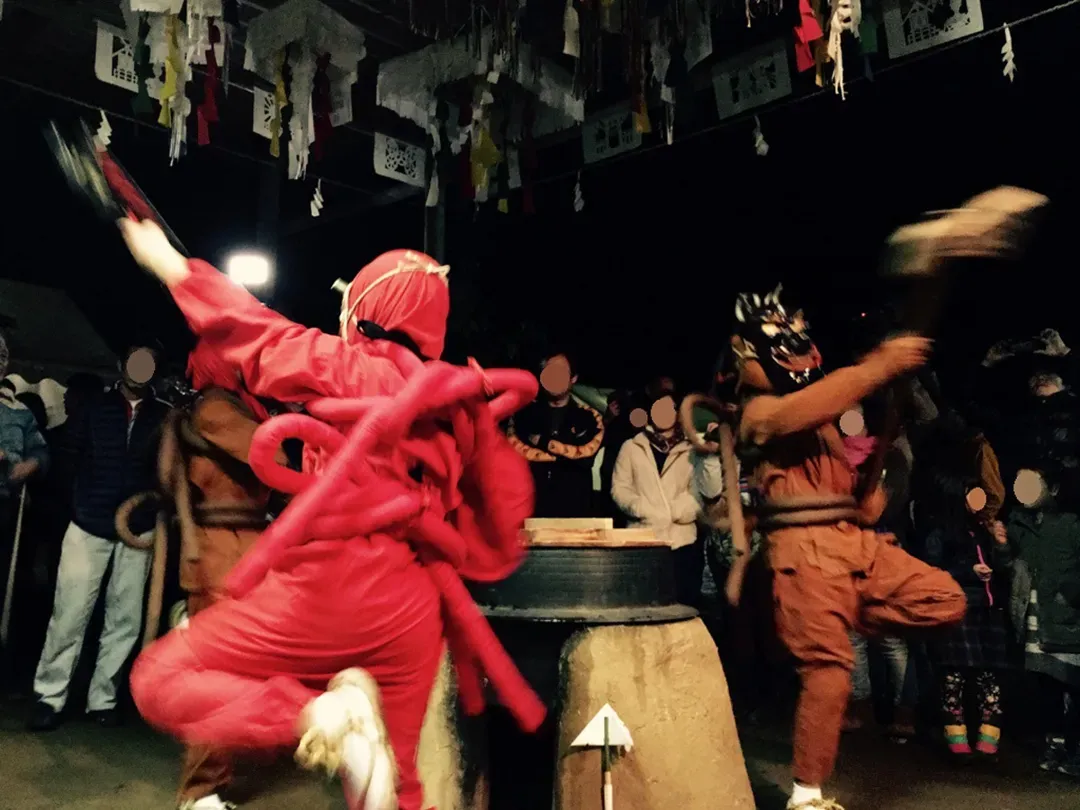
The demon raises the straw brush dripping from the cauldron. You have maybe two seconds to decide—lean forward or pull back. Then the water comes, hot enough to make you flinch, not hot enough to burn. Droplets hit your face, your jacket, the floor. Steam rises. Someone next to you laughs. The demon moves on.
This is Yubayashi, the hot water purification, and it happens every December in Naka-Zaike, a hamlet in the Okumikawa mountains about three and a half hours from Nagoya. It's part of the Hana Festival—one of several held across this mountain region each winter, designated a National Important Intangible Folk Cultural Property. The Hana Festivals of this region go back seven hundred years or more. The practice involves all-day, all-night ritual dances, Shinto-influenced ceremonies, demons in lacquered masks, and a hearth fire that burns from morning until the mountains start to show light again.
This isn't easy to reach.
That's not an accident.
What Gets Written Down
Here's what makes Naka-Zaike different: it's the only Hana Festival whose transmission is actually documented. Most festivals in this region carry their lineage orally—someone taught someone who taught someone, and the line blurs back into mountains and memory. But Naka-Zaike has it written: the festival came from the nearby village of Ashigome in 1872. Meiji 5. Someone thought it mattered enough to record who taught whom.
That's worth pausing over.
Tradition isn't what happened. Tradition is who taught you.
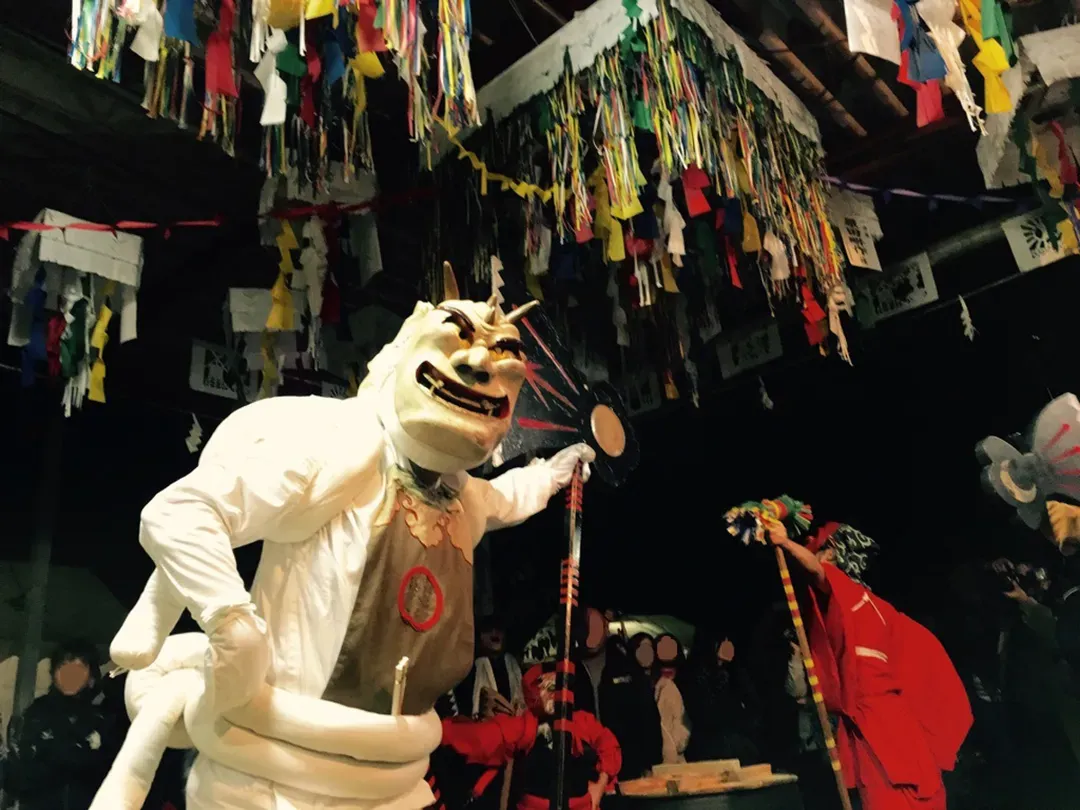
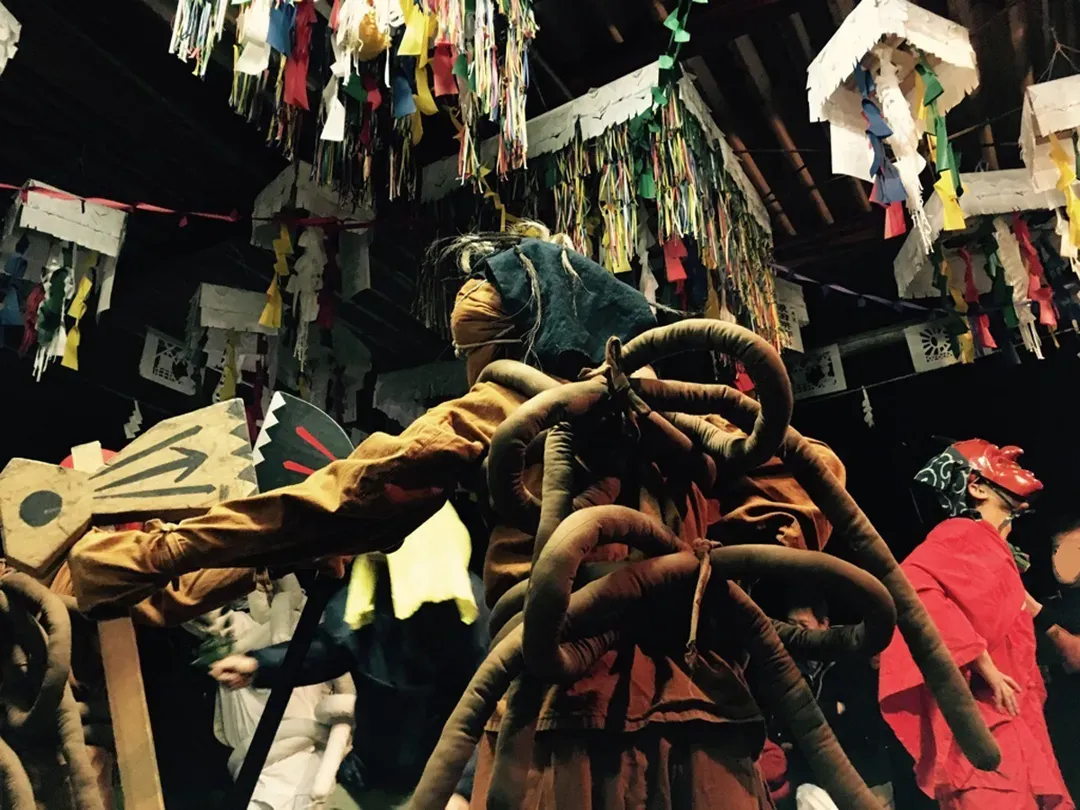
The Hana Festivals are old—older than the documentation, older than the villages themselves in some cases. They're Shinto-influenced but local, shaped by mountain Buddhism and harvest cycles and winter solstice darkness. Paper flowers hang from the ceiling, red and white and yellow, fluttering when someone passes beneath. Demons appear throughout the night. Drums mark time. The fire burns.
But the transmission in 1872 tells us something more specific: someone in Naka-Zaike wanted to learn, someone in Ashigome was willing to teach, and the exchange was significant enough to write down. This is tradition as intentional act, not vague inheritance.
Nine Households Can't Dance Alone
Naka-Zaike today has nine households. Nine.
You can't perform a Hana Festival with nine households. You need dancers, drummers, demon performers, people to tend the fire, people to prepare offerings, people to hold knowledge. The math doesn't work. Young people leave for cities. The village ages. The festival should have died.
It didn't.
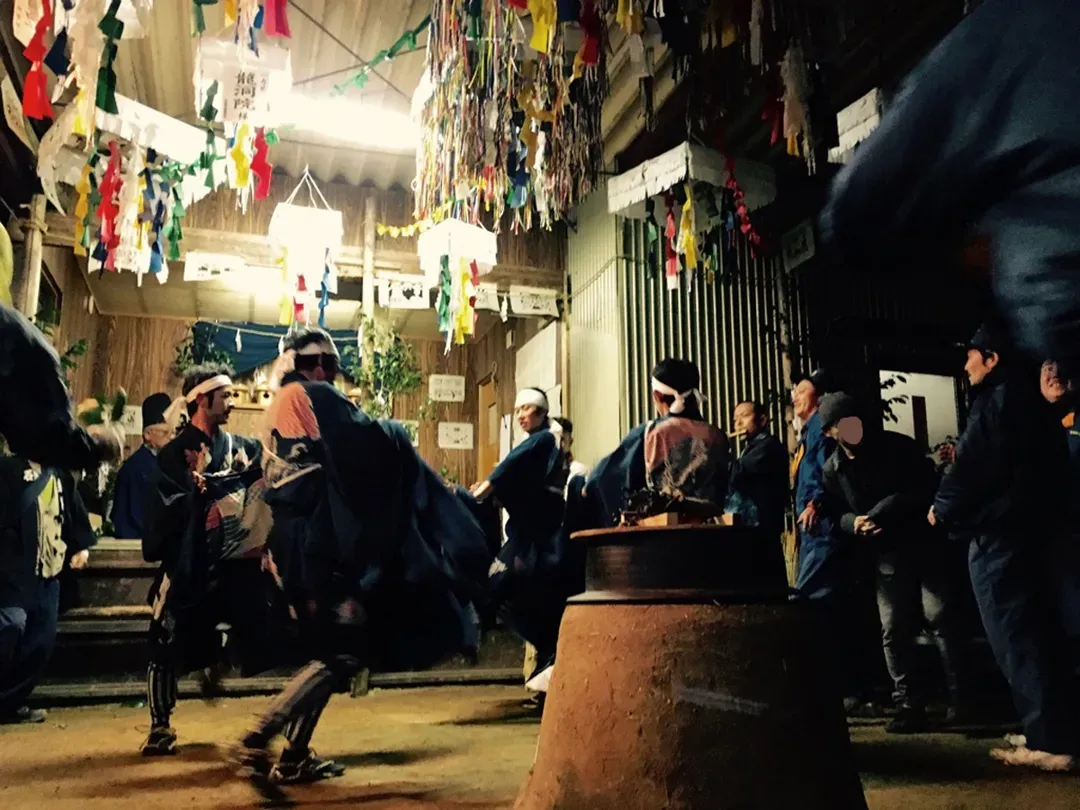
Instead, neighboring districts send performers. People come from other parts of Toei Town, from nearby villages, and they fill the roles that Naka-Zaike can't fill on its own. They've been doing this for years. The festival survives through a gift economy of bodies, time, knowledge—people showing up because the thing is worth keeping alive, even when it's not theirs to inherit directly.
We tend to think of tradition as inheritance, something you own from your ancestors, something passed down bloodlines or property lines. Naka-Zaike shows us tradition as network. You can only do this together. You have to ask for help. And people have to say yes.
That's not failure. That's how it actually works.
What the Fire Teaches
So what does a 150-year-old ritual in a mountain village teach us, here in December 2025, whether we make the trip or not?
Start with this: continuity requires asking for help. Naka-Zaike asked. People came. They keep coming. That's not about nostalgia or duty—it's about recognizing that some things are worth the effort, even when the effort is absurd by modern metrics. Nine households keeping a festival alive by borrowing dancers. Economically insane. It persists anyway. That's not nostalgia. That's values made visible.
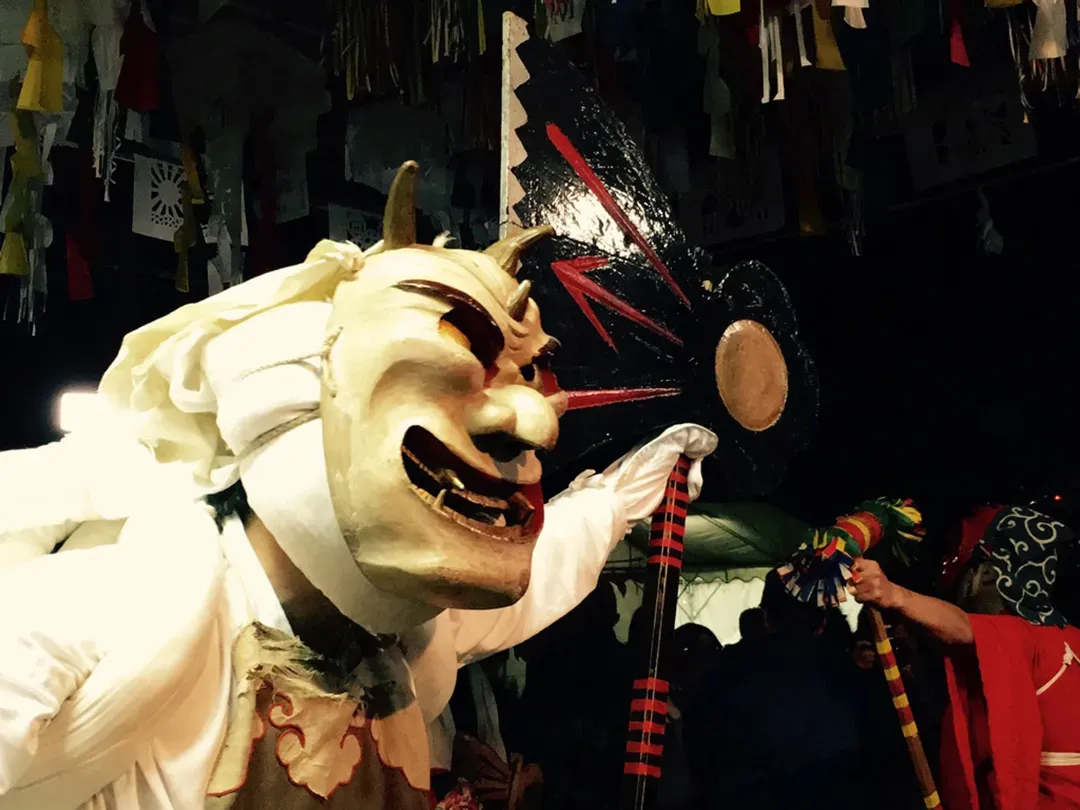
The festival also holds something we've mostly forgotten: sacred things can be playful. The demons grunt and joke between dances. Children giggle through the late hours. It's serious and fun, not serious or fun. That's a sophisticated relationship with ritual. Reverence doesn't require solemnity. Sometimes the deepest respect looks like laughter.
And maybe this: some things are worth doing even when they're not viable. The numbers don't work. The logistics are ridiculous. Do it anyway. Keep the fire burning. Ask for help. Show up. That's the teaching. Not efficiency. Not sustainability in the business sense. Just: this matters, so we do it.
Inside the Hall
If you go—and it's a commitment; we'll get to logistics—you step out of winter cold into warmth that comes from bodies and fire, not furnaces. The hall is simple. Low ceiling. Bare wooden floors darkened from decades of ash and spilled water. Paper flowers dangling overhead, catching light when they move.
The fire is central—a hearth, a cauldron heating water on iron supports. Steam rises and catches the dim light like smoke. The room flickers more than it illuminates. You can see faces close to you, but the edges stay shadowed.
The sounds aren't polished. Taiko drums—hollow, deep, slightly uneven in the good way that comes from human hands, not precision engineering. Wooden clappers snapping in rhythm with dancers' feet. The fire hissing when cold air sneaks in. Demons breathing heavily behind their masks, sometimes growling, sometimes making a sound that's almost a laugh.
Outside, the mountains are black. A few farmhouses glow in the valley below, but mostly it's thick silence pressing against the walls. Inside, it's warm and close and alive.
You smell wood smoke—cedar or pine, dry and clean, the kind that clings to your jacket for days. Someone's heating miso soup somewhere. There's damp wool, wet straw from the purification brushes, a faint metallic tang from the cauldron.
The demon appears. Lacquered red mask, darkened wood, green and black pigments—a face that looks carved from the hillside itself. The straw brush dips into the hot water. You decide.
Lean forward.
The Reward
If you make the trip—three and a half to four hours from Nagoya by train, bus, and a thirty-minute walk, or by car if you're comfortable with narrow mountain roads—what do you get?
You get proximity to something real. You're not watching a performance. You're inside a living practice, one that doesn't perform for tourists because it wasn't built for tourists. Your presence matters. Small crowds mean every person counts.
You get time outside time. The all-day structure, the cycles of dance with no countdown clock, just rhythms that will keep going until they're done—it breaks you out of modern time. You might get cold. You might get tired. You might not understand everything you're seeing. That's okay. Understanding isn't always the point of being somewhere.
You get the story. Years from now, you can say: I was at Naka-Zaike when the demon flung hot water. I sat by the fire while the drums played and the mountains held the night. Not many people can say that.
And you get to be part of the gift economy that keeps this alive. Just by showing up, you're saying: this matters. That's not nothing.
What We Take Away
December is ending. We're taking stock, preparing for reset. The Hana Festival knows something about this—about marking time, about purification that isn't about being clean, about keeping things alive by asking for help.
Tradition isn't repeating the same thing. It's teaching the next person. Naka-Zaike teaches us that continuity is a gift economy. You can't do it alone, and that's not failure. That's how it works. Nine households and their borrowed dancers, keeping something alive that predates all of us.
Maybe you make the trip. Maybe you just hold the idea: somewhere in the Okumikawa mountains, they'll be there in the cold and the firelight, flinging hot water and dancing until dawn, whether we show up or not.
That's both humbling and hopeful.
Want to make it a weekend?
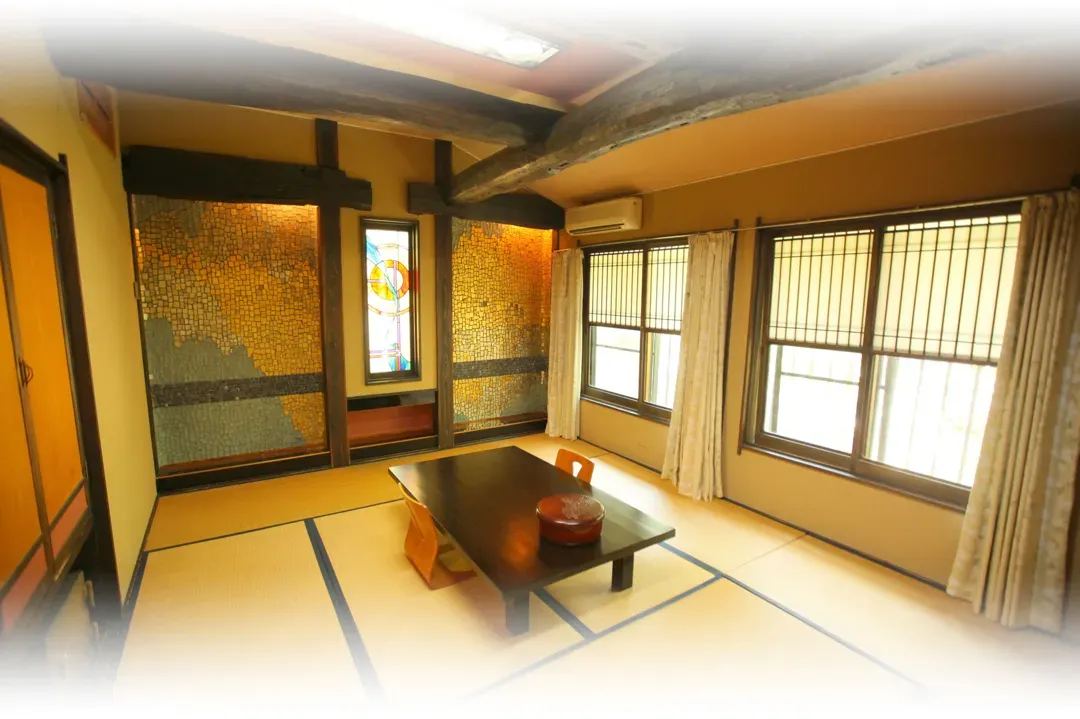
If you decide to stay overnight, the simplest and most reliable option is Yuya Onsen Ryokan Suimei, a small riverside inn in Shinshiro’s Yuya Onsen district. It’s a 5–7 minute walk from Yuya Onsen Station on the JR Iida Line, making it ideal for anyone traveling without a car.
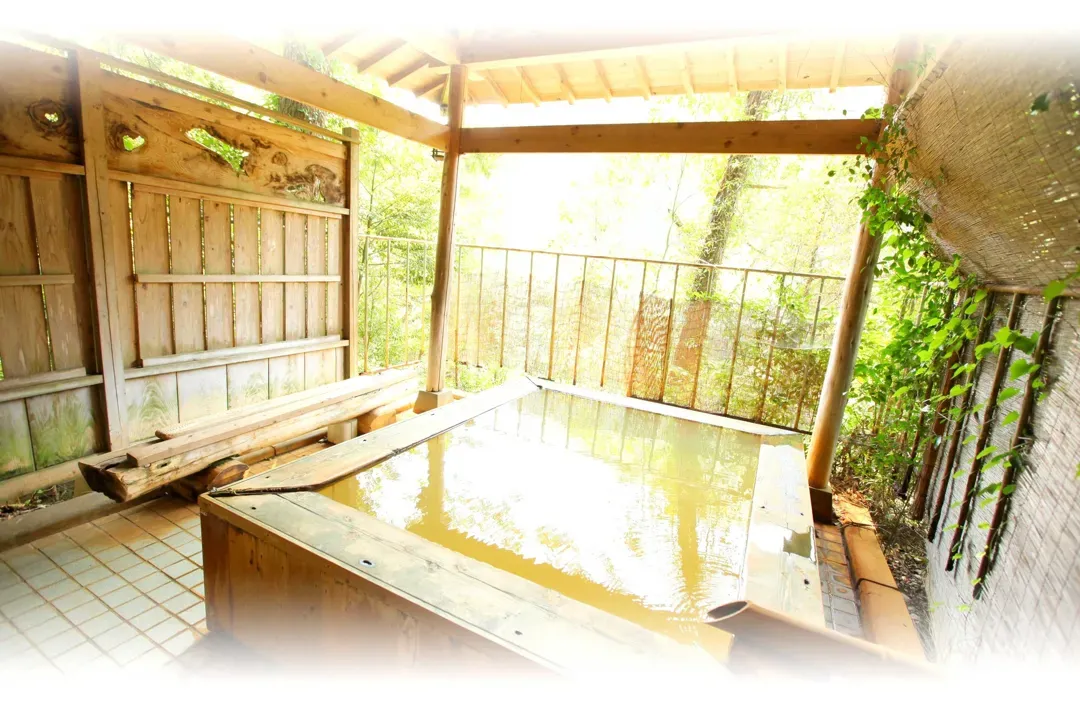
The ryokan has indoor and outdoor baths, traditional meals, and free parking if you’re driving.
Address:
6-2 Notose Kamiyadaira
Shinshiro-shi, Aichi 441-1605
Phone: 0536-32-1551
Website: https://yuya-suimei.jimdofree.com/
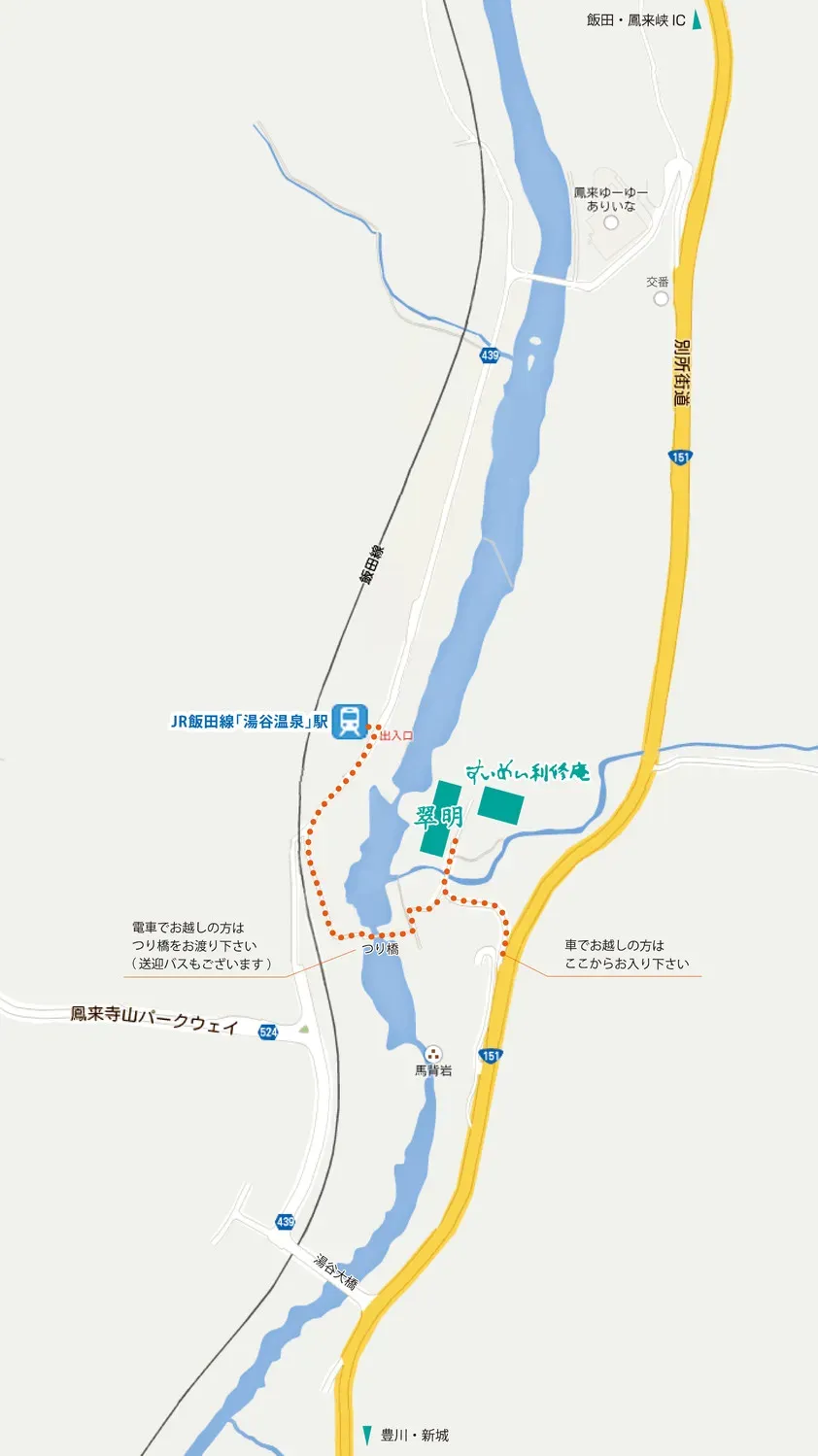
Onsen Ryokan Suimei Map
Access to the Ryokan:
- By Train: Get off at Yuya Onsen Station (JR Iida Line). Exit the station, cross the pedestrian suspension bridge, and follow the dotted footpath shown on the map. Suimei is a 5–7 minute walk.
- By Car: Approach from Route 151 using the ryokan entrance indicated on the map (not via the suspension bridge). Free parking available. For Car navigation settings use 6-2 Noto-Sekami Tanidaira, Shinshiro City, Aichi Prefecture, 441-1605)
Pro Tip:
If you stay overnight, Okumikawa has excellent hot springs, and several other Hana Festivals run from November through March—turning the trip into a quiet winter retreat instead of a long day.
Event Details
Hana Festival
(Naka-Zaike, Toei Town)
Date:
Sunday, Dec. 14, 2025
Time:
08:00–23:00
(All-day program. The major demon and hot-water purification scenes typically happen after dark.)
Venue:
Meijuso Elderly Rest Home (Nakazaike community hall)
Naka-Zaike, Nane
Toei-cho, Kita-Shitara-gun
Aichi
Admission:
Free (donations welcomed for local gifts)
Website:
Aichi Now – Naka-Zaike Hana Festival
Toei Town Hana Festival Info
Access
By Train & Bus:
From Nagoya Station, take the JR Tokaido Main Line to Toyohashi (50–60 min), transfer to the JR Iida Line to Toei Station (approx. 1.5 hours). Take the Toei Line Bus to Mitsuseguchi, then walk about 30 minutes west to Meijuso.
Allow 3.5–4 hours each way including transfers.
Public transport in the mountains is limited. Toei Town recommends using a taxi from Toei Station or coming by car if you're comfortable with winter driving.
By Car:
From the Shin-Tomei Expressway, exit at Horaikyo IC and drive north on Route 151 for about 11 km (approx. 15 minutes). Just before the tunnel, turn left, then left again before the abandoned tunnel. Follow the road about 1.3 km into Naka-Zaike.
MAP

in Nagoya?
Don’t ask the algorithm
Check Nagoya Buzz
#NagoyaBuzz #HanaFestival #AichiEvents #Okumikawa #JapanTravel #WinterFestivals #花祭り #中在家 #愛知イベント #奥三河 #冬祭り #東栄町



Leave a Comment