
Four tunnels, one coin, a lot of green
The thing about living in Nagoya for a long time is you start assuming the nearby surprises are basically over. Then someone mentions walking through abandoned railway tunnels in Kasugai for ¥100, and suddenly the city feels less settled than you thought.
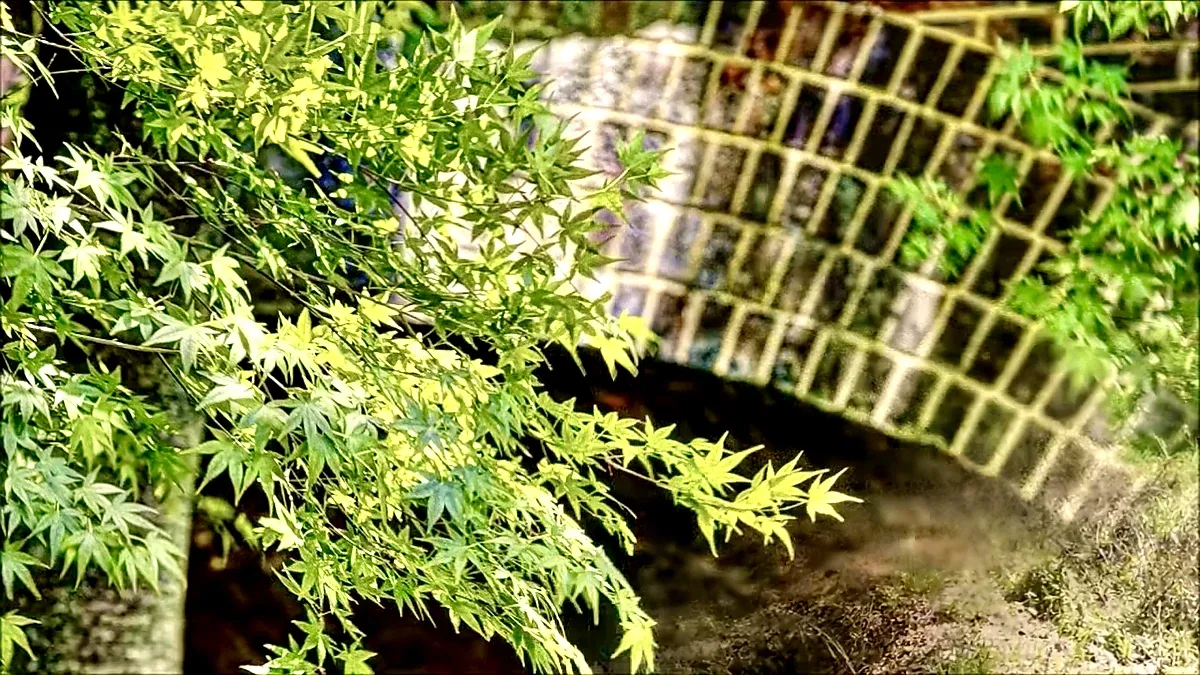
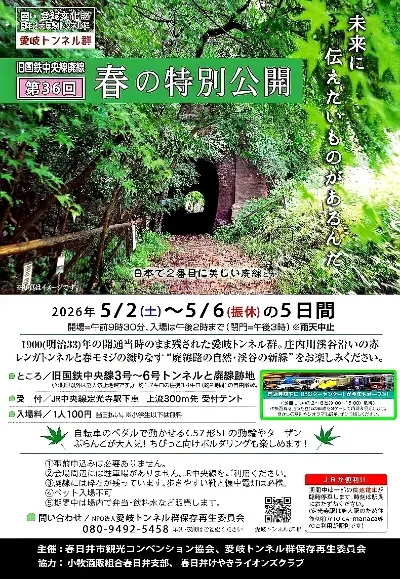
The Aigi Tunnels open twice a year — spring and autumn — and stay locked the rest of the time. This spring's special opening runs from May 2 to May 6. Entry is ¥100.
No reservation.
No parking.
Just a JR ride, decent shoes, and a willingness to spend part of Golden Week doing something far better than standing in a queue near a mall.
Start the experience by jumping on the JR Chuo Line from Nagoya Station (or stops along the way) and in around half an hour the city thins out into river, rock, and low green hills.
You get off at Jōkōji, an unmanned station that already feels slightly removed from normal life — cool air, no staff, the faint sound of the river nearby. Make sure to buy a round-trip ticket before you leave or just use an IC card.
There is nobody at the station - no one to rescue you from your own lack of planning!
From the station, it's about 300 meters upstream to reception. You follow the other people in walking shoes, pass the river, and arrive at a small entry point where your ¥100 gets you in.
Then you step onto the old railway bed.
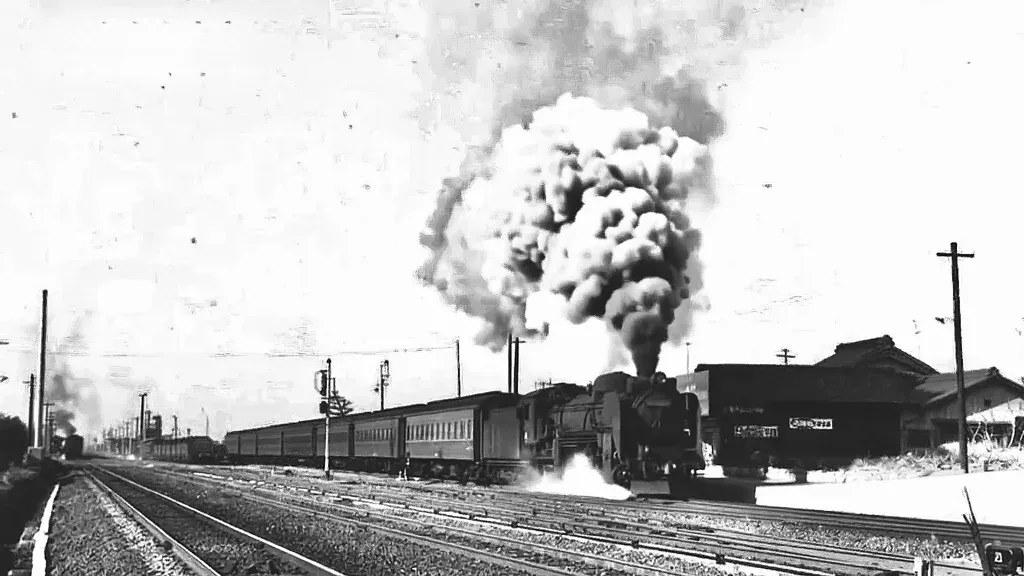
This is what you're walking: about 1.7 kilometers of the original 1900 Chuo Line, abandoned in 1966 when a newer route replaced it. The old line sat buried and overgrown for decades before local volunteers cleared it by hand.
A citizens' group formed in 2007, became an NPO in 2009, and now keeps the site open a few weeks a year so people like us can walk through. What they've preserved is not a polished theme-park version of railway history. It still feels like a line the forest almost managed to swallow.
The site features four red-brick tunnels, numbers three through six. The first thing you notice stepping inside is the temperature. Spring air vanishes. The damp takes over — wet brick, cool earth, the faint mineral edge of water somewhere close. Your flashlight catches old masonry, moss, a ceiling still marked with soot from the steam era.
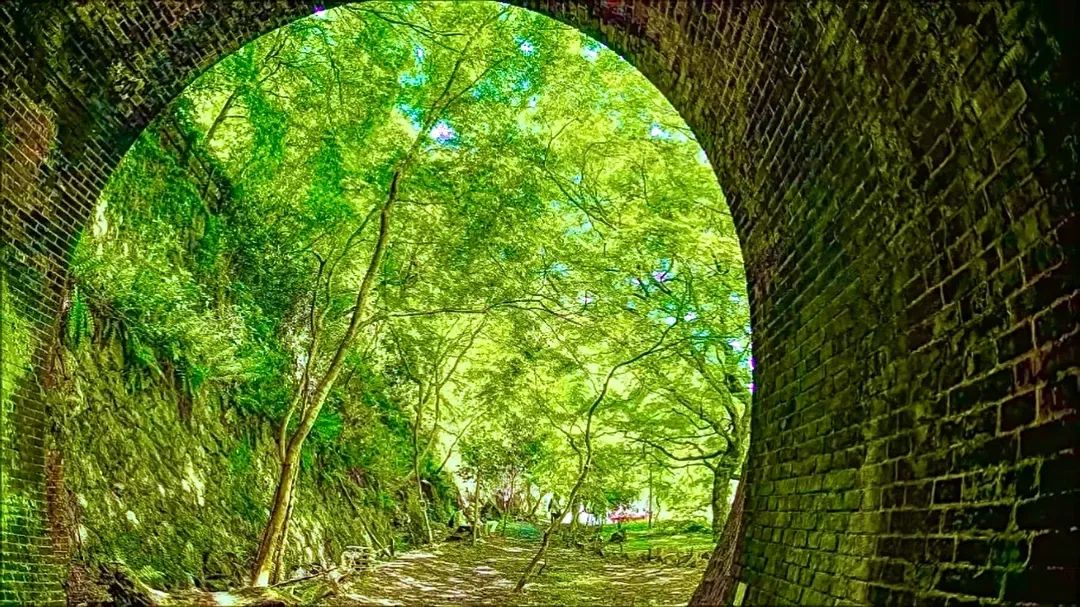
Then the far end opens up and everything turns green.
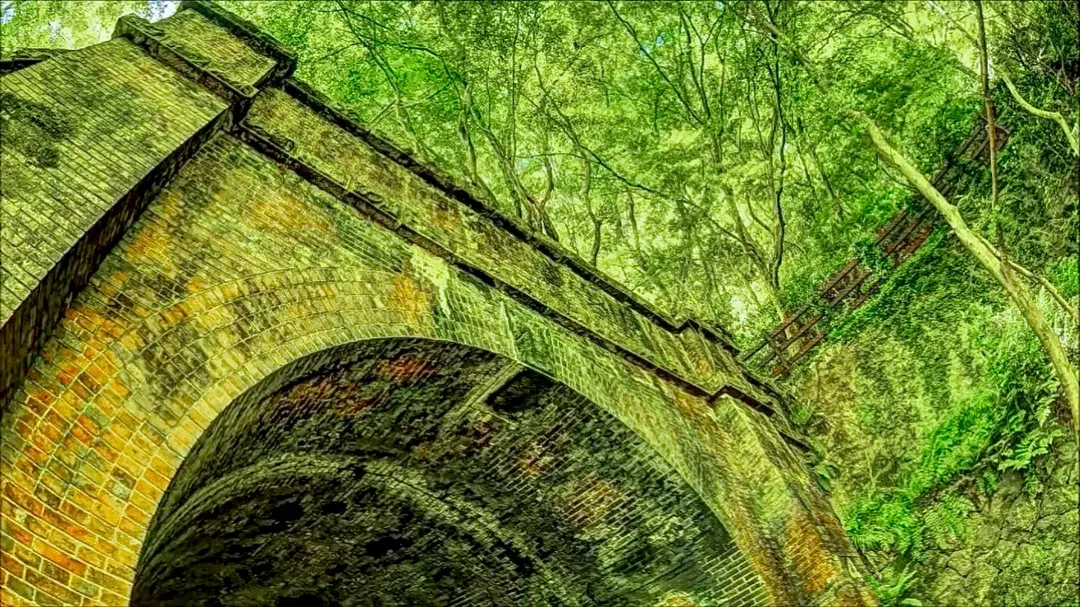
That is what autumn can't give you. Autumn gets the obvious drama. Spring gets the stranger one.
Outside the tunnel mouths the valley is full of new light — fresh maple leaves, pale and bright, filtering sun in a way that feels almost too saturated to be real. The old red brick looks stronger against it than it does against autumn gold. The air is softer.
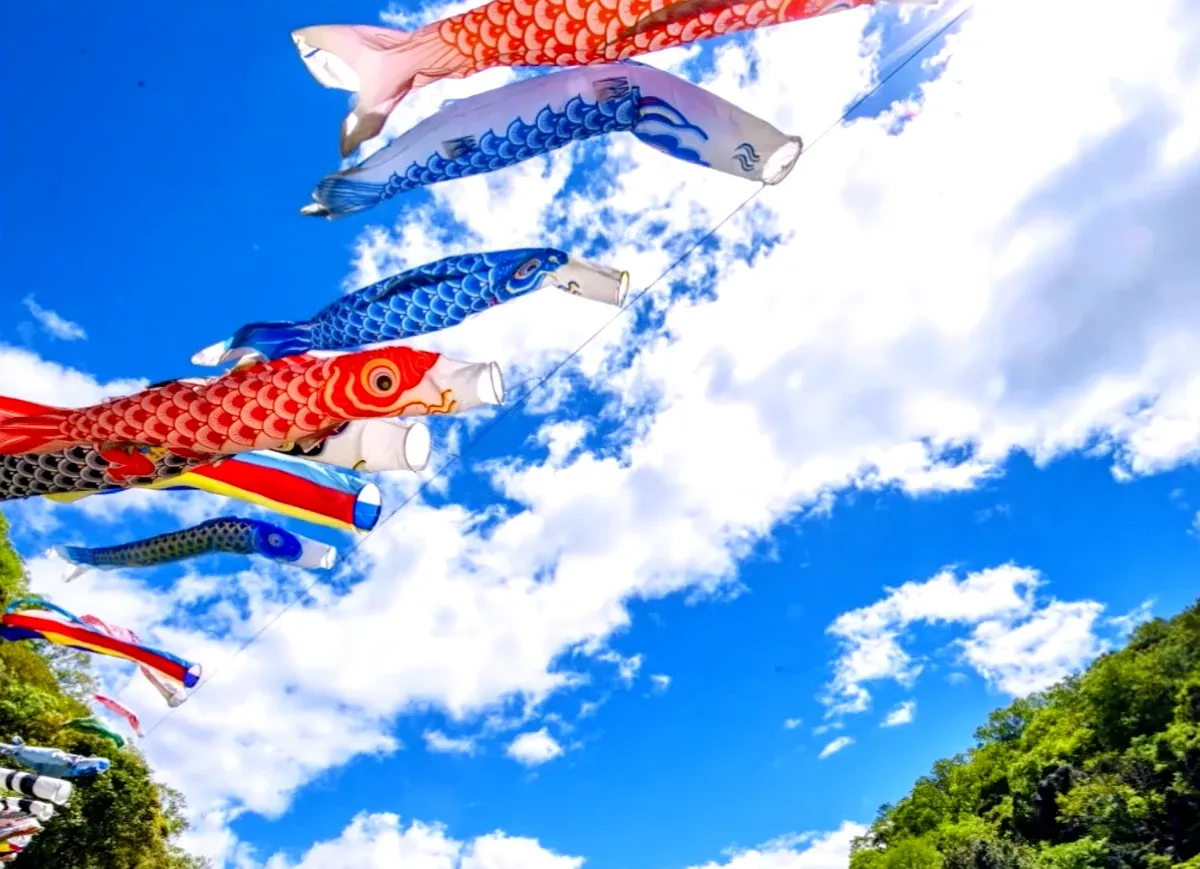
Overhead, carp streamers hang against the open sky, moving slowly, giving the whole thing just enough seasonal strangeness to stop it becoming a generic nice-nature-walk. You step from cool dark into that, blinking, with river sound below and koinobori above, and for a moment it does not feel much like a hiking trail.
You keep moving between registers every few hundred meters. Cool damp brick. Bright green valley. Back into darkness. Out again into birdsong and May light. The ballast gravel underfoot still has the logic of a railway, not a footpath. There are old rail fences, salvaged remnants on display, a bamboo grove, a handmade water wheel, areas that feel built rather than designed. Tunnel No. 6 still has soot marks on the ceiling. If you want a bit more elevation, a 300-meter circuit on Momiji Mountain above No. 6 is there for people who don't mind the extra effort.
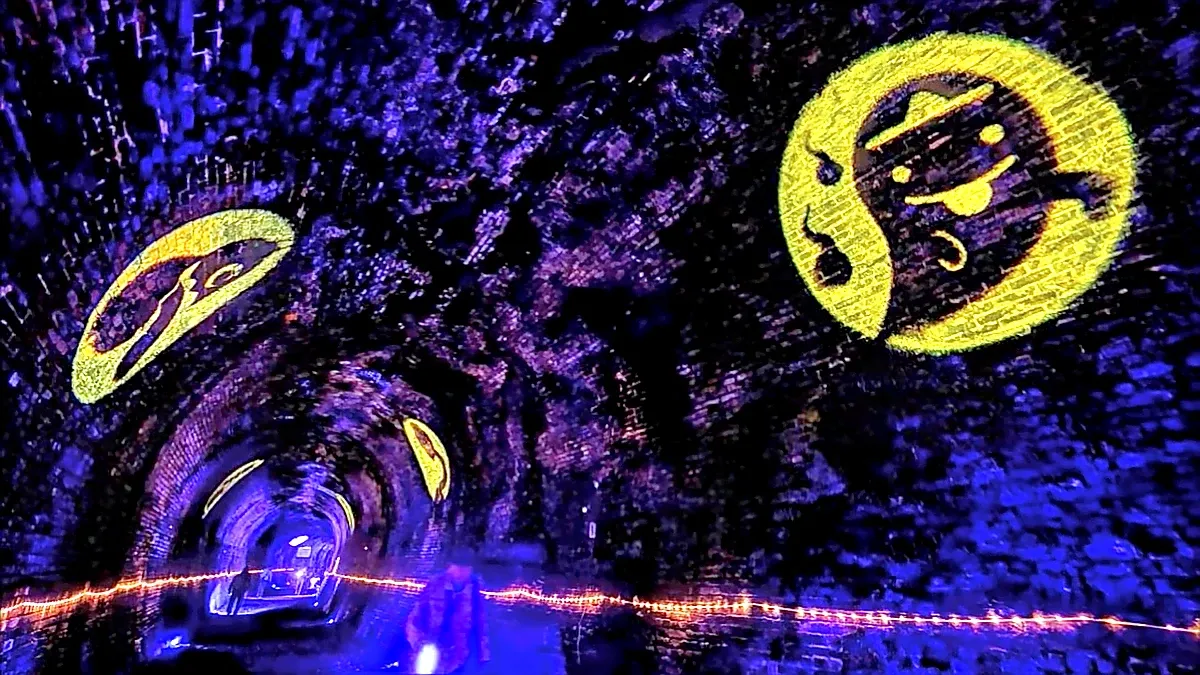
The dedication of the people who cleared and continue to maintain this place shows — a little homemade, a little earnest, and all the more likeable for it. During the spring opening there are food and drink vendors on site, concert events, and a small marché setup. That said, the tunnels are the point. The stalls are background. The appeal is that for ¥100 you are being allowed into a place that is normally closed, slightly hidden, and far more atmospheric than it has any right to be.
The round trip is about 3.4 kilometers and takes around two hours if you stop, wander, and take photos — which you will. The tunnel mouths frame the valley too neatly not to. Even people who claim to be above that sort of thing will end up taking out their phones.
Practical Stuff
Wear proper shoes. The old ballast stones are still underfoot and this is not smooth walking. Bring a flashlight. Pets are not allowed. If it rains, the event is canceled.
And because there is no parking, take the train and save yourself the familiar Golden Week mistake of trying to outsmart a local event with a car.
You will not be the first person to think about it.
This is a fun walk if you like old infrastructure, tunnel air, river valleys, and the odd beauty of something kept alive by volunteers rather than a tourism budget. This is for those who want a half-day that doesn't involve pretending to enjoy a crowded shopping complex.
If you've been here long enough to appreciate the smaller places — the ones that survive not because they're famous, but because a few stubborn people decided they were worth saving — then this is for you.
After the hike you'll be back in Nagoya by late afternoon. Your shoes will have gravel dust on them. Your phone will be full of tunnel-mouth photos in various shades of green. And you'll have spent less than the cost of a department store lunch.
One coin, one morning, four tunnels.
A lot of green.
The Details
Aigi Tunnels Spring Special Opening
愛岐トンネル群 春の特別公開
Venue:
Former JNR Chuo Line Site
Tunnels No. 3–6 and abandoned railway
Dates:
May 2 to May 6, 2026
Times:
09:30–15:00
Last entry 14:00
Price:
¥100 entry
Elementary school and younger free
Notes:
• No reservation required
• Canceled in rainy weather
• No parking
• Wear sturdy walking shoes
• Bring a flashlight for the tunnels!
• Pets not allowed
Address:
Tamano-cho, Kasugai
Near Jōkōji Station
Website (Japanese)
Access
By Train:
JR Chuo Line from Nagoya Station to Jōkōji Station
(approximately 30 minutes).
Walk approximately 300 meters upstream from the station to reception.
Get a round trip Ticket
Jōkōji is an unmanned station.
A round-trip ticket or IC card is recommended.
Some rapid trains stop at Jōkōji during the event period.
MAP
Read more about the Aigi Tunnels in the Autumn
 Nagoya Buzz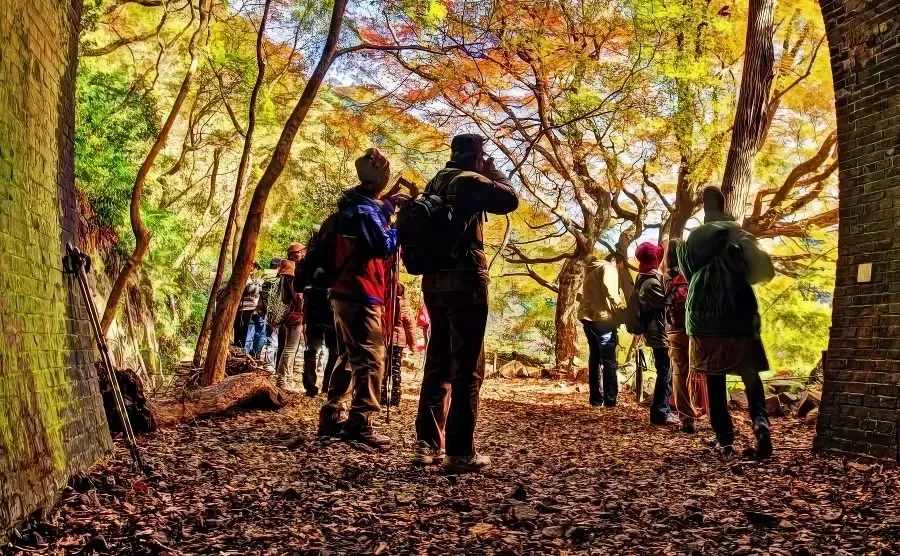
Read about more hikes in Chubu
Nagoya Buzz
Read about Green Spaces in Nagoya
Nagoya Buzz








Leave a Comment