
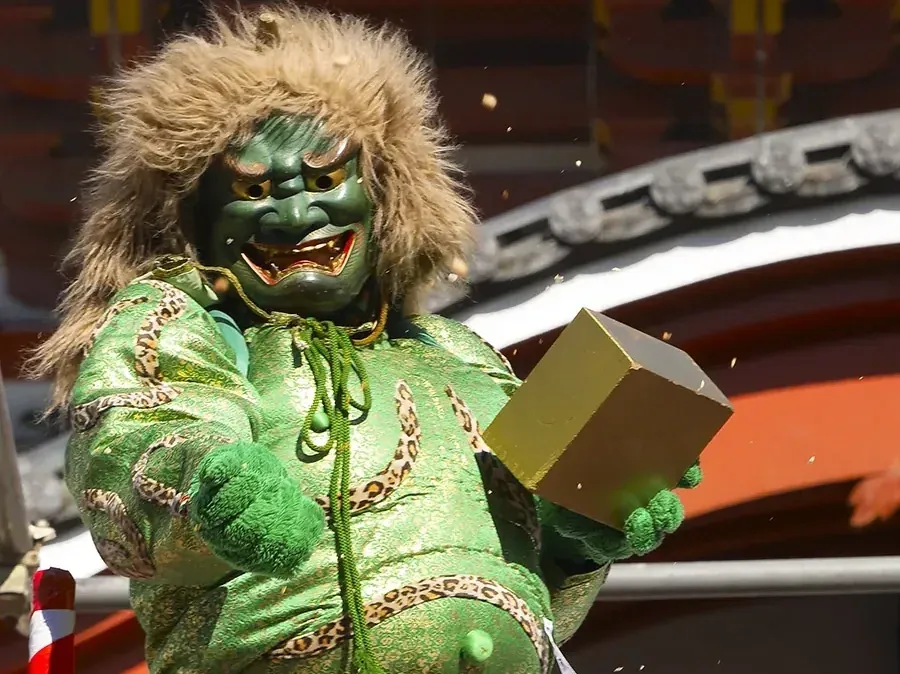
Setsubun at Osu Kannon!
If winter in Japan has a ceremonial off-switch, Setsubun is it. And in Nagoya, the best place to throw beans at imaginary demons is Osu Kannon Temple, where tradition collides with Osu’s street energy and bean-throwing turns into a full-contact spectator sport.
This is the same spot that hosts the twice-monthly Osu Antique Market, when the temple grounds fill with old ceramics, tools, and small, strange treasures.
You’ve probably noticed the boxes of roasted soybeans creeping into supermarket displays. Maybe you’ve even lobbed a few out the window at home.
But if you’re new to Setsubun—or you’ve only ever done the quiet, slightly embarrassed version—Osu is where it all clicks.
Setsubun marks a boundary. A pause. A reset. It sits at the edge between seasons and quietly signals that the New Year frenzy is over.
The trauma of New Year's TV specials has faded, the last shinnenkai has finally wrapped up, and everyone agrees it’s time to stop talking about resolutions and start looking ahead—whether spring is ready or not.
The word Setsubun (節分) literally means “seasonal division.” The kanji 節 (setsu) refers to a season or a change in rhythm, while 分 (bun) means division or boundary—the same character you see when you’re checking how many minutes late the train is.
Historically, there were four Setsubun days each year, one before each new season in the old lunar calendar. The important one was the shift from winter to spring. Because Spring meant crops, warmth and survival. So that’s the one people cared about.
That’s why modern Setsubun lands in early February, right before Risshun, the traditional first day of spring.
Monks, local figures, and guests throw beans from a stage while crowds try to catch them for luck. Music, costumes, and ceremony turn it into a shared reset. This is where Osu Kannon shines.
The ritual itself comes from ancient Chinese court practices that reached Japan during the Heian period (794–1185). What stuck was mamemaki—bean throwing.
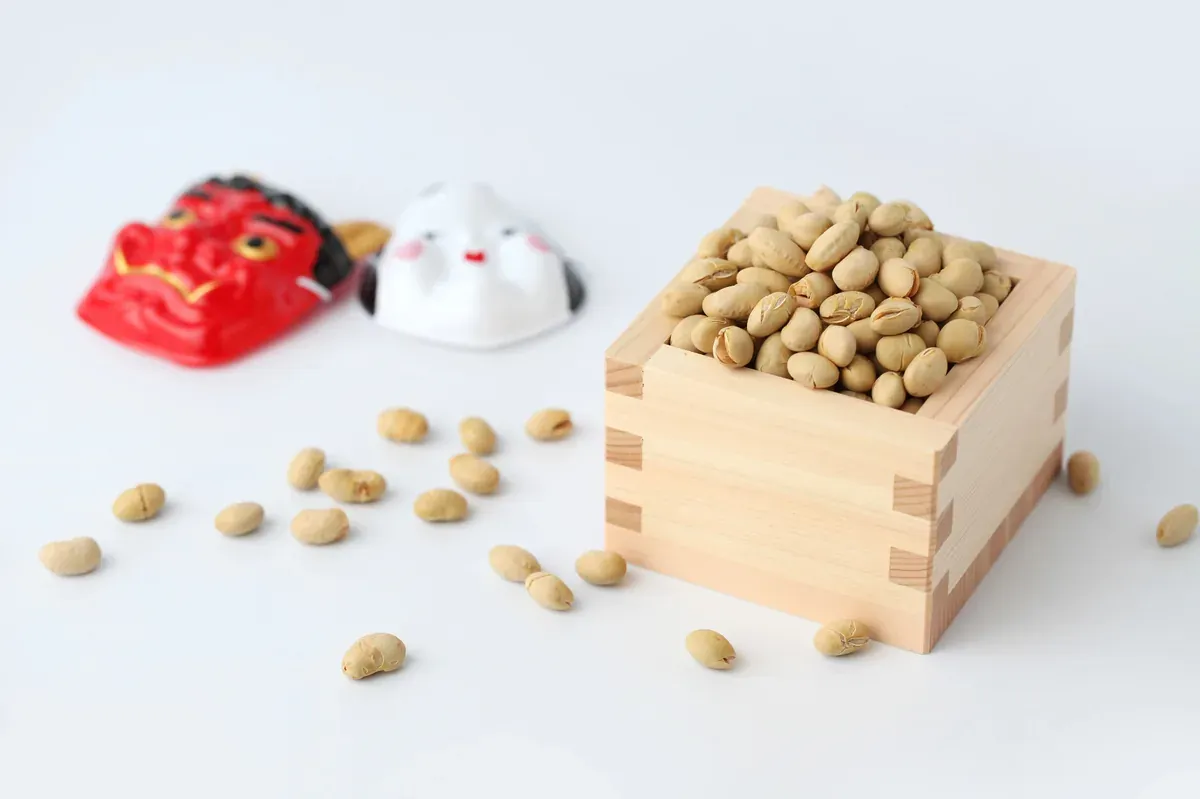
The logic is symbolic, not literal. Oni (demons) stand in for misfortune, illness, disasters, and whatever winter dragged in with it. Roasted soybeans represent life, purity, and agricultural abundance.
Throwing them is a physical way of clearing space—drawing a line between what you’re done with and what you’re willing to carry forward.
There’s also a very Japanese layer of wordplay. Mame (豆, bean) sounds like mametsu (魔滅), meaning “destroying evil.” The beans are roasted on purpose. Raw beans can sprout, and nobody wants bad luck taking root.
This is very Japan folks.
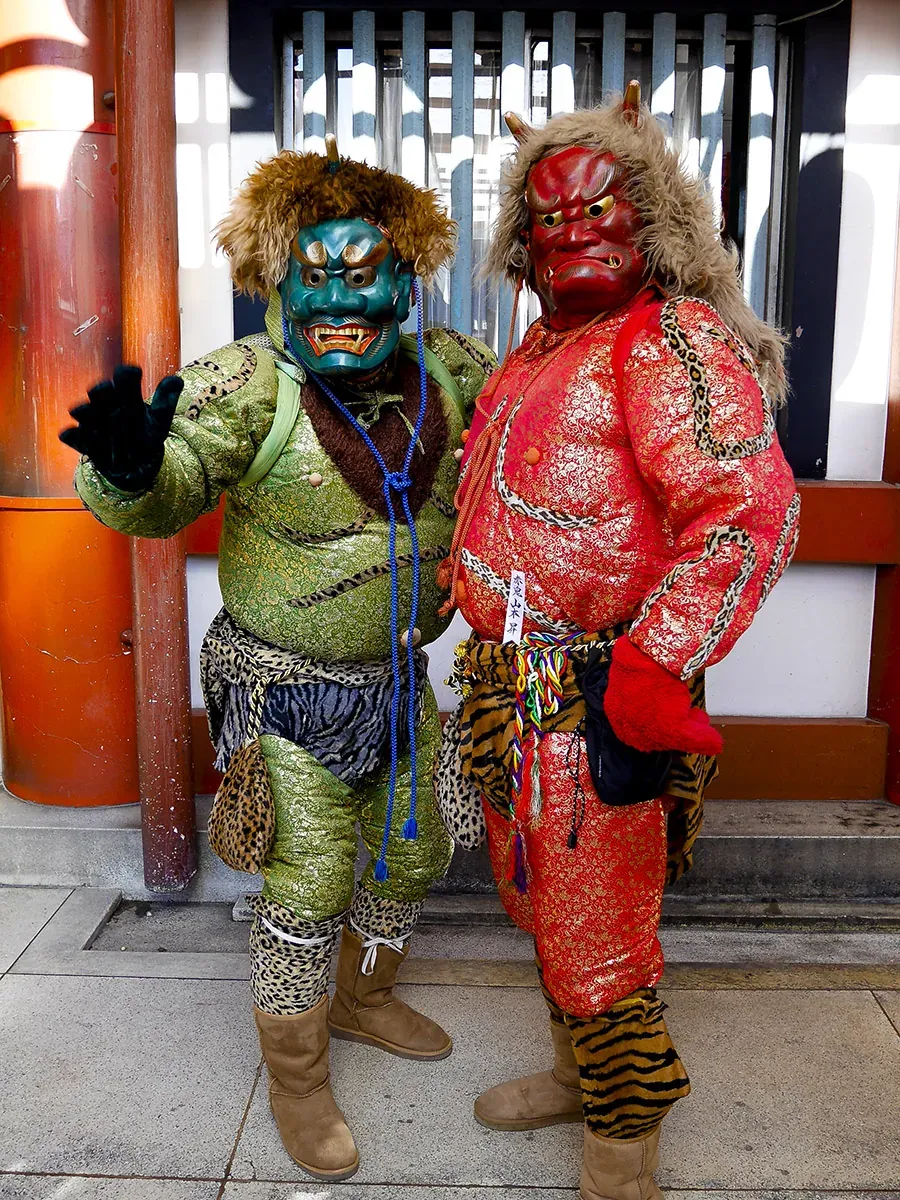
At home, Setsubun is intimate and chaotic. Someone puts on an oni mask, beans fly, everyone shouts “Oni wa soto! Fuku wa uchi!” (Demons out! Good fortune in!), and then you eat roughly your age in beans and immediately wonder why this is tradition.
Half ritual, half mess. Very memorable—especially for the kids.
At temples and shrines, it scales up. Monks, local figures, and guests throw beans from a stage while crowds try to catch them for luck. Music, costumes, and ceremony turn it into a shared reset. This is where Osu Kannon shines.
Osu Kannon—one of Japan’s Great "Kannon" temples—doesn’t do subtle. Its Setsubun festival runs all day and pulls you straight into the action. For a fee, anyone can step onto the special stage and throw beans down into the crowd, joining monks, community figures, and invited guests.
It’s loud, joyful, and unmistakably Osu: sacred, theatrical... and a little chaotic.
In the early afternoon, the festival shifts gears. A "treasure ship" called the Osu Maru makes its way from Hisaya-odori Park (Kibō no Hiroba Square) to the temple. Modeled on a traditional takara-bune, it’s a moving symbol of good fortune, prosperity, and safe passage—basically a floating invitation for luck to show up.
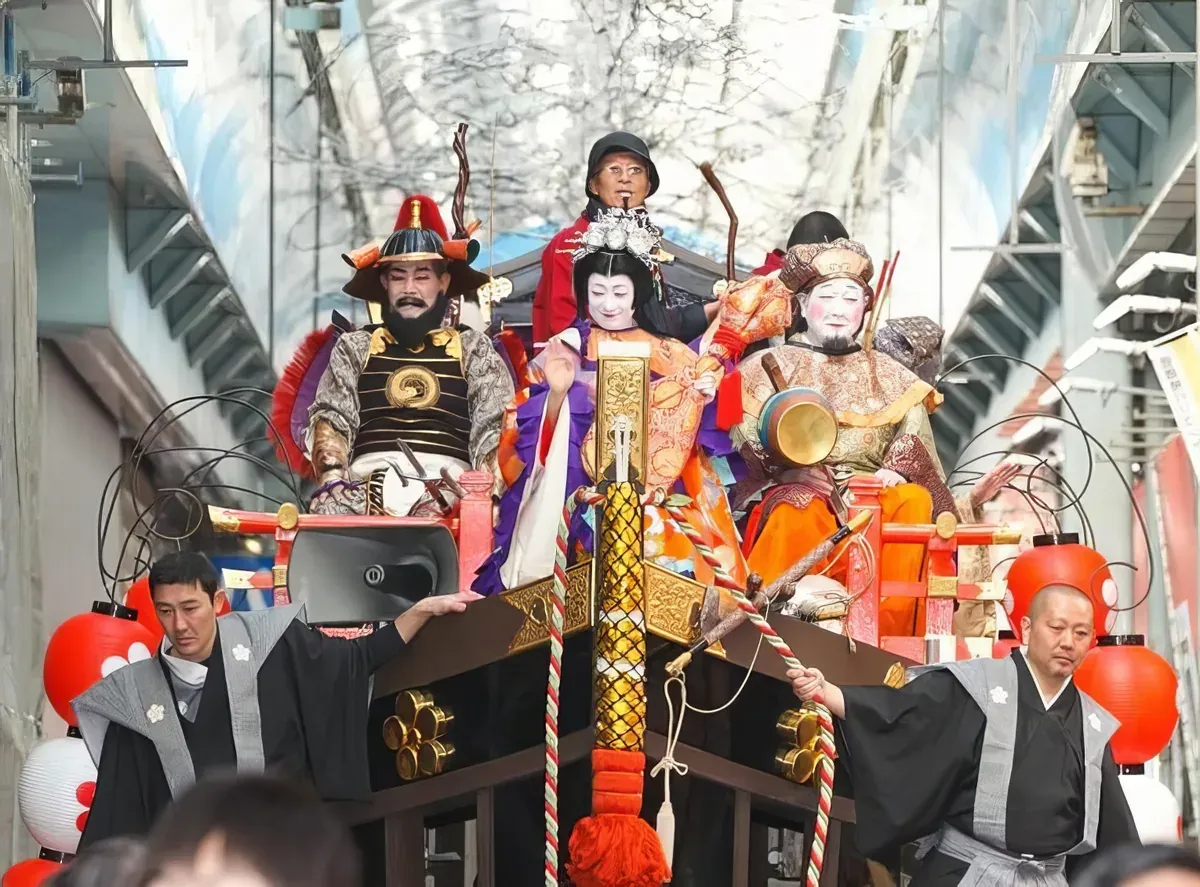
On board are the Seven Gods of Fortune. Between them, they cover most reasonable hopes for the year ahead: wealth, health, happiness, learning, protection, and long life.
When the ship arrives at Osu Kannon, the mood changes. Cheers go up, cameras come out, and once the gods are in place, the bean-throwing kicks into a higher gear.
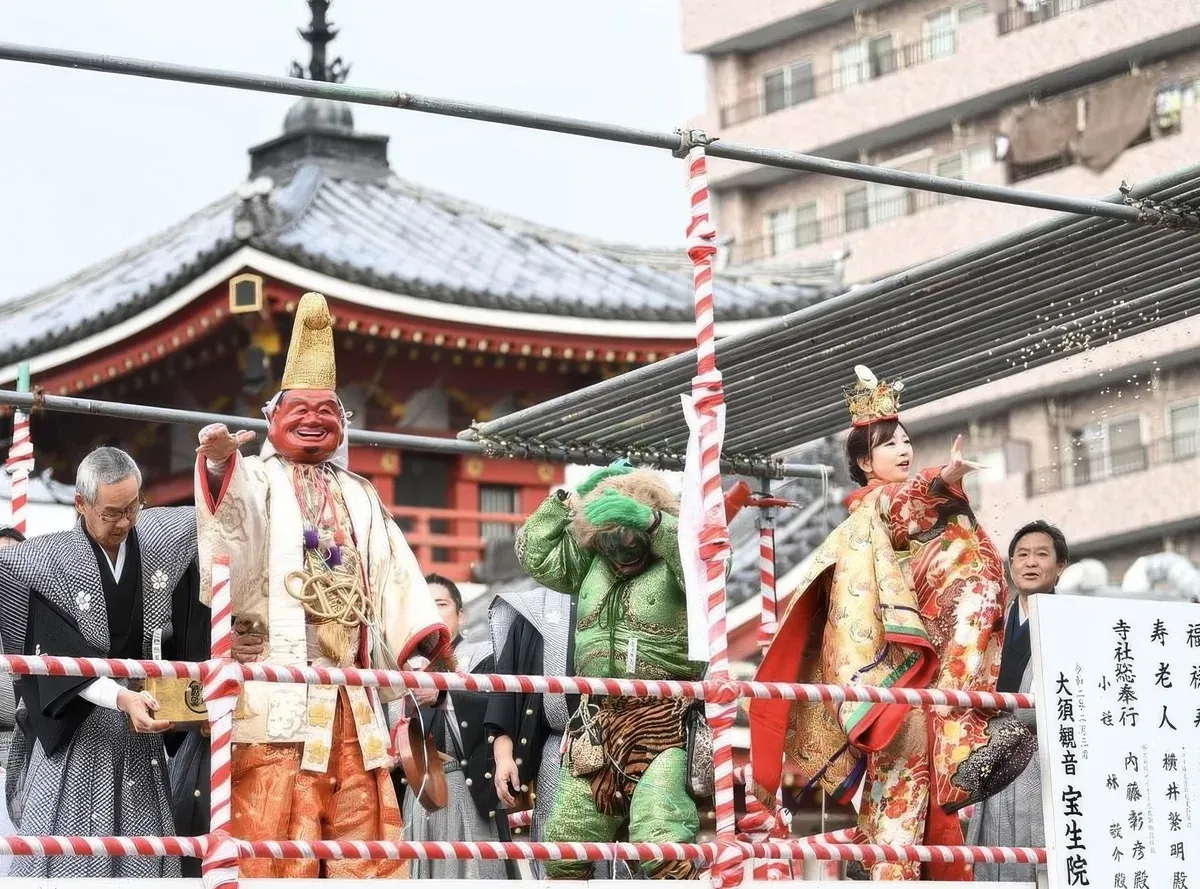
If you’re going to drive away evil, you might as well do it properly!
Expect flying beans, laughing crowds, and that rare feeling of taking part in something ancient that still works because it doesn’t overthink itself.
The Details
Setsubun Festival at Osu Kannon
Date: Tuesday, Feb. 3, 2026
Subscribe to Nagoya Buzz Events Calendar
Google
iCal
Bean throwing:
10:00–18:00
In front of Osu Kannon Temple
Treasure ship parade:
From 13:18 ~
The Osu Maru treasure ship parade starts at Hisaya-odori Park (Kibō no Hiroba Square) and travels south to Osu Kannon Temple. For the clearest view of the ship and the Seven Gods of Fortune, watch it depart from Kibō no Hiroba Square. For the biggest crowd and most energy, head to Osu Kannon, where the forecourt fills quickly as the ship arrives and bean-throwing ramps up.
Price:
Free to watch
¥3,500 per bean-throwing ticket
¥5,000 (includes a wooden box of beans)
Osu Website
(Has loads of info about shops etc)
Access:
Tsurumai Line, Osu Kannon Station (T08)
Exit 2, about a 2-minute walk.
Nagoya Subway Map
Check out our handy guide to using the Nagoya Subway
MAP
Nagoya Buzz publishes weekly guides to events, exhibitions, food, and the small local things that make living here easier (and occasionally stranger.)
If you enjoyed this, our Events page highlights other small, seasonal things happening around Nagoya right now.
→ See what’s happening in Nagoya this week!





Leave a Comment