
The Ukiyo-e Exhibition of "Red" Closes Sunday
Red has been doing a lot of work in Japanese culture for a very long time. Before it was a color, it was a signal — life, danger, the divine, the theatrical, the edible, the erotic. The current exhibition at the MUFG Bank Currency and Ukiyo-e Museum, running until this Sunday, makes that case through four centuries of woodblock prints, and it makes it well.
Every work in the show connects to red — not as a background element but as a focal point. The exhibition explores the many registers of the color that painted Edo and Meiji Japan in every imaginable way: the red of shrine gates and autumn maples, the red of kabuki kumadori face paint, the protective red of certain foods eaten to ward off illness, the cosmetic red of beni lip color, the fashion red of akahime — the red-clad princess figure in kabuki — and the chemical red of the vivid pigments that defined Meiji-era ukiyo-e printing.
Japanese has distinct words for these shades of red: Bengara, akane, beni, tan, shu, hi, enji — each word evokes a different shade, a unique use, a different yet often subtle meaning. While the exhibit could easily turn into an etymologically pedantic lecture, it avoids that trap. The prints add context to color in a setting which allows you to experience meaning through inference, not just explanation.
Works On Display
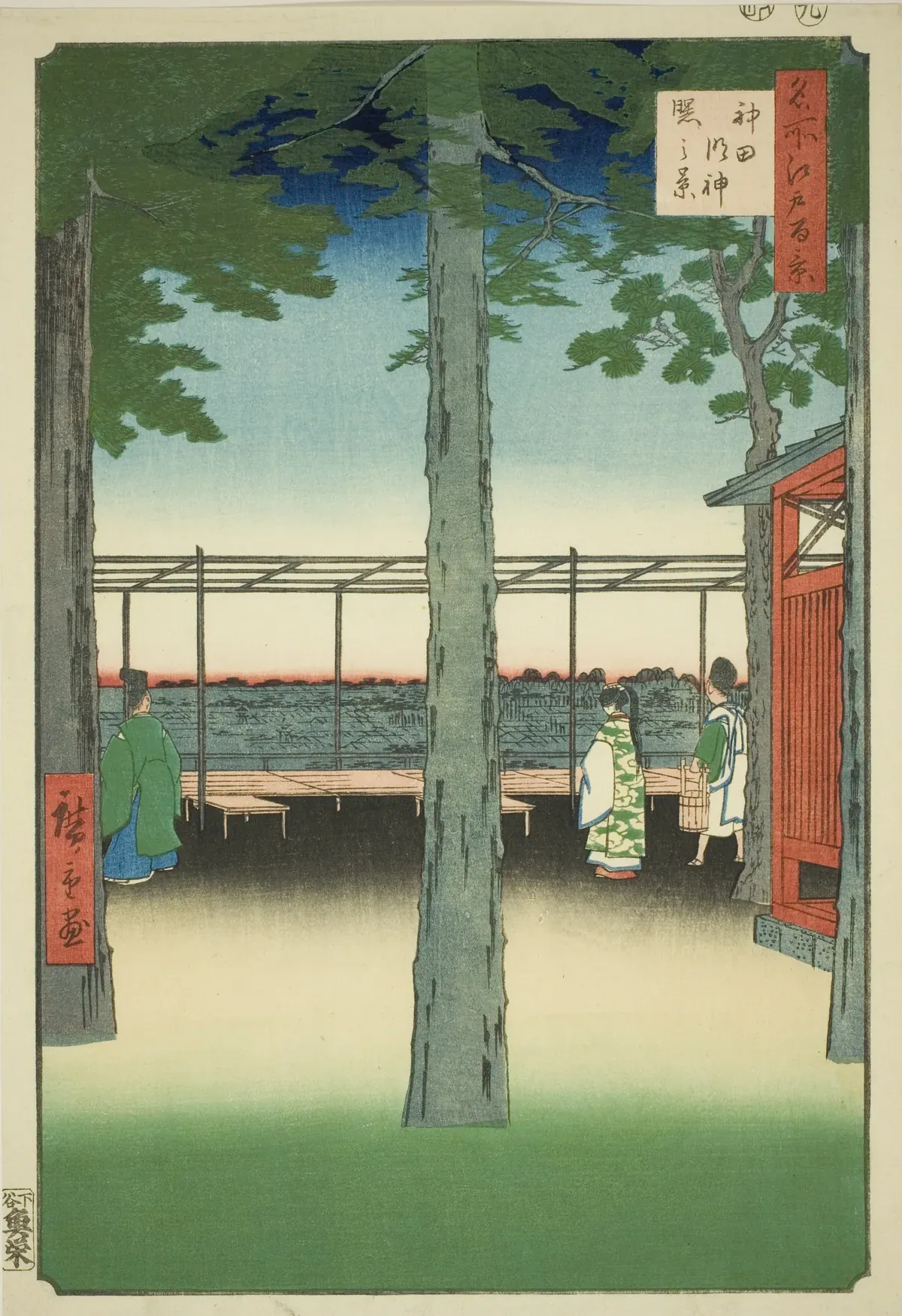
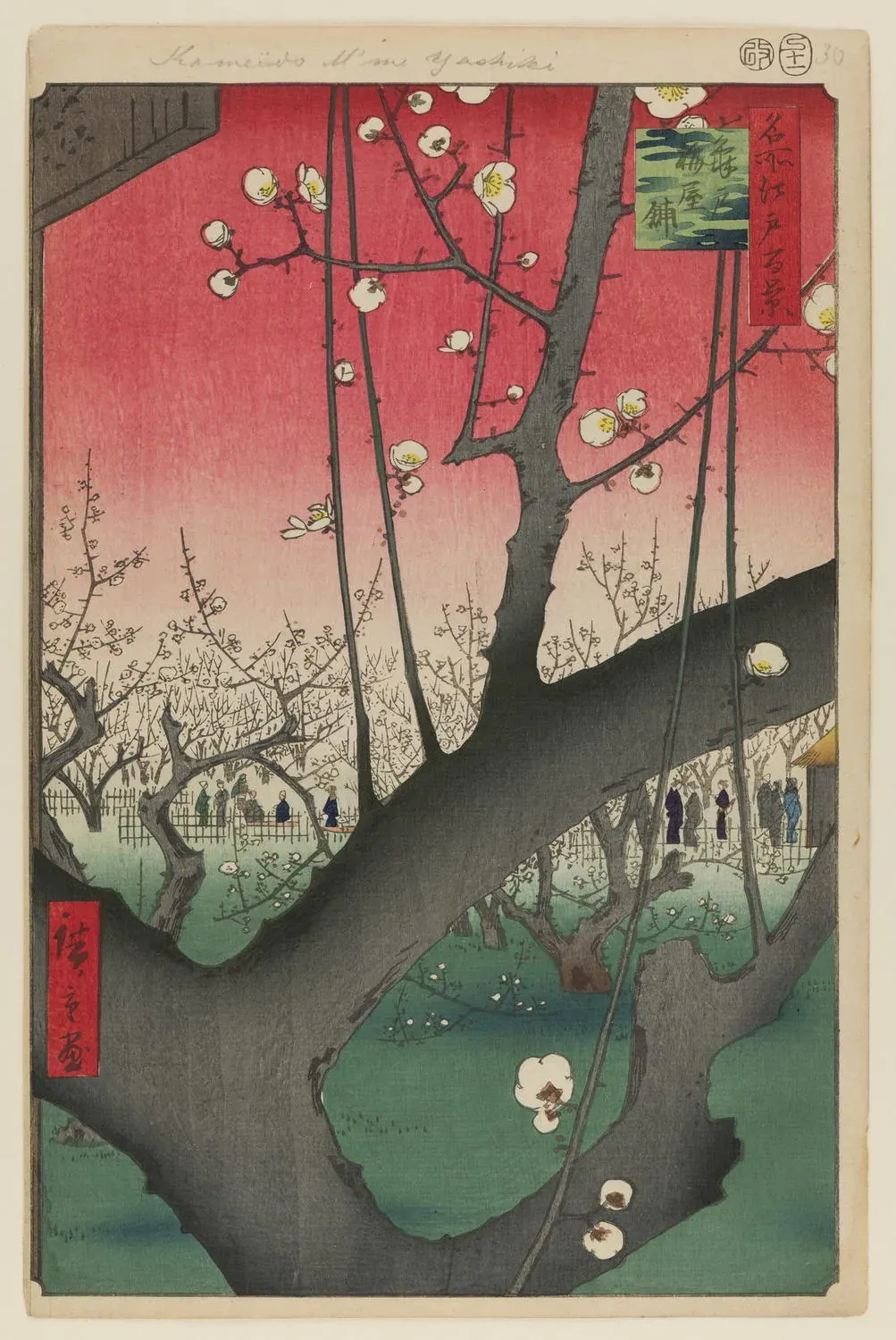
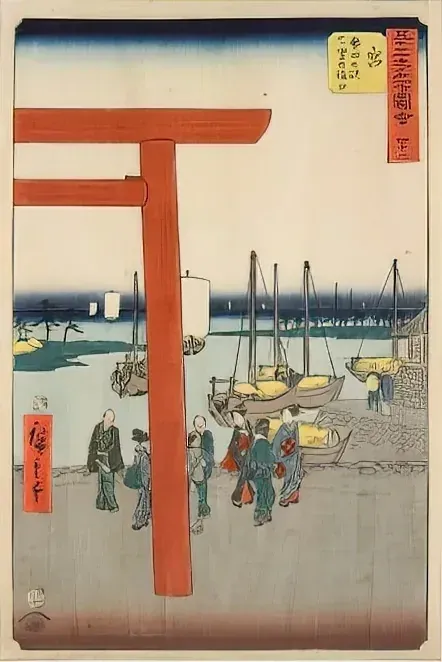
The exhibition draws heavily on Hiroshige, including works from One Hundred Famous Views of Edo and the Fifty-three Stations of the Tōkaidō. Look for Kameido Umeyashiki, with its red sky cut by black plum branches, and Kanda Myojin at Dawn, where the red is quieter but just as deliberate. The local connection is Hiroshige’s Atsuta / Miya scene, showing the Tōkaidō station where travelers crossed Ise Bay by ferry — a small Nagoya link hidden inside the exhibition’s broader study of red.
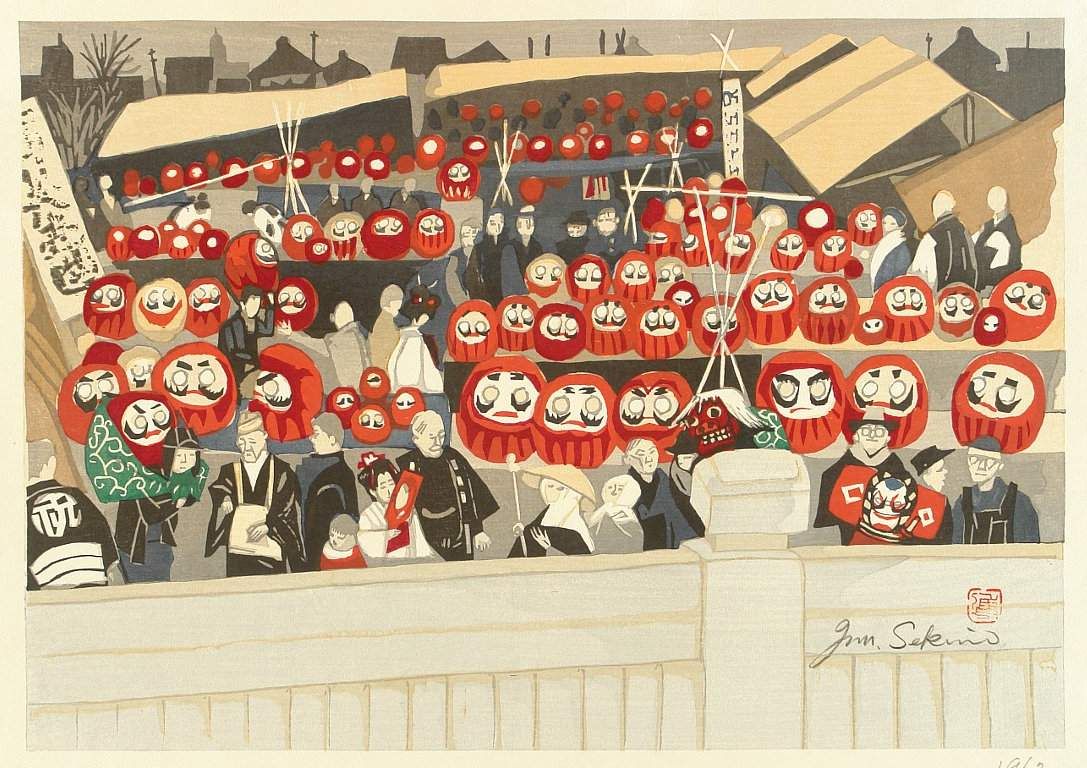
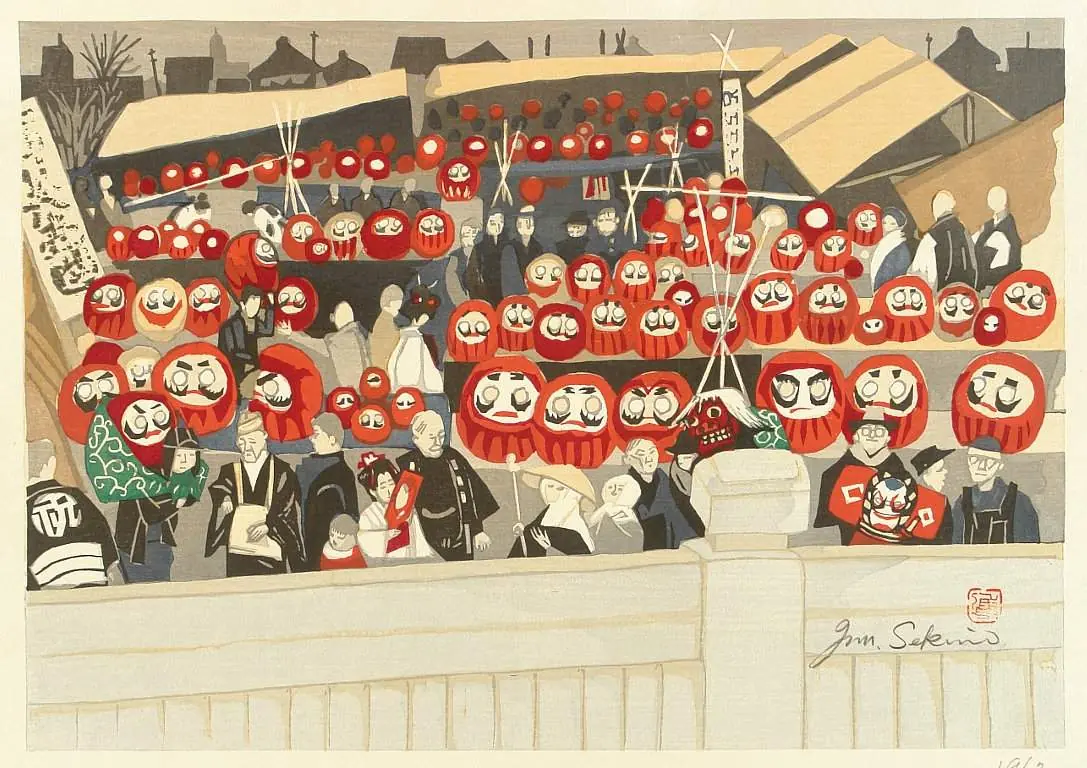
The piece that will stop you is a Sekino Jun'ichiro woodblock of a daruma market. Rows of red daruma dolls, densely packed, all staring out of the frame at once. It has a different energy from the Hiroshige works — more graphic, more immediate — a useful reminder that red in Japanese visual culture did not stop being interesting after the Edo period.
The Museum Beyond the Exhibition
The temporary show occupies the ukiyo-e room, but the permanent collection is worth some extra time. The currency exhibition holds around 15,000 coins and banknotes from Japan and around the world — ancient Chinese shell money, Greco-Roman coins, Yap stone money, Edo-period clan currency, and printing blocks from the same era. There is also a gold Oban coin commissioned by Toyotomi Hideyoshi, one of very few surviving examples. It is the kind of object that resets your sense of scale.
The whole museum runs on the first floor of a working bank building, which gives it an odd, slightly compressed quality — you are between exhibitions faster than you expect. That is not criticism as much as a note that it fits a forty-five minute visit perfectly and leaves time for coffee.
Practical Notes
The exhibition closes this Sunday May 24 and the museum goes dark Monday through Wednesday to prepare for the next one. There is no soft ending here. Free entry, no booking required, last entry at 15:30.
The museum's tagline for the show is Willows are green, flowers are red — a classical pairing that sets up red as the color of vivid, living things against the quieter green world around them. Spend an hour inside and you will find yourself noticing red differently on the walk back out. Every torii gate, every lantern, every traffic light. The show offers a unique view of a color that is synonymous with Japan, though many may not know why.
The Details
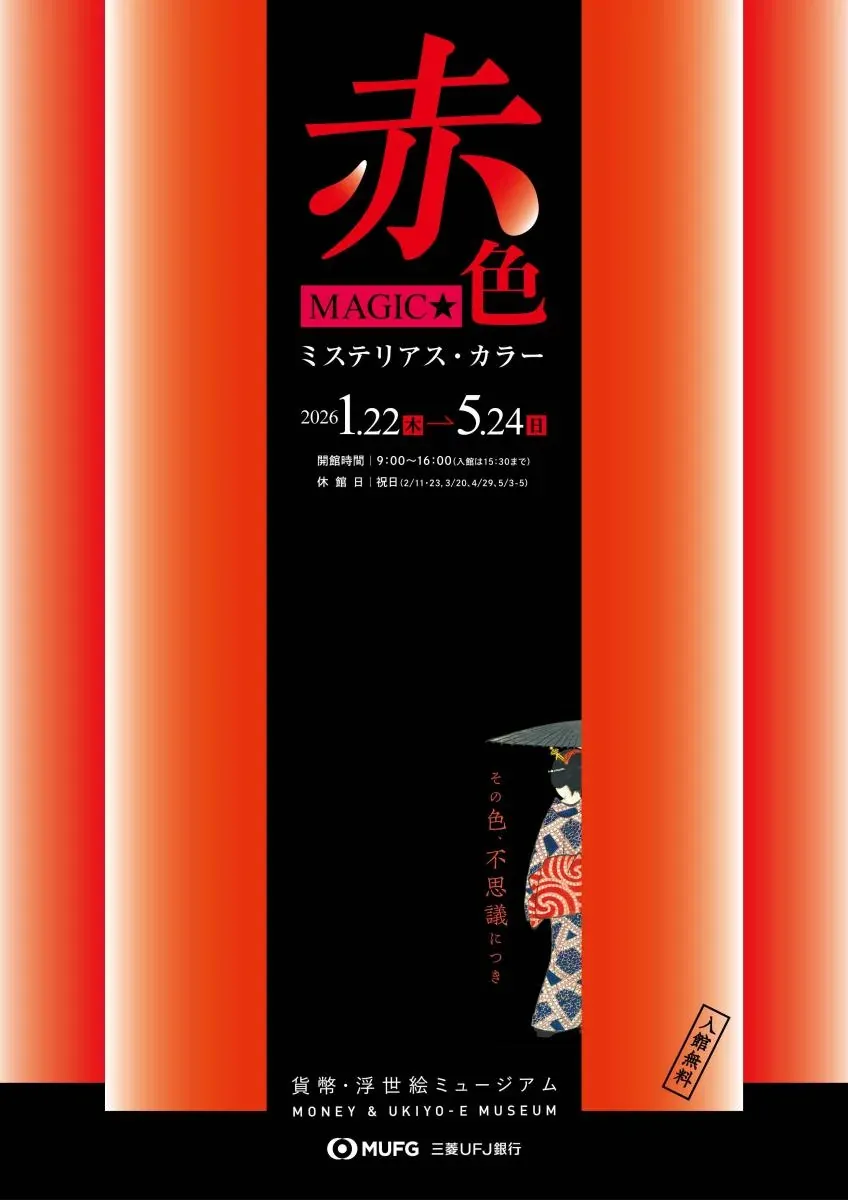
赤色MAGIC★
Mysterious Color
Venue:
Mitsubishi UFJ Bank
Currency and Ukiyo-e Museum
Dates: Until Sunday, May 24, 2026
Times:
9:00–16:00
Last entry 15:30
Admission: Free
Closed on public holidays
Final weekend: May 23–24
Mitsubishi UFJ Bank
Nagoya Building 1F
3-21-24 Nishiki,
Naka-ku, Nagoya
Tel: 052-300-8686
English phone support not available
No parking
Please use public transport
Access
From Fushimi Station
Higashiyama Line H09
Tsurumai Line T07
Exit 3
About 5 minutes on foot
Walk east/northeast from Fushimi toward Nishiki.
The museum is on the 1st floor of the Mitsubishi UFJ Bank Nagoya Building.
From Sakae Station
Higashiyama Line H10
Meijo Line M05
Exit 8
About 5 minutes on foot
Walk west along Nishiki-dori toward Fushimi.
The museum is inside the Mitsubishi UFJ Bank Nagoya Building.
 Nagoya Buzz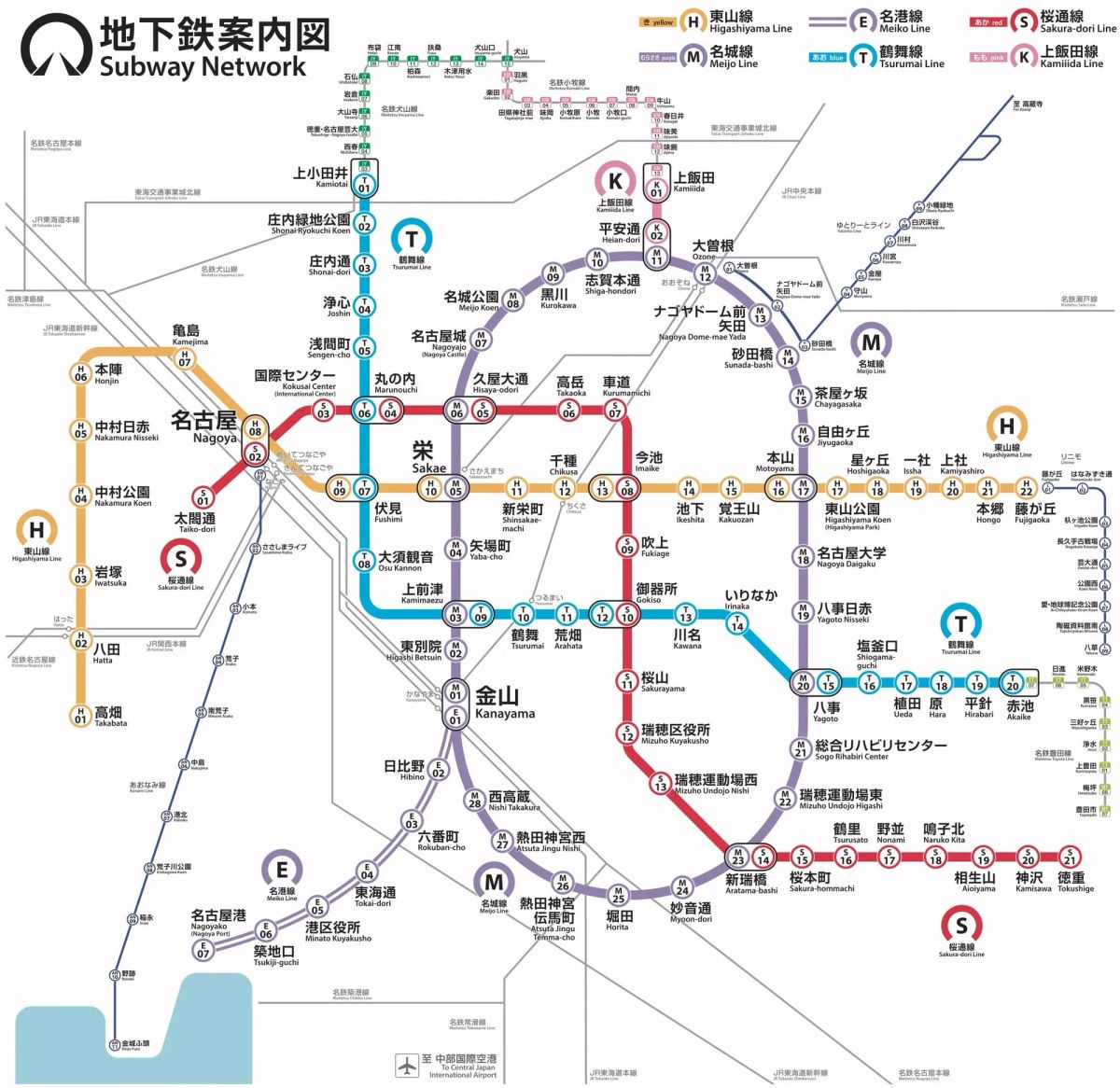
MAP





Leave a Comment