
History, Mechanical Dolls, and Lanterns
Wakamiya Hachimansha sits in central Nagoya, between Sakae and Osu, on a block most people pass without noticing. The shrine has been in Nagoya considerably longer than the block has — its records date to 701, when it stood in what is now the Sannomaru district of Nagoya Castle.
In 1610, Tokugawa Ieyasu needed that ground for his castle, so he moved the shrine to its current location in Sakae and simultaneously designated it the main tutelary shrine of the city. Evicted and promoted in the same year. It has been here ever since — destroyed in the bombing of 1945, rebuilt in 1957, and still running one of the city's best traditional festivals each May.
Held on May 15 and 16, the Wakamiya Festival is one of Nagoya's one of Nagoya's three historic Edo-period shrine festivals, alongside the Tōshōgū Festival and the Tenno Festival at Nagono Shrine. Of these, Wakamiya is by far the most accessible — both geographically and in terms of actually being able to see what's happening.
The Float and the Karakuri
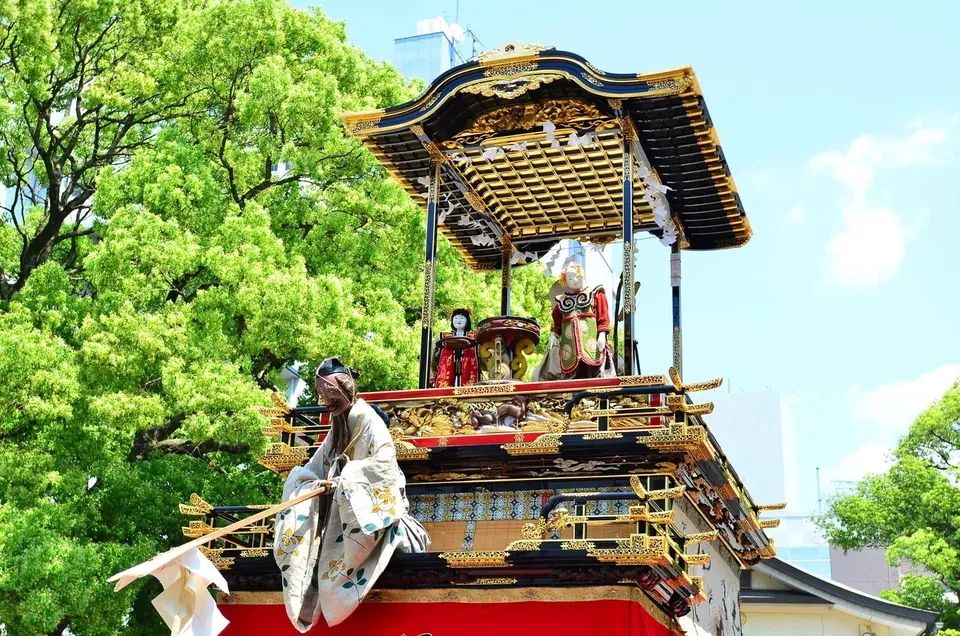
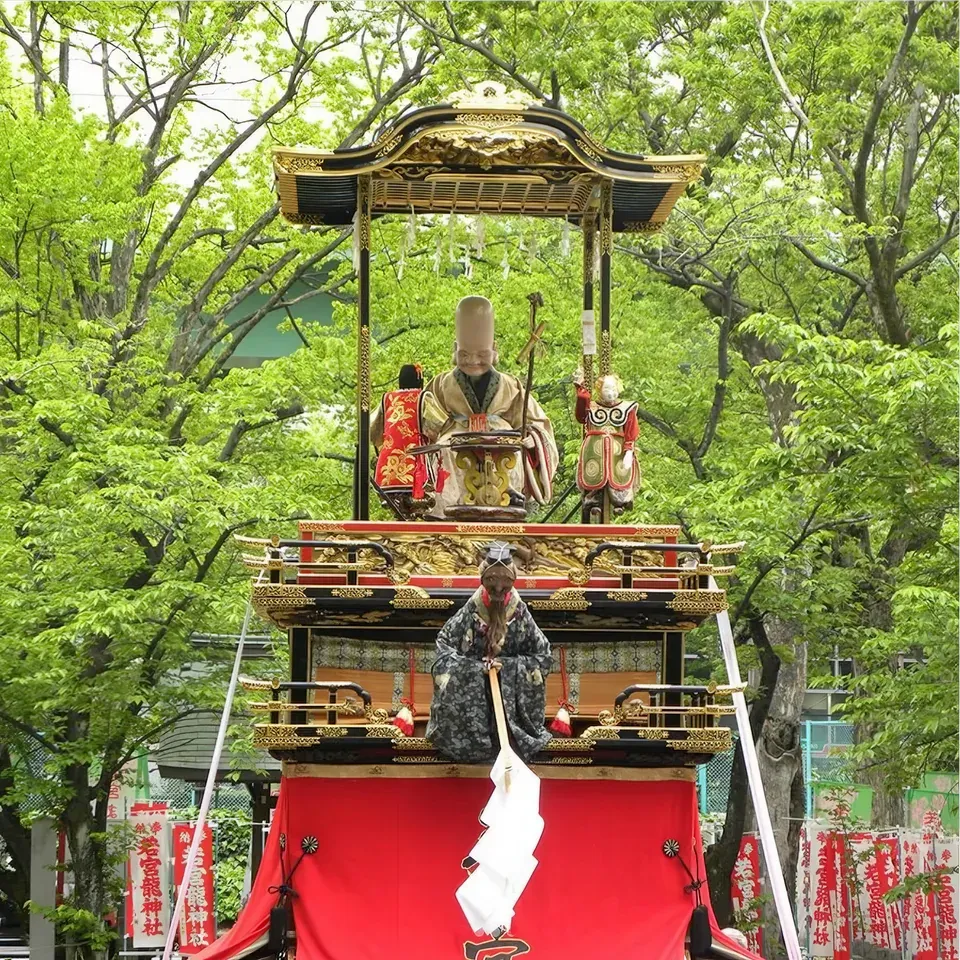
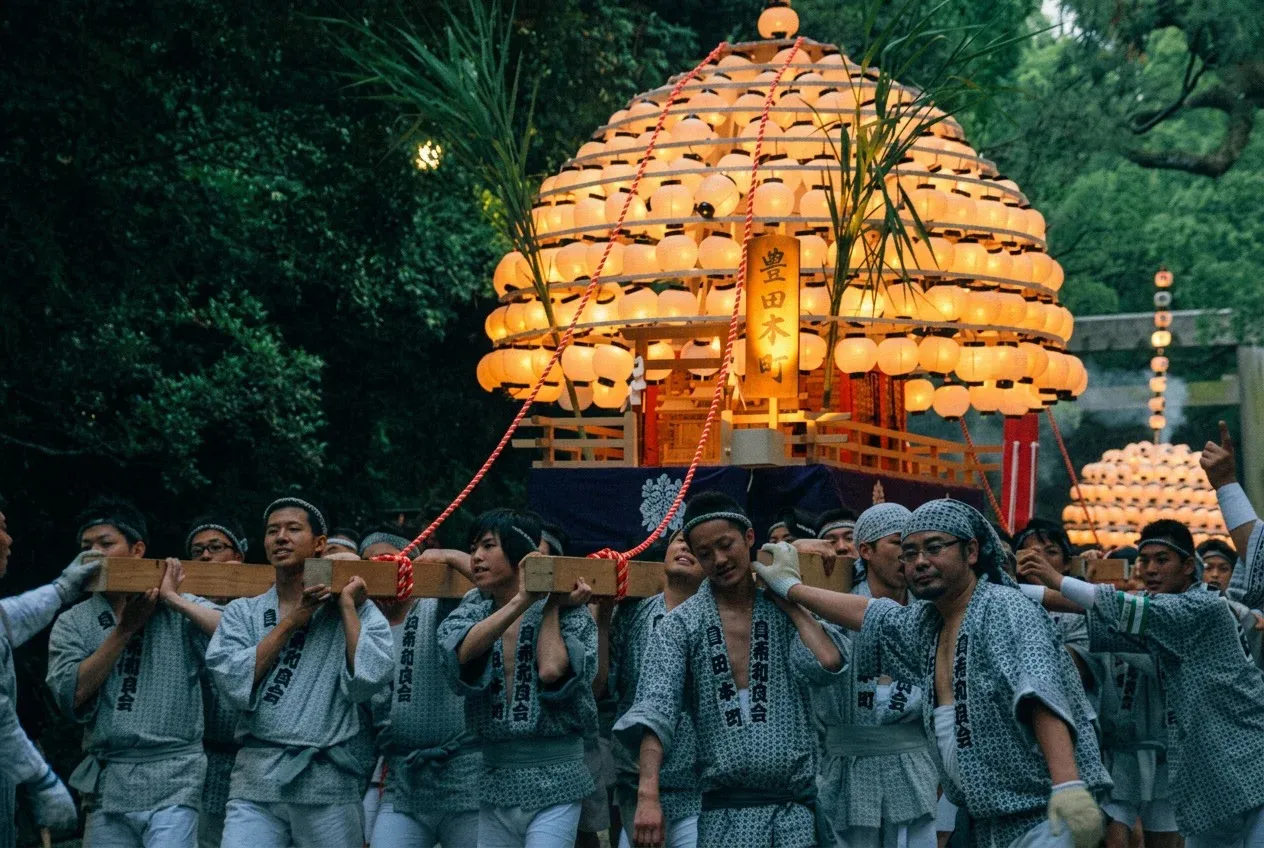
The festival's centerpiece is the Fukurokuju Float (福禄寿車), built in 1676 and designated a cultural property of Nagoya City.
Fukurokuju is one of Japan's seven gods of good fortune, associated with longevity, wisdom, and prosperity. The easiest way to recognise him — in person or in photos — is his head: extraordinarily tall and elongated, sometimes almost cylindrical, symbolising wisdom and long life in Japanese art. On the float he sits prominently on the upper stage, staff in one hand, scroll in the other. Once you know what you're looking at, you'll spot him immediately.
The float is ornate but not massive, yet unlike floats that impress mainly through scale, this one is built to be watched at close range.
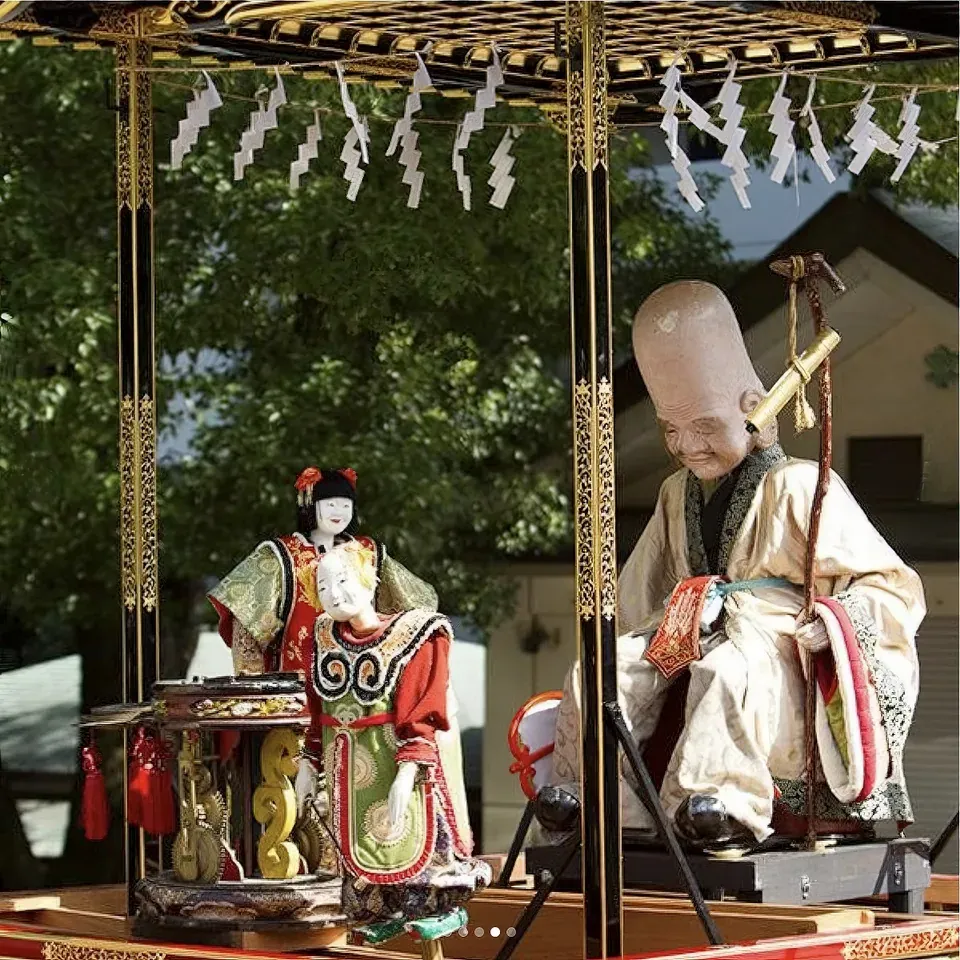
Mounted on it are karakuri mechanical dolls — wooden figures operated by hidden systems of springs, gears, and silk threads, with no electronics involved. The mechanisms date to the Edo period, when audiences were genuinely fascinated by what hidden machinery could make a wooden figure do.
The performance typically involves three dolls: Fukurokuju himself, a child figure called Tangako (唐子), and a supporting doll. During the sequence, the child doll moves forward and performs a small mechanical trick — sometimes writing characters with a brush. Small gestures, precise timing, the accumulated craft of people who spent their lives on this. Easy to underestimate if you're expecting noise and speed. Worth giving your full attention.
By the Edo period, seven floats representing different districts had paraded through Honmachi, the main street of castle-town Nagoya. Most were destroyed in 1945. The Fukurokuju Float is the one that remains.
The Fukurokuju Float will be part of this year's festivities. However the annual parade featuring of all floats and portable shrines procession did not run in 2025 due to restoration work. When the schedule for 2026 is released this article will be updated with that information. Regardless the sacred stage performances and festival events within the shrine grounds are going ahead as scheduled.
May 15 — Shiraku Festival
The Procession
On the main festival day, the float and a mikoshi — a portable shrine carried on the shoulders of parishioners — make a round trip between Wakamiya Hachimansha and Nagono Shrine, a short distance away.
The two shrines have been connected since before Ieyasu moved the castle grounds — they were neighbors at the original Sannomaru site. Walking ahead of the procession and watching it arrive is more satisfying than following along behind it.
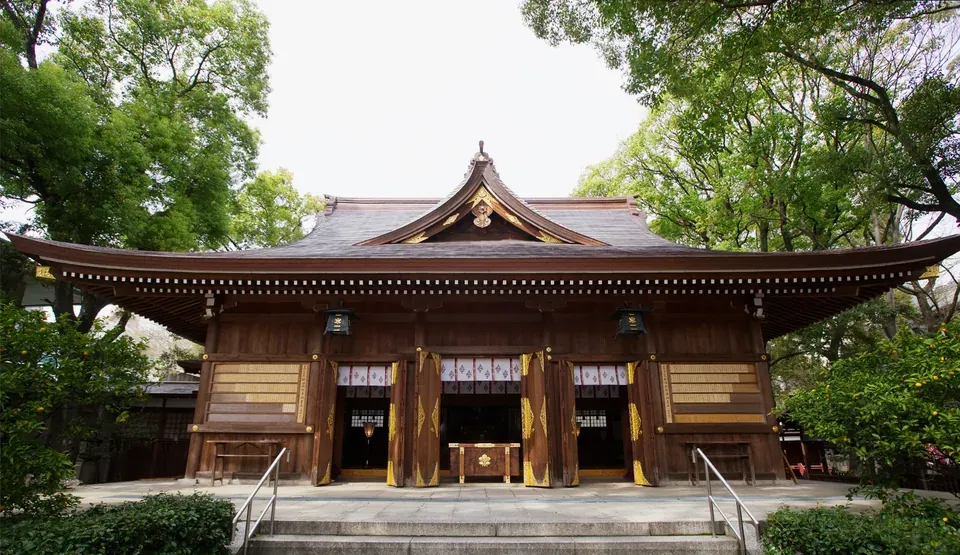
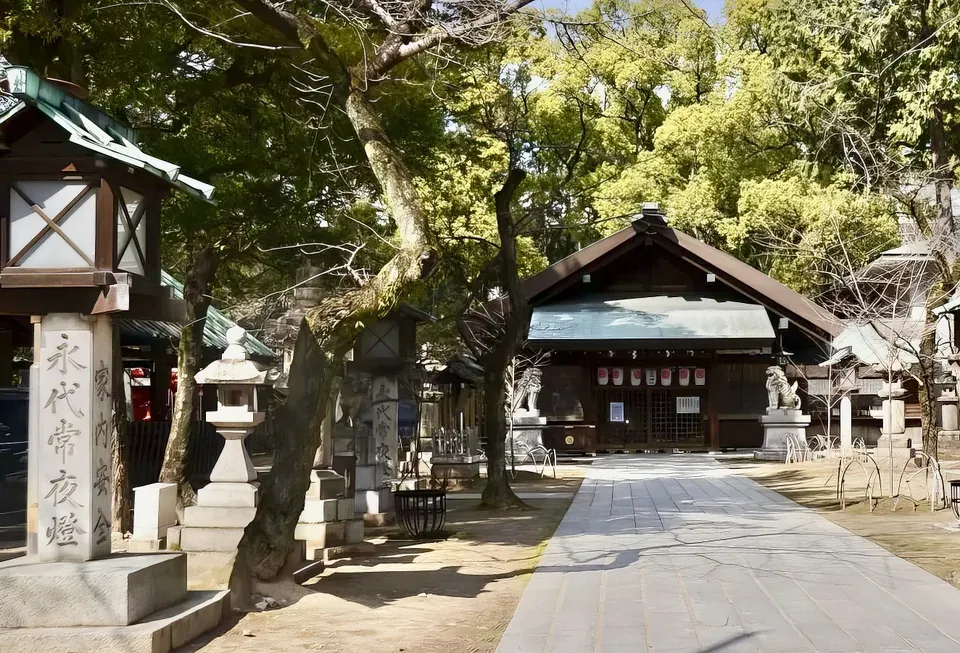
The shrine's main hall holds its rehearsal festival from 16:00. On the sacred stage, musical performances run at 13:30, 15:20, and 19:00, featuring the Nagoya University Koto Zither Club, the Nishikawa School, and the Suehiro Town Shinto Dance Group. Traditional Japanese dance begins at 17:00. Food trucks open in the north area from 16:00.
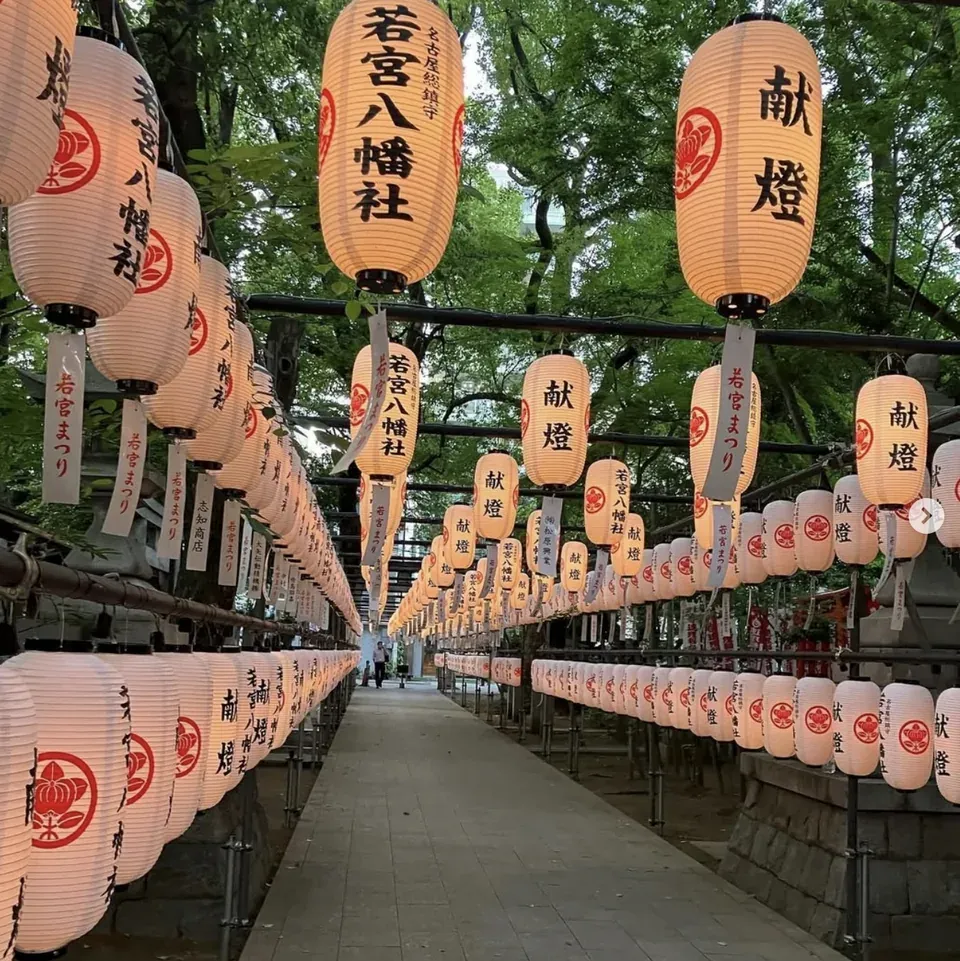
After dark, the float is lit with lanterns. This is the detail most people who've been will mention unprompted.
If you prefer taking things in without chasing a schedule, May 15 is the easier day.
May 16 — Honraku Festival (Main Event)
The annual devotional dance takes place in the main hall at 10:00. On the sacred stage, Chinese lion dances run at 11:15, 13:30, 15:25, 17:35, and 19:20. Ryukyu dance, Dojosukui dance, and Tokiwazu performances begin from 16:30. Owari Shinjiro taiko drumming is at 18:30.
This is the day the shrine feels most alive. If you can only go once, this is the one.
If you have time for both, the most straightforward combination is the evening of May 15 — lantern-lit float, koto, no rush — and the afternoon of May 16 for the lion dances and taiko.
What to Expect
This is not the kind of event where you stake out a spot hours in advance or fight your way through dense traffic to see anything. There are crowds, but they're manageable. You can actually get close.
The karakuri performances reward attention rather than distance. Find a spot near the float and stay put for a full performance. The yatai food stalls set up around the grounds — standard festival fare, takoyaki and the like — give you something to do in between.
The shrine itself is slightly tucked away for how central it is. That's part of what makes the festival feel right-sized.
A Half-Day Around It
Wakamiya Hachimansha is between Osu and Sakae, which makes it easy to build into a larger day. A straightforward version: Osu in the morning for browsing and lunch, the festival from the early afternoon, Sakae in the evening. Almost no transit required.
The shrine is worth a visit on a regular day too — the grounds are calm in a way that doesn't feel earned given the neighborhood surrounding around it.
Oh.. and fun fact! Every February 8th, the Wakamiya Hachimansha Shrine holds the annual Hari Kuyo. This ceremony gives worn-out sewing needles a plush send-off into soft tofu or jelly—a way to ease their "pain" after years of hard labor. It's a sweet, if slightly bizarre, way to thank these tiny, tireless tools.

The Details
Wakamiya Festival
Venue: Wakamiya Hachimansha Shrine
Date: May 15–16 (annual)
Times:
May 15:
Sacred stage from 13:30, food trucks and main events from 16:00.
Lanterns after dark
May 16:
From 10:00, main performances from 11:15
Price: Free
Address:
3-35-30 Sakae
Naka-ku, Nagoya
Access
By Subway / Train:
About 5–6 minutes on foot from Yabachō Station (M04) on the Meijō Line.
Also walkable (about 7 minutes) from Ōsu Kannon Station (T08) on the Tsurumai Line.
 Nagoya Buzz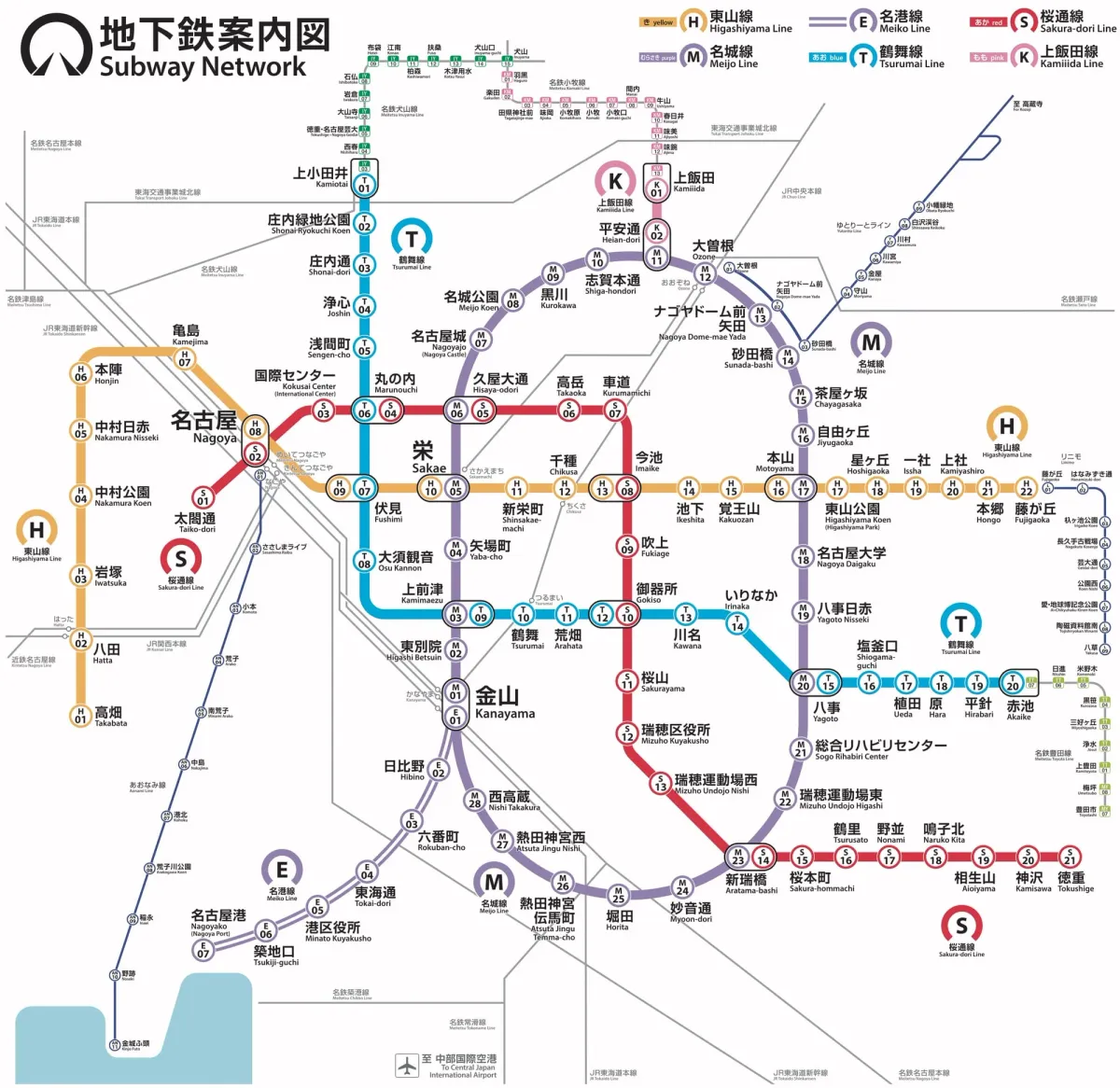
MAP
Nagoya Buzz is a weekly guide to events, food, and the things that make this city worth paying attention to. More where this came from on our Events page.
→ See what’s happening in Nagoya this week!




Leave a Comment