

What's Next for Nagoya Buzz?
By Carter Witt
You (along with about three or four others) may have noticed things have gone a bit quiet at Nagoya Buzz recently. For about three years, I have been putting out new posts and a newsletter every week. But then, for the last couple of months — nothing.
And that is what actually happened.
Nothing.
My time simply got squeezed. The workflow that kept it running stopped working the way it once had.
That doesn't mean the project matters less to me — quite the opposite. Time away from it made me think about who and what it is for, and why I had started doing it in the first place.
A Bit of History
I've lived in Japan for over 30 years. For most of that time, I've been creating English-language publications.
The first was a rag called THE ALIEN. On a bright spring day in 1990, I wrote it out by hand, pasted in a couple of odd photos from The Japan Times and considered it done. I trundled down to the local LAWSON, bought a beer and watched the photocopier spit out copies of my zine.
After I stapled the pages together, I bought a few more beers and walked into Sakae, handing them to any “foreigner” I saw, which at the time wasn't many.
An afternoon with nothing much to do turned into a life of doing more or less the same thing.
I'd lived in Britain and loved Private Eye. THE ALIEN started as a pale attempt at imitation, mostly depicting a time and place I saw as “funny.” Japan felt odd compared with the other places I had lived and traveled. The name came from the “Alien” sign at the immigration counter at Narita. The “Engrish” I read on signs seemed part of the same joke, and I thought I was in on it.
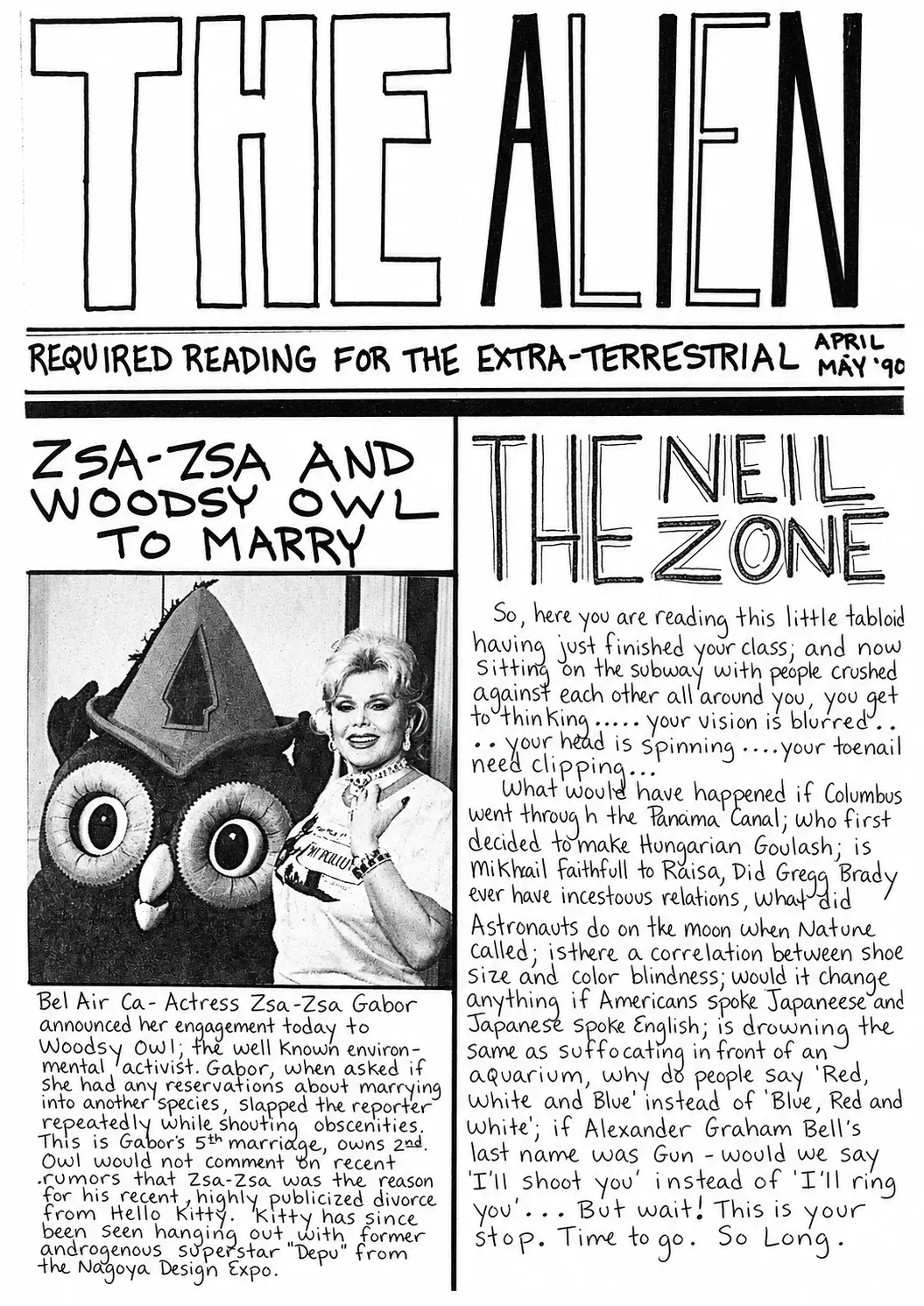
As the rag evolved into a monthly magazine, those of us who created it did so from inside our own ignorance. We often behaved as if many of the social rules simply didn't apply to us.
We called ourselves “gaijin” on purpose. Even then the word was fraught. We used what many consider a term of disrespect as a way of defining ourselves, as though claiming it gave us some power over it. We laughed off anyone who thought they knew better than us.
I don't pretend to speak for others. This is just how I remember it.
I was a young white man in the bubble economy when champagne glittered with flakes of gold. I made incredible sums of money “teaching English,” to the point where it often looked more like theft.
I never experienced any real discrimination. I was welcomed, often enthusiastically, at a time when the international community was small enough that you knew pretty much everyone by face, if not by name.
Nagoya felt like the world's largest village. It never crossed our minds that we were its idiots.
Beneath the laughter was a creeping realization. Being “foreigners” didn't exempt us. Often we only learned rules after we broke them.
Over the years, as Japan stopped being somewhere I was passing through and simply became where I lived, some of those old jokes started to feel different.
THE ALIEN began to read less like humor and more like criticism.
Did Japanese people see us as literal aliens? Or had something inside of me shifted?
Probably a bit of both.
What does seem clear to me now is that the joke often depended on distance.
As THE ALIEN spread beyond Nagoya, the same jokes landed differently. What amused one audience irritated another.
We spent hours analyzing the solution and ignoring the problem. It was black and white! The design was dated! We needed full color! We needed a website!
We never considered that what we wrote and how we wrote it might be the issue. The obvious conclusion was to rebrand.
So we papered over the problem by changing the name from THE ALIEN to Japanzine.
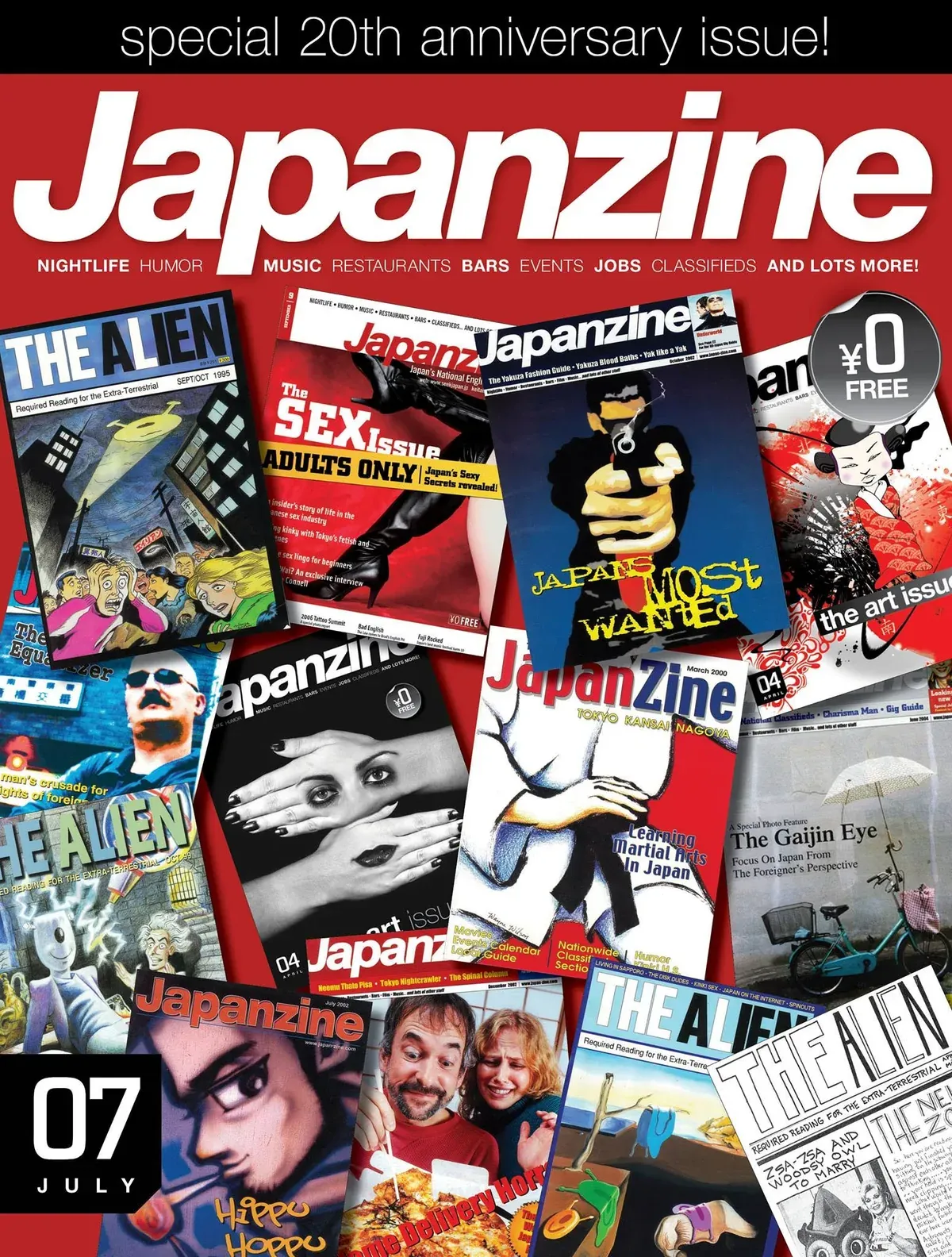
Japanzine
That worked for a while. But changing a name is considerably easier than changing a perspective. We were still using many of the same caricatures and much of the same humor. I certainly was.
Eventually the partnership behind Japanzine broke apart. It wasn't a shining moment, and there is no reason to dwell on an old dispute.
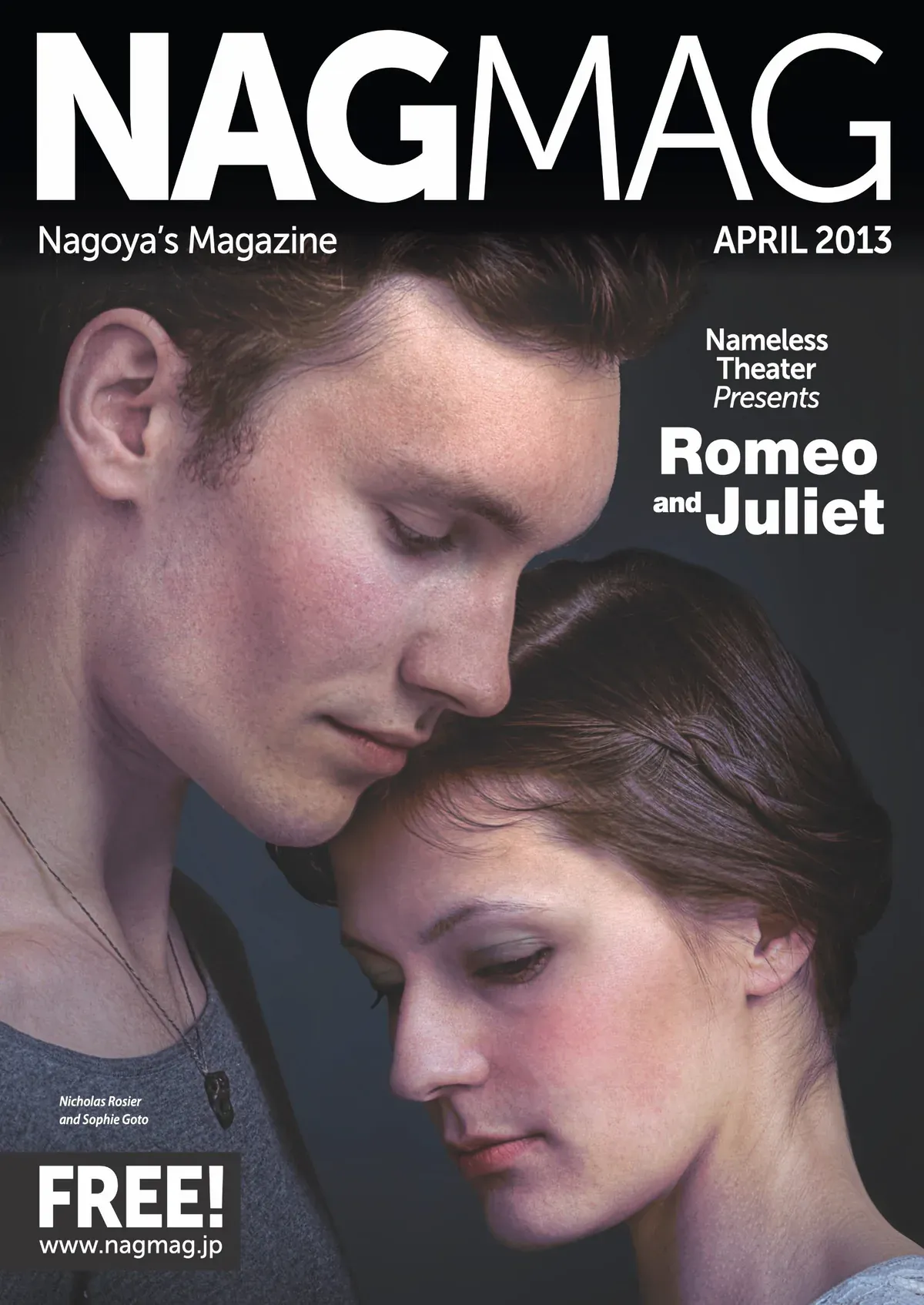
NAGMAG
With young children, I shifted gears. The next move became local. NAGMAG was built around a growing, diverse international community living in one city.
Somewhere along the way, Nagoya itself had become more interesting to me than “Japan.”
Years later, when I returned to publishing with Nagoya Buzz, the community had changed again. More people were arriving from more places, while social media had completely changed how information travelled.
We had more information than ever, but some of the knowledge once passed from person to person seemed to be disappearing.
The things nobody tells you. Where people actually go. Who is doing something interesting. What an event is really like.
Nagoya Buzz grew partly out of that gap.
But I have never wanted it to become a clubhouse for foreigners talking only to foreigners about Japan. The point is connection: international residents with Nagoya, people with one another, artists with audiences, Japanese and international residents creating in the same city.
I became less interested in helping foreigners look at Japan from the outside and more interested in helping people participate in the place where they live.
I still think Nagoya is a pretty good place to live.
But something important has shifted.
I hear it in conversations.
International residents talk differently about how they are perceived. Japanese friends and acquaintances express frustrations of their own. Some people describe what they experience as prejudice or racism. My own experience doesn't give me the authority to define that for them, but it doesn't give me a reason to dismiss it either.
There are plenty of possible explanations.
What I do notice is people increasingly talking about one another rather than to one another.
That kind of distance concerns me because I've spent much of my life watching it open and close.
Living here for nearly forty years has taught me that living somewhere changes you.
I don't think that means surrendering who you are. But neither do I believe we can live somewhere for years without allowing the place to alter us.
Japan changed me. I am certainly not the person who stood outside Medi-ya in Sakae handing strangers photocopies of THE ALIEN.
Thank God.
Part of living here is learning that your actions affect the people around you. Sometimes the rules are obvious. Sometimes nobody tells you until you break one.
But participation can't run in only one direction. People who come here should understand the place they are joining. A society that expects participation also has to leave room for them to belong.
And international residents aren't simply visitors “consuming” Japan. They work here. Raise children here. Run businesses. Make music and art. Teach, study, cook, organize things, pay taxes, care for people and contribute to the city around them.
Which is a rather long way of explaining what any of this has to do with a website about Nagoya.
Quite a lot, actually.
What Now?
Nagoya Buzz is still evolving.
The website and newsletter will continue. And I still believe in print — something analogue and physical that can sit on a counter, disappear into a bag or be handed to somebody.
These aren't separate projects, but different ways of doing the same thing. The print side is still taking shape, probably as some form of quarterly — part city guide, part creative publication, with room for local photography, art and writing.
The last few months also exposed an obvious problem.
If Nagoya Buzz depends entirely on how much time I personally have available, it stops whenever my time disappears.
That's not sustainable, and it isn't much of a community.
So I've been thinking about something I have been calling, for want of a better term, The Hive.
It isn't really a plan yet — it's just an idea.
What I have in mind is something loose: people who might contribute regularly or occasionally — music, art, photography, food, neighborhoods, events, essays, interviews, short fiction, or one strange corner of Nagoya they know better than the rest of us.
That means Japanese residents as much as international ones. That was always the goal.
I will continue to edit and curate Nagoya Buzz. The idea is to bring more perspectives into something that has depended too heavily on me.
Before deciding what The Hive should become, I would rather talk with people who might want to be part of it.
In the coming weeks, I plan to arrange an informal gathering for anyone interested in contributing — regularly, occasionally, or simply by bringing ideas about what Nagoya Buzz could become.
One More Thing
There is a reason most Nagoya Buzz articles aren't written quite this personally.
Readers who have been around for a while may know Doug Breté, the intentionally overenthusiastic voice I use for much of Nagoya Buzz.
Doug is still around, and considerably more excited about the next autumn illumination than I am.
But the enthusiasm behind him is real.
This couldn't really come from Doug because I'm not announcing a finished idea. I'm asking what this should become.
It's a long way from calling myself a gaijin and running a magazine called THE ALIEN, laughing at someone else's misunderstanding.
Maybe the irony is the point.
Carter Witt
Get in Touch
What is Nagoya Buzz missing? What do you wish somebody had told you about living here?
If you'd like to write, photograph, explain, organize, create — or simply tell us about something worth knowing — I'd like to hear from you.
Click the button below or email us at: info@nagoyabuzz.com
And if you're interested in whatever The Hive eventually becomes, let me know. I'll contact interested people when I arrange the first informal gathering.
Comment!
If you'd like to start a public conversation please leave a note in the comments section below! (Free members only!)






Leave a Comment