
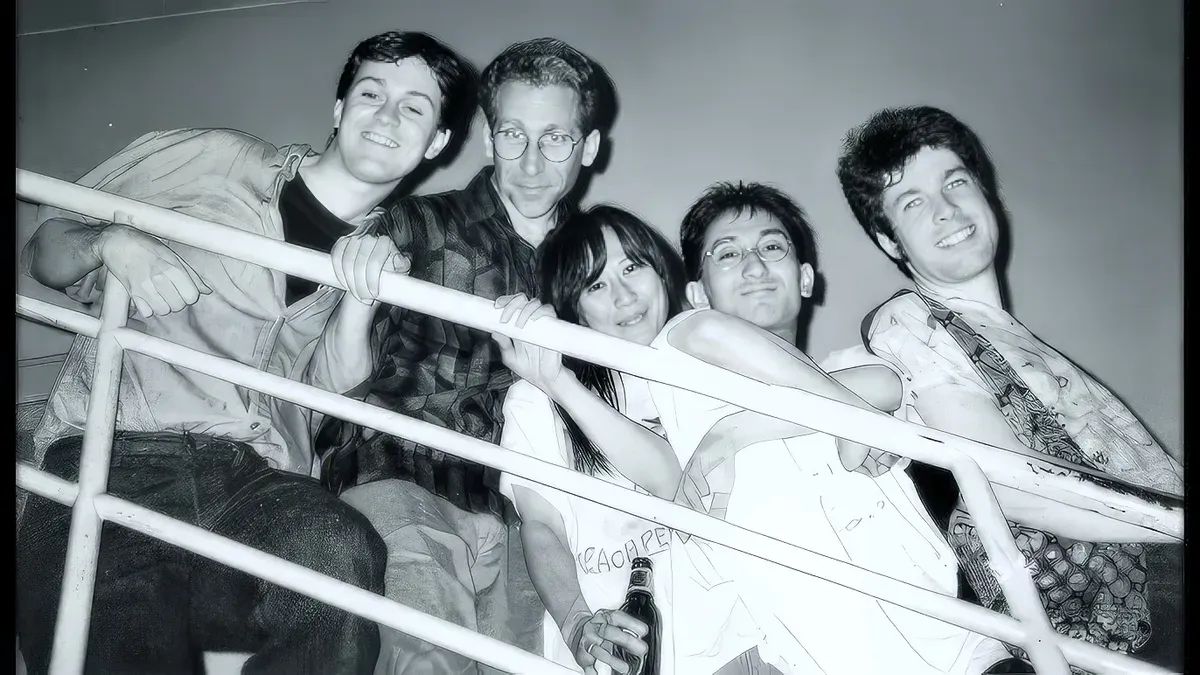
At Second Home May 17
Before Nagoya's international community had Facebook groups, event apps, or anything resembling an organized infrastructure — unless you count THE ALIEN magazine as "organized" or "infrastructure" — it had bars, live houses, English teaching jobs, and people who had told themselves they were only staying for a year. A year that had a way of extending itself.
That loose, improvised world — noisy, word-of-mouth, or a local rag — was built on proximity and shared uncertainty. It is the setting for Rise Up Your Pints! – The Story of The Rising Pints, a documentary about one of the most notable bands that came out of it. The film premieres at Second Home in Fushimi on Sunday, May 17.
The Band
The Rising Pints formed on St. Patrick's Day 1996, which is either a very obvious origin story for an Irish folk band or a very honest one. Brian Cullen brought the Irish music — Dublin-rooted, stoked in part by learning to pick a guitar from a German guy in a hostel. He brought not just the voice and the songwriting but a knack for holding a room and earning a few quid for his trouble.
Mark Renburke came through band culture, already performing rock gigs and writing his own power pop songs before arriving to Nagoya in 1994 to the grunge-era live scene that was just beginning to figure itself out. Elder member William Matheny widened the group's sound with a melodic sensibility from coming of age in the American music scene of the late 1960s and early ‘70s.
This happenstance group of musicians introduced something that runs underneath much of the band's music: that particular Irish folk feeling that is somehow resigned and joyful in the same breath, a pint raised in acknowledgment and defiance — an amicable rage against the dying of the light.
Together the Rising Pints built something that pushed against the edges of traditional Irish folk, drawing in rock, blues, and bluegrass without losing the thread back to where the music came from.
The band's name came from a Christmas card Brian received one year. Someone had written "from the land of the rising pints to the land of the rising sun" — and Brian saw the larger truth.
Their first official gig was a CD release party for Mark's debut solo album. He recruited Brian to play, and Brian — already embedded in Nagoya's Japanese Irish music scene — brought in two talented performers, Mayumi Nagura and Eiji Wakami, to round out the sound.
The gig was held at the now-legendary Santa Barbara in Osu: pink walls, blue roof, frozen margaritas, southwestern food, and an outdoor deck for burning through sunny weekends and warm nights. Under the management of one of Nagoya's most storied figures, Chris Zarodkiewicz, it was — for a good stretch of the 1990s — the closest thing the international scene had to a center of gravity. After Chris left, noise complaints from the neighbors increased, and the murky activities of a later manager eventually brought it down. (Oh, how I wish I could tell you the rest of that story.)
As the band found its footing, they worked their way through the spots where most of the foreign crowd gathered — along with a substantial contingent of Japanese regulars that were part of the scene. They played Country Joe, an essential stop on the circuit long before any of them arrived. The real confirmation came at the small second stage at Bottom Line in Imaike, where the crowd's response left no doubt that what they were building was actually something.
They recorded. They toured — Kansai, Tokyo, wherever the music took them. Then, as happens with most people who had come to Japan for a year, life intervened. Mark decided it was time to leave. His reasoning will ring familiar to anyone who has stayed here longer than they planned: if I don't leave now, I may never. Nagoya has a way of making that calculation genuinely difficult.
The Community Behind the Music
The 1990s Nagoya international scene was anything but polished. By today's standards it was small, not especially diverse, and almost entirely analog. Many people who passed through it used the word "gaijin" — self-deprecatingly, reclaiming a term that was not always meant warmly — to describe the loose network of foreigners building lives in a city that had no obvious template for what that looked like.
What the scene did have was time and proximity. Teaching jobs provided a decent income and enough breathing room to take other things seriously. Bars and live houses provided the stages. People showed up, met each other, formed bands, and made things — not because anyone had a strategy, but because that is what happens when you put talented musicians in the same city and give them somewhere to play.
A lot of what exists in Nagoya's international community now — the events, the networks, the sense that this is a city where you can build something — has roots in that period. Most people who have built upon it arrived too late to have a sense of what it was like, or what it took to make it.
The Film
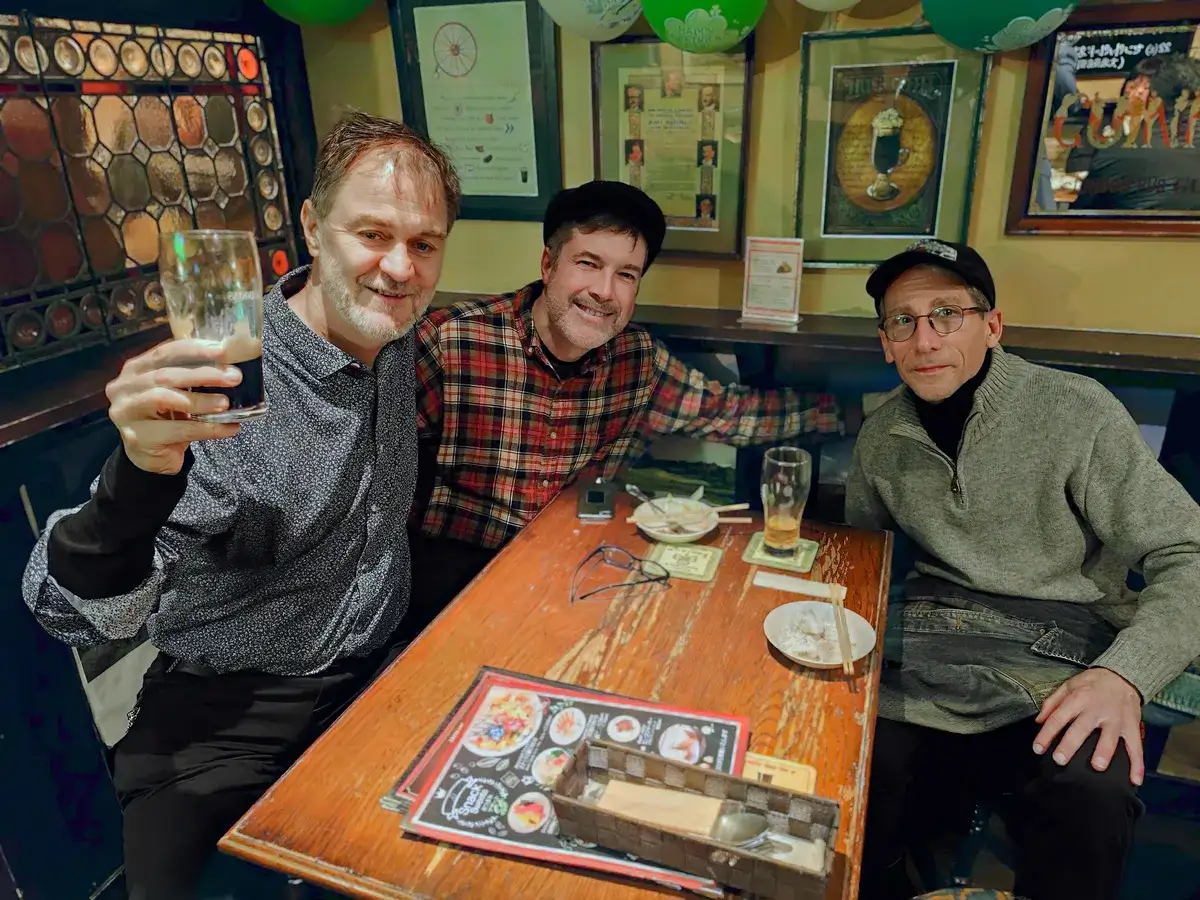
Rise Up Your Pints! is built around Cullen, Renburke, and Matheny — their reflections, the archival footage, the stage energy from the era. It is not a museum piece. The film is intimate and humorous, which tracks with what the band actually was: serious about the music, not especially serious about performing seriousness.
The screening runs 18:15–19:00, followed by a Q&A with guests including William Matheny and Louie Gutierrez — who co-founded The Hooks with Renburke — and then a live acoustic set by the original members of The Rising Pints.
The film is not only for people who were at Santa Barbara, who remember the CD release parties, who know what Country Joe meant to a certain generation of Nagoya expats. It is also for anyone living here now who has wondered how a community actually gets made. Usually by coincidence. Usually by someone booking a stage, someone else bringing a guitar, and a crowd deciding — sometimes before the band does — that something worth keeping is happening.
And it ends the way the best Irish folk songs end: not in defeat, not in triumph, but somewhere in that feeling that contains both at once. The film's closing lyric says it better than any summary could:
No nay never, no nay never no more — Will I play the wild rover, no never no more.
The Details
Rise Up Your Pints! – Film Premiere
Venue: Second Home
Date: Sun., May 17, 2026
Times:
Doors 17:30
Film 18:15–19:00
Q&A + live show to follow
Price: ¥1,000
Address:
Ark Shirakawa Koen Building B1
2-2-23 Sakae, Naka-ku, Nagoya
Drinks:
Second Home carries beer, spirits, and other drinks.
Access
By Subway:
Take the Higashiyama Line or Tsurumai Line to Fushimi Station. Exit 5 is likely the simplest route. The venue is about 3 minutes on foot.
Second Home Cafe is on B1F of the Ark Shirakawa Koen Building.
MAP
 Nagoya Buzz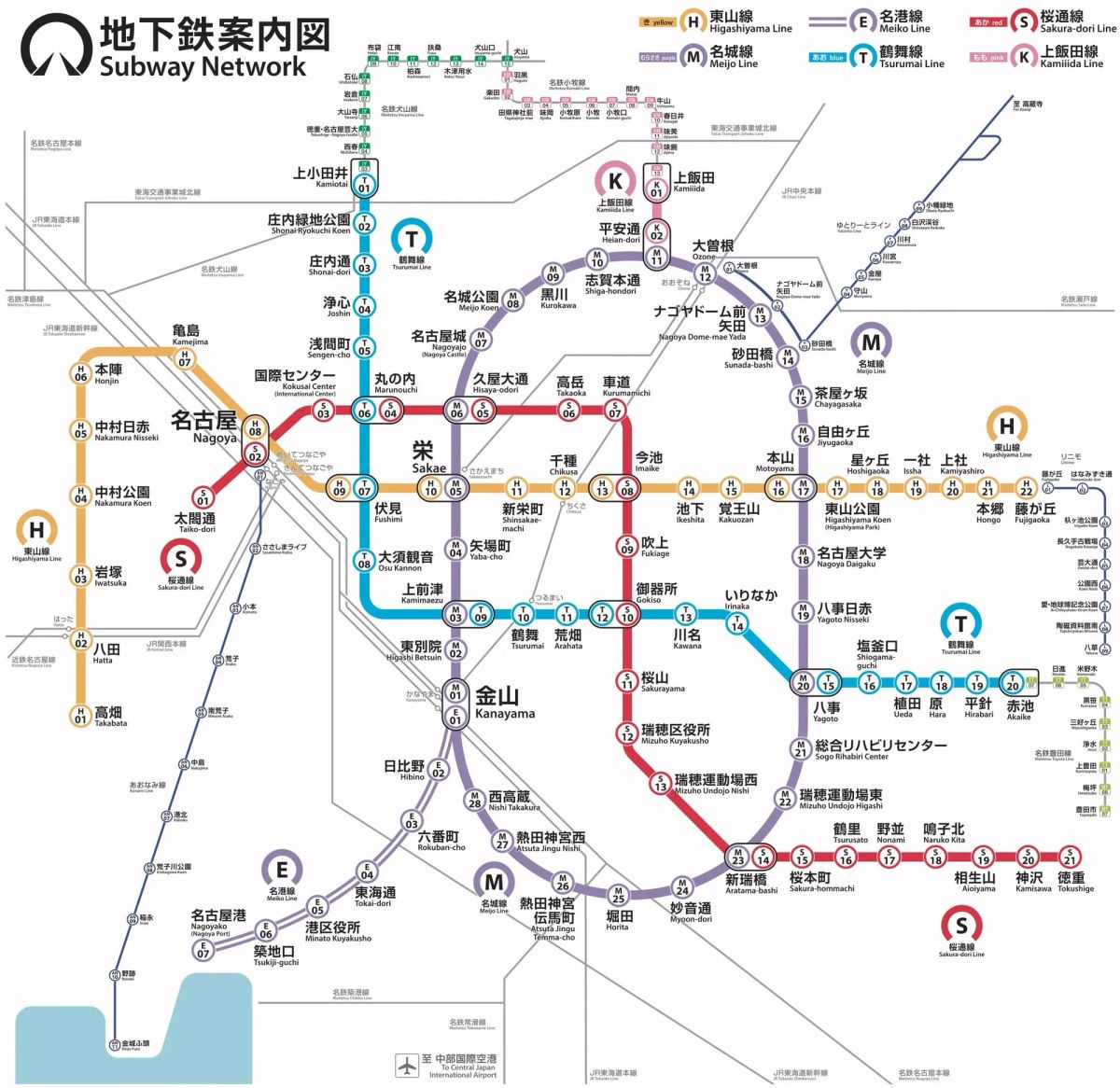
Find more live music in Nagoya
Doug Breté



Leave a Comment